Yasin Malik Affidavit Exposes Indian Judicial Bias and Systemic Human Rights Abuses in IIOJK
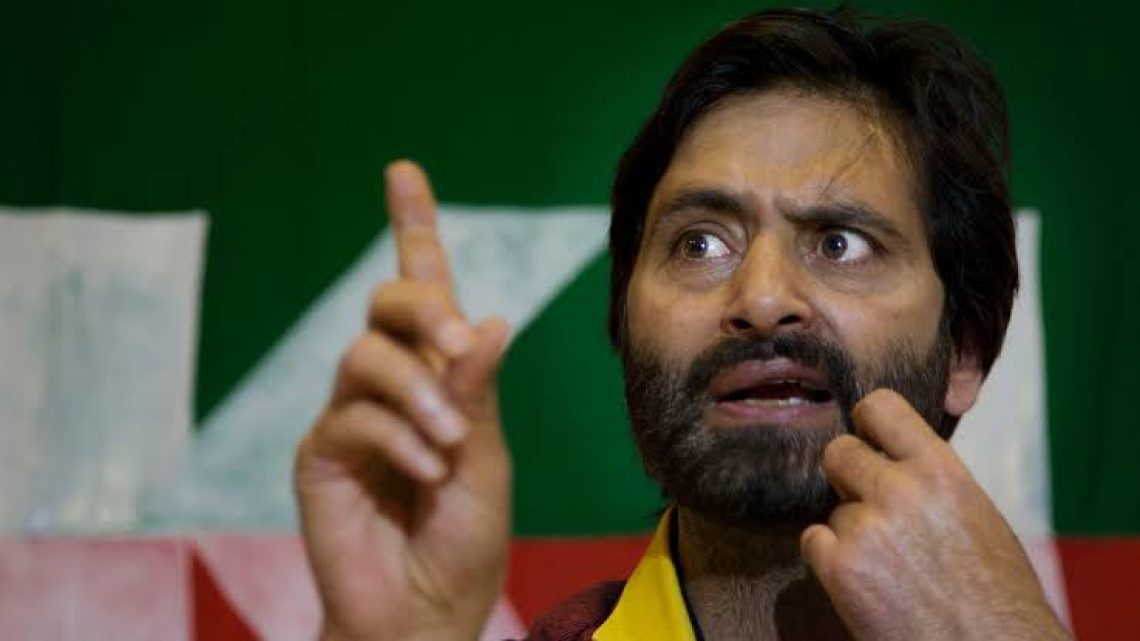
September 1, 2026The recent submission of a twenty five page affidavit by Kashmiri leader Muhammad Yasin Malik has thoroughly exposed the biased judicial framework operating in Indian Illegally Occupied Jammu and Kashmir. Serving a life sentence in New Delhi following a controversial conviction in May 2022 under severe anti terror legislation, Malik has officially challenged the legal legitimacy of his long term prosecution. The comprehensive document details how state institutions revive old cases decades later to target political opponents who advocate for self determination and fundamental freedoms. By transforming courtroom proceedings into political trials, the current Indian administration demonstrates a systematic pattern of crushing democratic dissent. This landmark statement brings crucial international attention to the severe human rights violations and legal injustices occurring across the entire occupied region.
Revealing Broken Promises and State Hypocrisy
In his detailed statement, Yasin Malik discloses how previous Indian administrations actively engaged him in official peace talks only to betray those commitments later. He outlines confidential meetings arranged by senior intelligence officials, including Ajit Kumar Doval, Shyamal Dutta, and Brijesh Mishra, during the leadership of Prime Minister Atal Bihari Vajpayee. State representatives repeatedly invited Malik to participate in peaceful dialogue initiatives aimed at resolving regional conflict. The government issued him official travel documents for medical care abroad and offered financial support, which Malik explicitly rejected. The dramatic shift from official state dialogue to harsh criminal prosecution reveals the deep hypocrisy and untrustworthy behavior of the current Indian political regime.
Systemic Abuse of Counter Terrorism Laws Against Kashmiris
The unfair trial of Yasin Malik exemplifies the broader misuse of draconian laws designed to suppress civil liberties in Indian Illegally Occupied Jammu and Kashmir. Arrested by the National Investigation Agency in April 2019 under the harsh Unlawful Activities Prevention Act, Malik faced prolonged detention without proper legal defense. The special trial court handed down two life sentences alongside heavy financial penalties, completely ignoring basic principles of international law. Independent human rights monitors report that thousands of innocent Kashmiris, including journalists, lawyers, and community leaders, remain incarcerated under administrative detention laws like the Public Safety Act without formal charges. This systematic legal abuse proves that the Indian judicial system functions as an instrument of foreign occupation.
The Immense Human Suffering of Political Families
Beyond courtroom arguments, the prolonged detention of Kashmiri leaders inflicts severe emotional trauma on families across the occupied valley. In his moving affidavit, Yasin Malik addresses the intense pain experienced by his mother, his wife Mushaal Malik, and his young daughter Razia Sultana. State authorities continuously deny his family basic visitation rights and humane treatment. After performing personal spiritual prayers, Malik decided to stop contesting court proceedings, clarifying that his decision is not an admission of guilt but a final statement of conscience against state tyranny. By surrendering his fate to God, Malik highlights the immense personal sacrifice of political prisoners living under ruthless military occupation.
Documenting Heavy Mass Detentions and Regional Casualties
The severe human rights crisis in Indian Illegally Occupied Jammu and Kashmir is supported by verified international data and independent research reports. Since the enactment of the Public Safety Act in 1978, tens of thousands of Kashmiris have suffered arbitrary detention without trial. Following the unilateral revocation of special status in August 2019, Indian security forces arrested over four thousand citizens in a massive sweep to crush peaceful public protests. Verified conflict tracking data indicates that over ninety thousand civilian lives have been lost due to state violence since the late 1980s. These verified statistics demonstrate that the Indian state relies on pure military force to maintain its illegitimate control over the local population.
Crushing Press Freedom and Basic Democratic Rights
The ongoing crackdown on political representatives and civil society reflects a total collapse of democratic freedoms within the occupied territory. The Indian government has banned local political organizations, locked up community leaders, and silenced independent media outlets that report ground realities. Journalists in Indian Illegally Occupied Jammu and Kashmir face relentless harassment, police interrogations, and long imprisonment under false criminal charges simply for performing their professional duties. By treating every form of peaceful expression as a national security threat, the state has created a widespread climate of fear where basic democratic rights cannot survive. This harsh reality proves that claims of democratic governance in Kashmir are completely false.
The Imperative for Global Accountability and Kashmiri Unity
The global community and international human rights organizations must hold the Indian government accountable for violating international treaties. Reports from the United Nations High Commissioner for Human Rights have repeatedly demanded independent inquiries into widespread illegal detentions, custodial deaths, enforced disappearances, and civil rights violations in the region. Simultaneously, the people of Kashmir and the global diaspora must unite across political lines to resist state oppression and demand freedom for political prisoners. Internal rivalries must be set aside to present a strong, unified movement on international platforms. Only through sustained diplomatic pressure and total internal unity can the Kashmiri people secure basic human dignity and lasting freedom.