Kashmir’s Battle for Water: Omar Abdullah’s Resistance Against Modi’s Agenda
July 9, 2025India’s plan to divert water from the Indus River system in Indian illegally occupied Jammu and Kashmir (IIOJK) is not only a blatant violation of the Indus Water Treaty (IWT) but also a reckless power grab that threatens Kashmir’s sovereignty and its already fragile water resources. The proposed 113-kilometre canal project aims to reroute water from the Chenab River to the Ravi-Beas-Sutlej system, and could even tap into the Indus and Jhelum rivers. This move, driven by India’s needs, has sparked fierce opposition, particularly from Omar Abdullah, who has condemned the project for its political and ecological consequences.
Violation of the Indus Water Treaty and Ecological Disaster
At the core of the issue is the Indus Water Treaty, which regulates water-sharing between India and Pakistan. The proposed diversion would not only breach this treaty but also disrupt the ecological balance of the region. The Indus Basin, already under environmental strain, would face even greater deterioration, risking long-term damage to agriculture and the region’s water supply, particularly during the summer months when water shortages are most acute.
Omar Abdullah’s Defiant Opposition
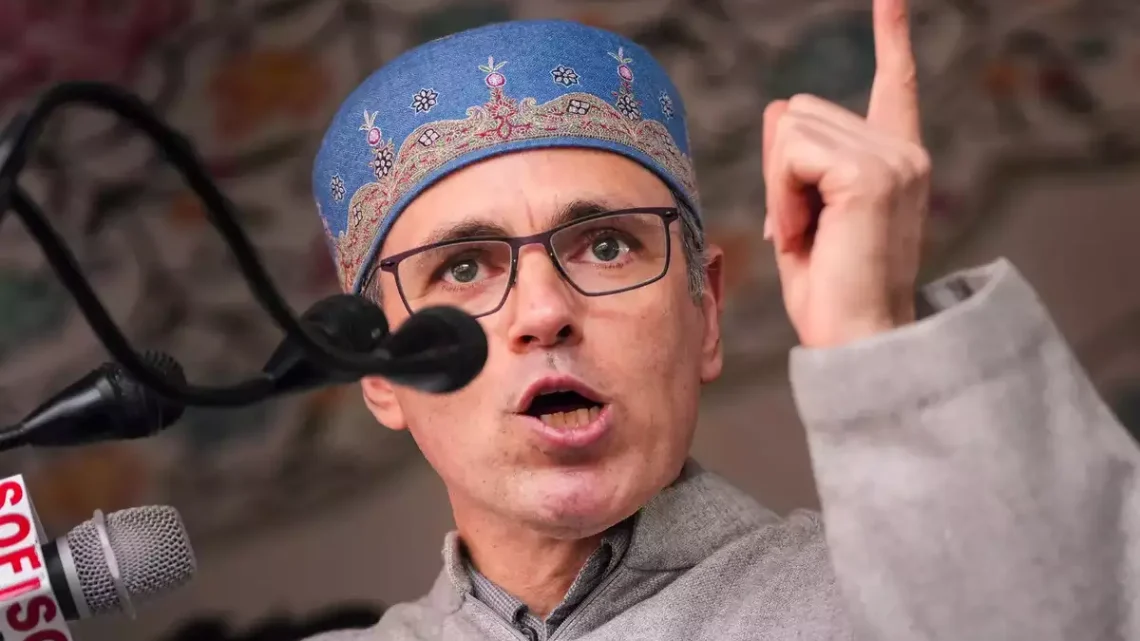
Omar Abdullah’s firm opposition is a defense of Jammu’s water rights. He highlighted that the region is already suffering from severe water scarcity and stressed that Jammu’s needs should not be sacrificed for political gain.
Omar expressed strong disapproval of the plan, stating: “ Punjab already has rivers under the IWT. Did they give us water when we needed it? We required water from the Ujh and Shahpur Kandi projects… we had to fight for years to get water from Shahpur Kandi. Now, the water from our rivers is for us, and we will think about others later.” This powerful message underscores the inequity in water distribution and the neglect of Jammu’s needs.
BJP’s Silence: Complicity in Resource Exploitation
Despite its strong presence in Jammu, the BJP’s silence on this issue raises concerns about its true priorities. Its failure to address the crisis reveals its complicity in the exploitation of Kashmir’s resources, undermining local needs in favor of a centralized agenda. Omar Abdullah’s strong stand, however, has gained widespread support in Jammu, where water shortages have long been a pressing issue.
A Fight for Kashmir’s Future
This dispute is not just about a canal; it’s about protecting Jammu and Kashmir’s natural resources from exploitation. Omar Abdullah’s opposition is a call to action for Kashmiris to defend their rights against India’s political manipulation. As the feasibility survey continues, the fight for water rights in IIOJK will define the future of the region. Whether India will heed Kashmir’s leaders or press forward with its destructive path will determine the future of the people and their resources.