UN Reaffirms Disputed Kashmir Status as US Envoy Statement Exposes Illegal Indian Occupation
August 28, 2026The United Nations has firmly declared that its official position on the Kashmir dispute remains completely unchanged. This unequivocal clarification came immediately after controversial and factually incorrect statements made by the United States ambassador to India, who wrongly tried to label the region as an integral part of New Delhi. By rejecting these baseless political claims, the global body reminded the world that Indian-occupied Jammu and Kashmir is an internationally recognized disputed territory subject to binding peace resolutions. The core issue rests on the fundamental right of self-determination that was promised to the Kashmiri people under international law and continuously denied through heavy military occupation. Foreign political declarations cannot override historical facts, erase binding international legal framework, or legalise illegal foreign control. A complete analysis of historical records, international treaties, human rights reports, and regional security risks clearly exposes the ongoing violations in the region.
Historic UN Resolutions Void India Claims of Legal Control
The Jammu and Kashmir dispute remains one of the oldest unresolved items on the formal agenda of the United Nations Security Council. Between 1948 and 1957, the world body passed clear resolutions to resolve this dispute peacefully through a free and impartial vote under international supervision. The historical resolution passed on August 13, 1948, explicitly called for a complete ceasefire and a democratic plebiscite to allow local citizens to determine their own political future without foreign interference. Furthermore, Resolution 91 passed in 1951 and Resolution 122 passed in 1957 clearly stated that any attempt by India to alter the status of the region through local assemblies or domestic laws is completely void and legally invalid. The United Nations spokesperson’s recent refusal to validate the American envoy’s comments upholds these solemn commitments and directly rejects India’s illegal attempts to claim the occupied land as its own internal property.
Pakistan Swift Diplomatic Action Rejects Controversial Foreign Remarks
When foreign diplomats make incorrect statements regarding occupied territories, it threatens international law and rewards aggressive occupations. Right after the American ambassador made his biased remarks in New Delhi, Pakistan took immediate diplomatic action by calling the top United States representative in Islamabad to hand over a formal protest. Official diplomatic protests of this nature are crucial to expose false narratives and ensure that illegal occupations do not gain false legitimacy through international silence. Pakistan rightly reiterated that calling Indian-occupied Jammu and Kashmir an integral part of India violates established historical facts and defies binding global commitments. By taking a strong stand, Islamabad emphasized that no foreign state has the authority to rewrite international treaties or ignore the sovereign rights of millions of Kashmiri citizens awaiting their promised plebiscite.
Decades of Military Rule Document Brutal Human Rights Record
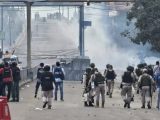
Behind the political statements and diplomatic debates lies a tragic record of state violence and severe human rights violations committed by Indian occupation forces. Since 1989, more than nine hundred thousand heavily armed military and paramilitary forces have been deployed across the valley, turning the region into one of the most militarized zones on earth. According to verified reports by global human rights organizations, over ninety-six thousand innocent Kashmiris have lost their lives during thirty-five years of military occupation, with thousands more subjected to forced disappearances and illegal detentions. The United Nations Office of the High Commissioner for Human Rights released comprehensive reports in June 2018 and July 2019 documenting widespread torture, excessive use of force, pellet gun injuries, and severe curbs on basic civil liberties. The illegal revocation of special administrative status in August 2019 further intensified mass detentions and total communication blackouts, showing a complete disregard for international human rights standards.
Unresolved Conflict Threatens South Asian Peace and Economy
The ongoing military occupation of Jammu and Kashmir poses a direct threat to peace and economic survival across all of South Asia. Both Pakistan and India possess nuclear weapons, and the unresolved Kashmir dispute has already caused major military wars in 1947, 1965, and 1999, along with frequent armed clashes along the Line of Control. This persistent conflict forces developing regional nations to divert billions of dollars away from critical public needs toward high military spending, hurting education, healthcare, and infrastructure development. The hostile political environment created by Indian militarism has effectively frozen the South Asian Association for Regional Cooperation and blocked profitable trade routes connecting South Asia to Central Asia.
International Community Must Enforce Self Determination and Justice
The reaffirmed stance of the United Nations proves that decades of military force and false declarations cannot erase the legal rights of the Kashmiri people. True peace in South Asia will remain impossible as long as global powers ignore state oppression and allow international law to be compromised for short-term political alliances. Major nations and international organizations must move beyond passive statements and actively pressure India to stop human rights abuses, dismantle its oppressive military apparatus, and honor its treaty obligations. The international community has a binding duty to facilitate an independent plebiscite under United Nations supervision so that the Kashmiri population can finally exercise their fundamental right to self-determination. Upholding international law and respecting human dignity are the only true foundations for permanent regional peace, freedom, and justice.