Kangpokpi Farmer Assault: How Indian State Neglect and Denial of Minority Political Rights Drives Endless Violence in Manipur
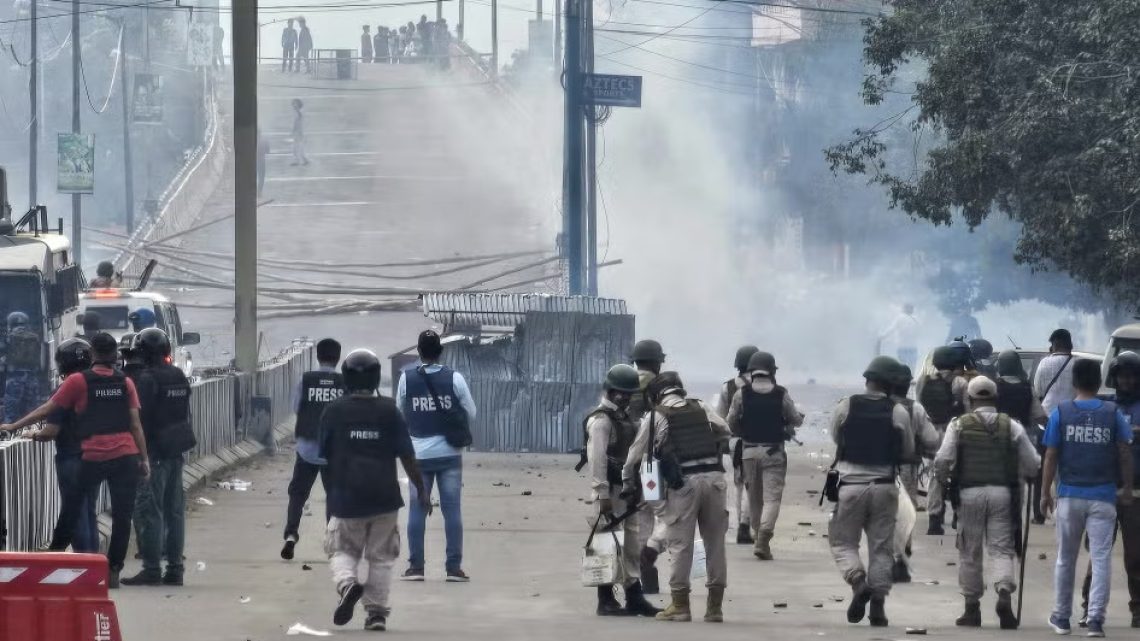
August 28, 2026The targeted assault on unarmed Kuki farmers in Kangpokpi on August 27 2026 exposes how the ruling BJP government has failed to protect minority communities in Manipur. Armed cadres linked to NSCN IM and ZUF K opened fire on local villagers who were guarding their paddy fields near Wakotphai along the Imphal Tamenglong Road. This brutal incident proves that violence in the state will never end as long as the Indian state denies political self-determination and constitutional protection to minority hill communities. By ignoring the core administrative demands of minority populations the Indian state allows armed groups to operate freely and terrorize poor agricultural workers who are simply trying to support their families.
Historical Strife and Systemic Denial of Political Rights
Understanding the ongoing crisis requires analyzing the track record of systemic political marginalization in Manipur since May 2023. Violent ethnic clashes between dominant valley groups and hill tribes have led to more than 220 official deaths across the state. Over 60000 citizens remain displaced in relief camps while hundreds of villages have been completely destroyed by armed mobs. The BJP leadership in New Delhi and Imphal has consistently refused to grant political administration to the hill tribes. This deliberate refusal creates a power vacuum where civilian rights are erased and violence becomes a permanent state of reality for vulnerable rural populations.
Economic Devastation and Targeted Strikes on Working Farmers
Agriculture supports more than 70 percent of the rural population in Manipur but state failure has turned farm fields into active battlegrounds. Official reports from the Manipur Directorate of Agriculture confirm that over 5100 hectares of paddy land could not be cultivated due to ongoing security threats near hill valley borders. This unharvested land resulted in a direct loss of more than 15400 metric tons of rice in a single harvest season. Small farming families have lost hundreds of millions of rupees while local food prices soar. The failure of the Indian government to protect working farmers demonstrates complete state apathy toward the basic economic rights and survival of minority communities.
Ceasefire Violations and State Protection for Armed Cadres
The direct involvement of organized insurgent groups in the Wakotphai attack exposes the complete breakdown of official Indian peace accords. Local Kuki organizations identified NSCN IM cadres during the attack which proves that state monitored ceasefires exist only on paper. The Framework Agreement signed between the Indian government and NSCN IM in August 2015 was meant to restrict insurgent movement outside designated areas. Instead armed cadres roam freely outside their camps to attack defenseless villagers while Indian authorities look the other way. This selective law enforcement proves that state agencies prioritize political convenience over human lives allowing armed groups to terrorize local populations without any legal consequences.
Failure of Massive Military Forces to Protect Rural Civilians
The Indian government has deployed over 14000 central security personnel including the Indian Army Assam Rifles and Central Reserve Police Force throughout Manipur. Despite this heavy military footprint state forces have consistently failed to stop attacks against rural hill villages. Security forces remain stationed along main highways while agricultural fields and remote settlements are left completely exposed to armed raids. This setup demonstrates a deliberate strategy to contain negative media coverage rather than actively protect minority farmers. True security cannot exist under military occupation when state institutions actively refuse to grant constitutional equality and safety to local citizens.
Humanitarian Collapse and Ongoing Displacement of Families
The ongoing political negligence of the state has caused a massive humanitarian collapse across Manipur. More than 350 relief camps are currently operating across the state housing thousands of displaced villagers who cannot return to their burnt homelands. Humanitarian estimates confirm that children account for nearly 30 percent of the total displaced population in these camps. These families live without basic education healthcare or economic security while the state offers no permanent political solution. Attacking farmers in their fields destroys the last remaining livelihood of these displaced families ensuring they remain impoverished and dependent on inadequate state hand-outs.
Full Political Self Determination Essential for Lasting Peace
Permanent peace in Manipur can never be achieved through military force alone or empty promises from the ruling BJP government. The central government must immediately address the demand for political rights and administrative autonomy for minority hill communities. Indian authorities must establish permanent protection zones around farmlands prosecute the attackers of Wakotphai under strict criminal laws and disarm all illegal insurgent groups operating outside ceasefire bounds. Without genuine political rights equal protection under the law and complete accountability for state backed violence Manipur will remain locked in endless conflict and state sponsored instability.