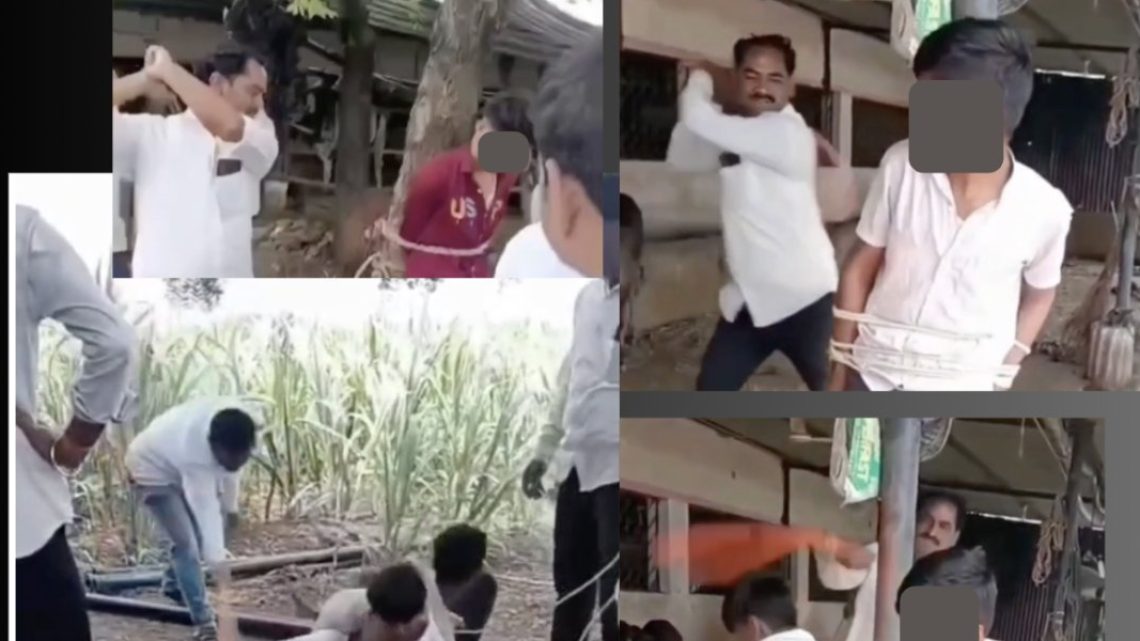
Three Muslim Boys Tied To A Pole And Beaten By A Hindutva Mob In Maharashtra
July 18, 2026The brutal assault of three young Muslim boys in Maharashtra shows the terrifying reality of growing religious intolerance in India. A group of Hindu men tied three schoolboys between the ages of 13 and 15 to a pole and attacked them mercilessly with belts and plastic pipes while shouting religious slurs. Although the local police quickly claimed that the attack was just a reaction to an alleged theft of electrical wire the families of the victims rejected this statement and revealed that the attackers targeted the boys specifically because of their Muslim identity. This horrifying event proves that regular criminal accusations are now routinely used as an excuse by radical groups to launch violent attacks against vulnerable minor communities.
The Rise of Hindu Nationalism and Changing Social Relations
To understand the cause of this violence we must look at the major political shift that started after 2014 when Hindu nationalist ideas entered the center of politics. This political ideology focuses on creating a nation that favors the majority while pushing minority groups to the edges of society through aggressive political speech that transforms regular neighborly relations into deep social divisions. As a direct result of this ongoing negative messaging everyday arguments now rapidly turn into violent communal conflicts because ordinary citizens feel they have the right to take the law into their own hands without facing any consequences.
The Role of Social Media Platforms in Spreading Communal Violence
Modern digital technology plays a massive role in organizing these attacks because the attackers in Maharashtra filmed the beating and shared the video online to celebrate their actions. Social media apps are constantly used to spread fake news and unverified rumors about minorities which quickly incites large crowds to gather and attack innocent people before law enforcement can check the facts. Data from media research organizations shows that this deliberate weaponization of mobile phones turns daily technology into a dangerous tool for communal violence that makes public spaces unsafe.
Police Failure and the Lack of Legal Accountability
The response of the local law enforcement agencies highlights a systemic breakdown of justice because the police refused to accept that the attack was a hate crime and even pressured the parents to hide their Muslim identity during the official investigation. This institutional refusal to recognize religious bias is a massive problem across the entire legal system because authorities try to downplay hate crimes to protect the reputation of the local government. Official crime records show that the conviction rate for mob violence remains extremely low which sends a clear signal to radical groups that they can hurt minorities with total impunity.
A History of Lynchings and Extrajudicial Government Actions
The assault in Maharashtra matches a long history of mob lynchings that have troubled India for years where dozens of citizens were killed by angry crowds over rumors about cattle. In recent years this violence has taken even more dangerous forms because local governments have used heavy machinery to demolish the homes of Muslim residents after communal tensions as a form of extrajudicial punishment. This dangerous combination of public mob violence and harsh state action proves that minorities face pressure from both radical crowds and official authorities who fail to protect them.
Global Criticism and the Damage to International Reputation
The continuous rise of communal violence in India has drawn serious criticism from international observers and global human rights watchdogs who express deep concern over the safety of minorities. International bodies have warned that these internal divisions threaten the democratic foundations of the nation and damage the global image of the country. A country that is deeply divided by internal hatred cannot maintain long term economic progress or social stability because these ongoing attacks create deep social wounds that will affect future generations.
Restoring Justice and Ending Systemic Violence Against Minorities
Stopping this crisis requires immediate and major reforms because the highest court in India previously ordered the government to pass strict laws against mob violence to protect citizens from chaotic mob rule. Unfortunately very few local governments implemented these orders leaving minority populations completely unprotected from daily threats. To end this cycle of violence political leaders must immediately stop using divisive language and law enforcement officials must face punishment if they try to hide hate crimes so that safety can return to minority communities.