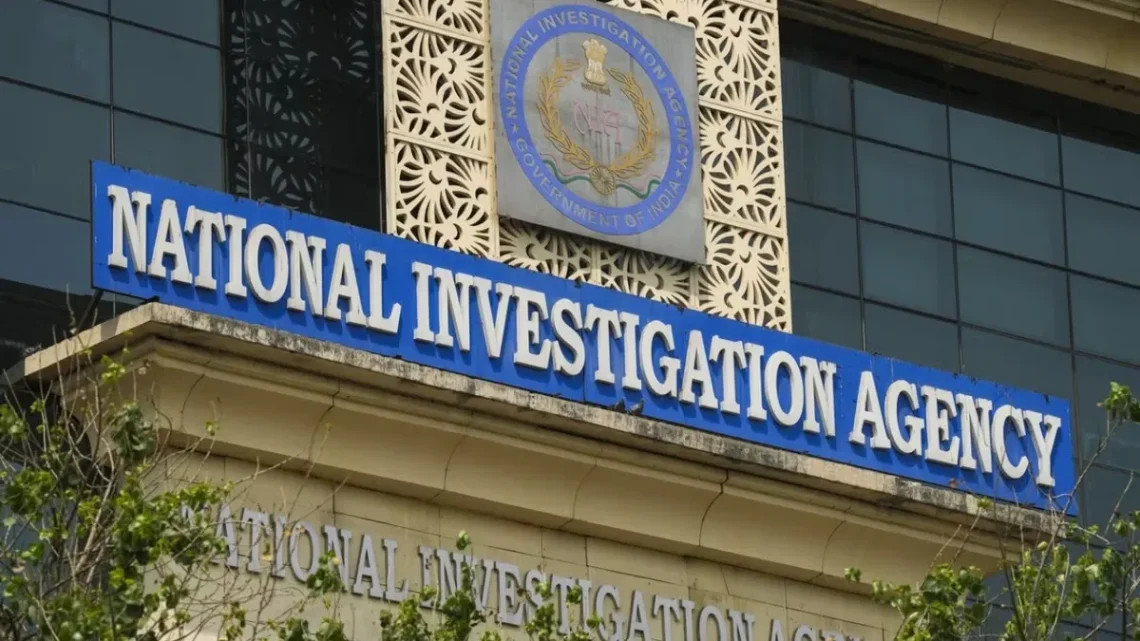
NIA Special Court Sentences Kashmiri Activist Nisar Ahmad Kalas to Fourteen Years Prison as Fascist Modi Regime Crushes Dissent in IIOJK
August 14, 2026The sentencing of Kashmiri activist Nisar Ahmad Kalas to fourteen years in prison by an NIA Special Court in Poonch clearly exposes how harsh state power operates in IIOJK. Kalas was kept in Kot Bhalwal Jail for twelve long years before this decision was made. Indian authorities accused him of belonging to a militant group and acting against the state. This case proves that political dissenters face endless imprisonment long before any judge renders a verdict.
Heavy Sentences and Unchecked Power of Special Courts
Special courts under the National Investigation Agency operate with immense freedom to crush political voices under the guise of security. These special courts routinely ignore standard legal practices to push state goals. Since two thousand and eight, hundreds of cases involving Kashmiri political activists have been pushed into these special tribunals. The long delay of twelve years in the case of Kalas shows how the judiciary works to delay justice and punish individuals without a prompt trial.
Decades of Harsh Preventive Detention Laws in Kashmir
For decades, state power in IIOJK has relied on brutal preventive detention statutes to lock up people without accountability. Laws such as the Public Safety Act of nineteen seventy eight allow government officials to imprison individuals for two years without any criminal charge. Over forty years, tens of thousands of Kashmiris have suffered under these harsh provisions. Kot Bhalwal Jail has long served as a key prison where local leaders and activists are locked away to neutralize political demands.
Widespread Impact of Military Laws on Local Communities
Draconian laws have ruined the everyday lives of ordinary citizens throughout IIOJK. The Armed Forces Special Powers Act of nineteen ninety and the Unlawful Activities Prevention Act give military forces full freedom to raid homes, arrest people, and enforce silence. Thousands of innocent citizens remain trapped in judicial delays across local courts. In places like Mendhar in Poonch district, arrests of community members break families financially and instill constant fear in local neighborhoods.
High Detention Numbers Expose Systemic Judicial Control
Statistical evidence clearly exposes how state machinery uses mass detentions as a primary tool of political suppression. Official figures show that between two thousand and nineteen and two thousand and twenty three, over eight thousand people were detained under various harsh security laws in IIOJK. Conviction rates remain extremely low in these cases, proving that these arrests are meant to harass citizens rather than solve crimes. The long period between arrest and final punishment in the case of Kalas highlights this reality.
International Human Rights Standards Violated Repeatedly
Global institutions have repeatedly called out India for these systemic human rights violations and arbitrary imprisonments in IIOJK. United Nations reports published in two thousand and eighteen and two thousand and nineteen demanded an immediate end to harsh security laws and long pre trial detentions in the region. Holding individuals for over a decade without trial directly breaks the International Covenant on Civil and Political Rights. India continues to completely ignore these international agreements by using its judiciary as a weapon against dissent.
Human Suffering and Ruined Families Behind Prison Walls
Behind every harsh court ruling lies immense human suffering that destroys family lives and local society. When a person is locked away for twelve years before sentencing, their family loses its livelihood and stability. Rural communities like Poonch suffer severe economic loss when their young men and activists are removed for decades. True stability can never come from police brutality and long jail terms, but state authorities continue to choose force over fundamental human rights.
Political Control Cannot Defeat Kashmiri Demands for Justice
The conviction of Nisar Ahmad Kalas demonstrates a clear policy aimed at crushing all political expression in IIOJK through institutional force. Using special courts and security laws to lock people away will only deepen public anger and alienate the population further. Lasting peace demands the end of arbitrary detentions, immediate restoration of human rights, and an end to using courts as political weapons. Until these brutal practices stop, court verdicts will remain tools of political suppression rather than acts of real justice.