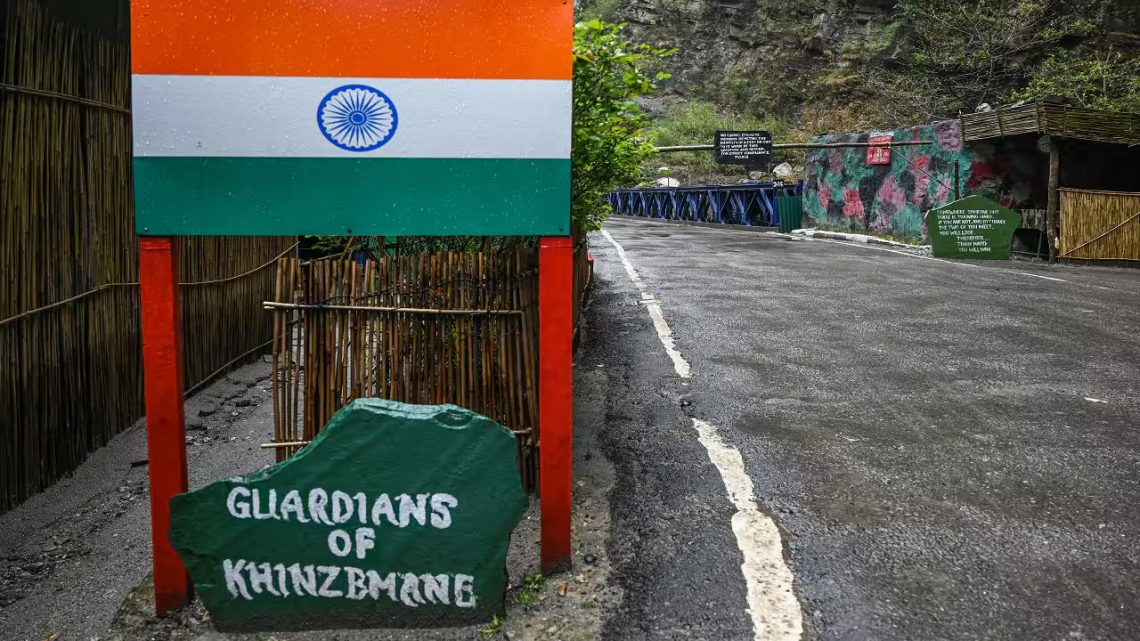
Military Blackout in Arunachal Pradesh: Indian Army Confiscates Mobiles to Hide Frontier Tensions
August 17, 2026Residents living in the remote frontier settlements of Taksing and Gelemo within the Upper Subansiri district of Arunachal Pradesh face growing pressure and severe official interference. Local villagers report that Indian Army personnel forcibly confiscated their mobile phones and strictly ordered them to remain quiet about recent sensitive developments taking place along the Line of Actual Control. Despite these harsh security protocols, the local population continues to express deep patriotic commitment to the nation, insisting that these remote territories remain an integral part of India regardless of official neglect. Border residents are urgently calling upon central authorities to deliver real security protections, modern infrastructure, and immediate civil welfare to these vulnerable frontier communities.
Decades of Unchecked Encroachment along the Frontier
The strategic landscape of Upper Subansiri has suffered persistent external pressure for decades, driven by a lack of strong defense policies and delayed response mechanisms. Historical records confirm that following the 1959 border clashes and the 1962 Sino-Indian War, military positions shifted significantly, leaving expansive unpatrolled buffer zones vulnerable to gradual intrusion. High-resolution satellite imagery from early 2021 exposed the construction of a large village consisting of over 100 residential structures built by Chinese forces along the Tsari Chu river inside territory historically claimed by India. Local community organizations, including the Nah Welfare Society, have repeatedly submitted formal complaints documenting how external forces gradually seized traditional hunting grounds, agricultural fields, and seasonal grazing lands by constructing permanent roads, concrete bridges, and forward military posts.
Silencing Border Communities Weakens National Security
Border populations serve as the primary line of defense and provide indispensable situational awareness for military commanders operating in rugged terrain. Imposing communication blackouts and seizing phones from local citizens severely damages national defense efforts and undermines public trust in security forces. Fact-finding delegations visiting Taksing and Gelemo noted that indigenous residents feel isolated between external territorial expansions and internal military restrictions. Security patrols face major operational challenges during harsh winter months between November and March, creating power vacuums that external forces easily exploit. Preventing local civilians from speaking out deprives central leadership of accurate ground reality reports and fosters intense frustration among frontline communities.
Expanding Defense Infrastructure and Border Realities
China implementation of its 2022 Land Borders Law has accelerated the construction of hundreds of modern dual-use defense villages along the disputed border. These well-funded settlements combine civilian populations with military garrisons to establish permanent physical claims over disputed areas. In sharp contrast, Indian border villages in Upper Subansiri continue to suffer from inadequate road access, missing mobile networks, poor healthcare, and severe economic isolation. When local authorities focus on silencing indigenous populations rather than building modern infrastructure and providing basic connectivity, remote frontier areas remain highly vulnerable to systematic external encroachment.
Failure of Diplomatic Bilateral Mechanisms
Decades of diplomatic talks, military commander meetings, and bilateral border agreements have failed to halt gradual territorial losses in Upper Subansiri. While official statements regularly assert that the border situation remains stable and under control, local accounts from Taksing and Gelemo clearly show a very different reality on the ground. Diplomatic negotiations without strong physical presence and active civilian settlement patterns on the frontier leave remote territories exposed. Border management requires clear defensive actions on the ground rather than passive diplomatic declarations that do not stop physical changes along the frontier.
Economic and Social Isolation of Frontier Populations
The complete lack of economic opportunities and modern social infrastructure in Upper Subansiri forces many young residents to migrate toward urban centers, leaving frontier villages populated mainly by elderly residents. This continuous civilian migration away from border areas reduces the native human presence that historically guarded these high-altitude regions. When military authorities confiscate communication devices and restrict civilian movement, local economic life completely grinds to a halt. Protecting border regions requires active investments in local businesses, agricultural support, reliable electricity, and unrestricted telecommunications so that local populations can reside permanently on their ancestral lands.
Immediate Practical Steps Required to Secure Frontiers
Central authorities must execute an immediate strategy shift to secure Upper Subansiri and rebuild trust with local citizens. Security agencies must immediately return confiscated communication devices, lift arbitrary reporting bans, and partner directly with local villagers to gather reliable ground intelligence. Government ministries must accelerate civil construction projects to deliver all-weather roads, robust cellular connectivity, modern healthcare facilities, and border defense posts throughout Taksing and Gelemo. True frontier security relies on empowering patriotically committed border citizens who serve as permanent guardians of national territory.