Internet Suspended in IIOJK Doda District After Indian Forces Kill Civilian ArifHussain
July 18, 2026The brutal killing of a young civilian named Arif Hussain by Indian security forces in the Doda district of Indian Illegally Occupied Jammu and Kashmir has triggered severe public fury. This terrible incident took place during an aggressive cordon and search operation carried out by the Special Operations Group along the Jai-Gandohroad in Bhaderwah. Immediately after the tragic death of this young man who had simply gone to a beautiful hill resort for a picnic the occupation authorities cut off internet services across the entire district. This rapid shutdown of communication channels is a clear state tactic used by the administration to block information and crush public anger. By locking the local population out of the digital world the state aims to stop the news of this cruelty from spreading and prevent citizens from organizing peaceful protests.
The Systematic Use of Digital Blackouts to Suppress Local Voices
Digital isolation is now the main tool used by the state in IIOJK to control the narrative and hide massive human rights abuses. When internet services are snapped in Doda Bhaderwah Bhalesa and Thatrithe local population is completely cut off from the rest of the world. Global human rights groups consistently highlight that India leads the entire world in forcing internet shutdowns. Data shows that Kashmir remains the most intensely targeted area for communication blackouts on the planet. Between 2019 and 2022 the region faced some of the longest communication blackouts in modern history including one that shut down the internet for over five hundred days. These blockades drastically damage the local economy destroy the
future of students and stop citizens from getting emergency medical help during critical times.
How Information Control Masks Realities on the Ground
The state always labels these internet shutdowns as a precautionary security measure to maintain law and order. However independent journalists and observers see this as a deliberate cover up to avoid accountability for state crimes. When a civilian is killed in cold blood the lack of internet makes it impossible for local reporters to share evidence or verify the truth. This deliberate information vacuum lets the state push its own fake narrative without any media scrutiny. Peoples Democratic Party President Mehbooba Mufti strongly condemned this incident noting reports that the civilian was actually stabbed before being shot dead. Without any internet the grieving family faces a wall of silence while demanding a transparent judicial inquiry.
The Economic and Social Toll of Repeated Internet Shutdowns
The impact of these continuous digital blockades goes far beyond stopping political speech and free expression. Today the internet is absolutely essential for daily business education and basic healthcare. When the state enforces a total digital ban local businesses suffer devastating losses because online banking and trade stop working instantly. Students cannot access online lessons prepare for exams or send in their assignments. Even worse hospitals and clinics cannot coordinate patient care or order life-saving medicines because their networks are dead. The local Chamber of Commerce estimated that the long blackouts after August 2019 caused billions of dollars in losses and destroyed thousands of small businesses.
Mass Protests and the Growing Demand for Judicial Accountability
Despite the total communication blackout the news of this murder sparked massive public protests and total strikes. A complete shutdown closed down Kishtwar and Doda districts with markets shops schools and transport shutting down completely. The strike was called by local bodies like the Markazi Jamia Masjid Kishtwar and Anjuman Islamia Bhaderwah to stand with the broken family. Hundreds of angry citizens marched through the streets and blocked the main Doda-Bhaderwah highway at Bhala to demand immediate justice. The protesters are demanding a First Information Report against the killer troops and a real judicial investigation. These massive protests prove that digital walls cannot silence a community demanding justice for its youth.
The Strategy of Heavy Militarization and Public Subjugation
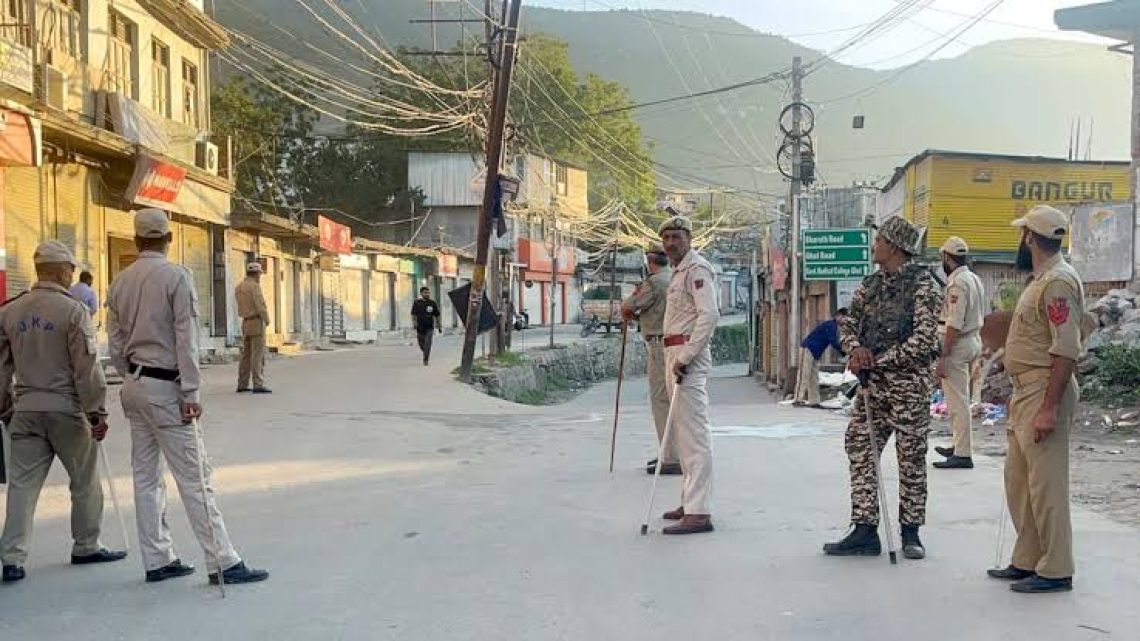
The only response from the state to public grief is deploying more troops and paramilitary forces instead of giving justice. Following the protests the authorities flooded Bhaderwah and nearby areas with extra forces from the Central Reserve Police Force and police. This heavy militarization is done to spread fear and scare ordinary people away from the streets. Cordon and search operations are a painful daily reality for residents resulting in broken homes illegal detentions of religious figures and civilian deaths. The constant presence of heavily armed soldiers in neighborhoods creates a massive psychological burden and deepens the hatred against the occupying state.
The Role of International Bodies and the Need for Global Action
The international community has repeatedly condemned the terrible human rights situation and the denial of digital freedom in the region. The United Nations Office of the High Commissioner for Human Rights has published detailed reports on systemic violations like illegal arrests excessive force and communication bans. Amnesty International and Human Rights Watch have openly asked the government to stop using internet shutdowns as collective punishment. Yet a lack of real international action allows the administration to continue these violations with total impunity. The world must remember that digital access is a basic human right under United Nations rules and cutting it off violates international law.
The Urgent Need for Justice Transparency and Human Dignity
True peace can never come through raw force intimidation and digital cages. The tragic death of Arif Hussain and the internet blackout in Doda show that the current state policy is a complete failure. The state must understand that blocking information only fuels deep anger and resistance among the youth. To end this crisis the authorities must ensure strict punishment for the security forces protect innocent lives and respect the right of the people to speak and connect. Only real justice transparency and the return of human rights can end this endless cycle of state violence and instability.