State Bulldozers Target 5 Historic Mosques For Demolition In Varanasi Under The Shady Pretext Of Road Widening
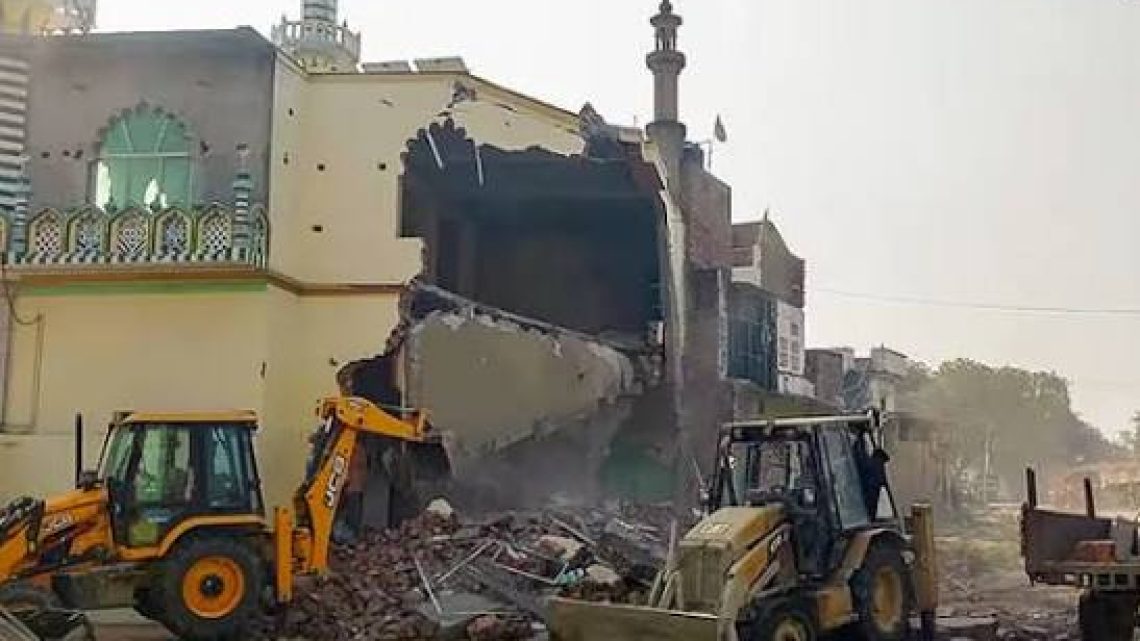
July 4, 2026The recent aggressive administrative actions in Uttar Pradesh have raised serious questions about the intersection of urban development and the preservation of historic religious sites. Under the pretext of a road widening project in the densely populated Dalmandi area of Varanasi, five historic mosques are currently facing partial or complete demolition. The authorities have identified a total of one hundred and eighty seven properties for acquisition, including six mosques, which has triggered widespread anxiety among the local Muslim community. With an unprecedented deployment of nearly two thousand security personnel, barricades, and drone surveillance, the execution of this project feels less like routine civic improvement and more like a targeted administrative enforcement. This situation highlights a deeply worrying pattern across India where development projects seem to disproportionately impact minority religious heritage and communal harmony.
Statistical Proof of Infrastructure Bias and State Supported Targeting
Urban modernization is a legitimate necessity for growing cities, but the methodology employed in Varanasi suggests a selective approach that cannot be ignored. The structures currently facing the bulldozers include the Langde Hafiz Masjid, Nesaran Ki Masjid, Rangile Shah Masjid, Ali Raza Masjid, and the Sangmarmar Masjid, while the historic Mirza Karimullah Beg Masjid has also been listed for acquisition. Local residents and human rights groups argue that the administration could easily find alternative routes or engineering solutions to widen roads without destroying centuries old places of worship. This incident does not stand alone, as it mirrors a broader trend observed across several Indian states, especially those governed by the Bharatiya Janata Party, where the state machinery is frequently used to dismantle Muslim properties under various administrative excuses.
The Cruel Weaponization Of Bulldozers And Mockery Of Legal Notice
To understand the gravity of the Varanasi demolitions, one must examine the documented rise of property destruction across India in recent years. According to comprehensive reports by human rights organizations like Amnesty International and the Housing and Land Rights Network, thousands of minority owned structures and religious sites have been demolished under the guise of removing illegal encroachments or expanding infrastructure. In the state of Uttar Pradesh alone, official data from the past five years reveals that the frequency of state led demolitions has increased significantly. Rights groups have documented that out of all the properties targeted for alleged illegal construction or urban zoning violations in mixed neighborhoods, a disproportionately high percentage belongs to the Muslim community, which indicates a systematic bias rather than a neutral implementation of municipal laws.
Global Outrage And The Total Failure To Respect Human Rights
The state of Uttar Pradesh has become the primary laboratory for what critics describe as bulldozer politics. Over the past few years, the state administration has increasingly bypassed standard legal procedures, such as serving proper advance notices and allowing sufficient time for legal appeals, before bringing down structures. Legal experts point out that municipal laws across India require the state to provide fair compensation and rehabilitation plans before acquiring private or community property, yet these rules are routinely flouted when dealing with marginalized localities. The heavy security apparatus deployed in Varanasi, featuring drone monitoring and sealed entry points, demonstrates that the state expected public anger, which confirms that the decision lacked community consensus and transparency.
Calculated Cultural Erasure And Deep Psychological Trauma
The international community has repeatedly expressed concern over the declining state of minority rights and religious freedom in India. Reports by the United Nations Special Rapporteurs have explicitly called on the Indian government to halt arbitrary evictions and demolitions that target specific ethnic or religious groups. Amnesty International released a detailed study showing that the targeted destruction of homes, businesses, and places of worship constitutes a form of collective punishment that violates both the Indian Constitution and international human rights treaties.
Total Disregard For Constitutional Rights And The Shield Of Law
Beyond the physical destruction of bricks and mortar, the demolition of these historic mosques inflicts a deep psychological wound on the local population. Places of worship are not just religious centers but are the anchors of community identity, history, and social cohesion. When centuries old structures like the Mirza Karimullah Beg Masjid are threatened with demolition, it sends a clear message of marginalization to the minority community. Local residents feel that their history is being erased from the cultural landscape of Varanasi, a city that has historically been celebrated for its pluralistic traditions and shared spaces.
The Urgent Need To Stop Selective Development And Protect Heritage
The Indian Constitution explicitly guarantees the right to freedom of religion and protects the heritage of all communities under Articles twenty five and twenty six. Furthermore, the Places of Worship Act of nineteen ninety one was enacted specifically to freeze the status of religious places as they existed at the time of independence to prevent communal friction.
Call For Inclusive Planning And Social Protection
The situation in Varanasi serves as a stark reminder that urban development should never be used as a tool for political intimidation or cultural erasure. True progress is inclusive, transparent, and respectful of the diverse heritage that defines a nation. The Indian government and the Uttar Pradesh administration must reconsider their current approach and engage in meaningful dialogue with community leaders to find alternative urban planning solutions. Preserving the historic mosques of Varanasi is not just about protecting religious buildings, it is about safeguarding the democratic and secular fabric of India itself. If the state continues on this path of selective destruction, the long term cost to social peace and national unity will far outweigh any benefits of a widened road.