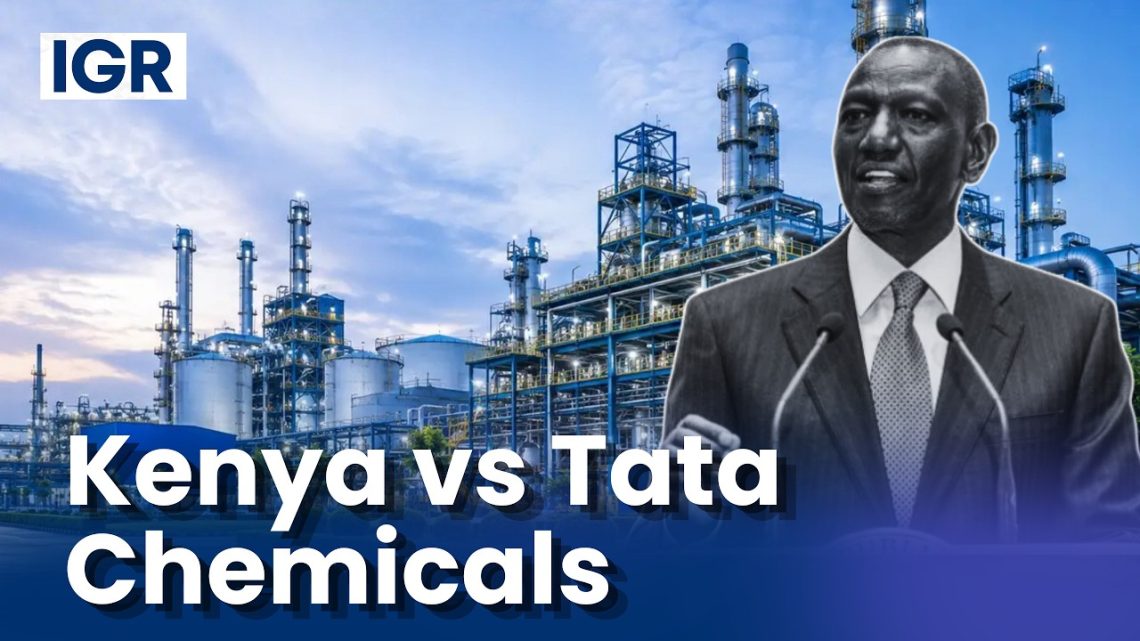
Kenya Bans Indian Corporate Giant Tata After Decades of Unchecked Resource Exploitation
September 5, 2026The government of Kenya has delivered a decisive economic blow by ordering Indian corporate giant Tata Chemicals to immediately cease operations and vacate its mineral sites. President William Ruto publicly exposed the multinational enterprise during a high-profile address in Kajiado County, placing a complete ban on its activities and bringing an abrupt end to decades of corporate exploitation. The president made it abundantly clear that the Indian firm extracted vast national wealth while leaving local communities in complete economic neglect. To safeguard national economic sovereignty, the Kenyan administration is bringing in two new operational partners to replace the Indian multinational. This firm directive sends a powerful message that African nations will no longer tolerate foreign corporate networks extracting wealth without giving back to the host country.
A Century of Resource Extraction Without Building Local Industry
The root of this major corporate scandal traces back to a century-old mineral lease that handed foreign corporations exclusive rights over Kenya’s natural wealth. Tata Chemicals Magadi, a prominent subsidiary of India’s Tata Group, maintained total control over the massive trona and soda ash deposits at Lake Magadi. Despite extracting millions of tons of raw minerals over twenty years under the Tata brand name, the Indian multinational failed to construct a single manufacturing factory in the region. Instead of processing materials locally to build the Kenyan economy, the company shipped raw minerals directly to foreign factories to feed international supply chains.
Exploitative Labor Practices and Total Disregard for Local Development
A central reason driving President Ruto’s direct intervention was the systematic failure of the Indian firm to provide quality employment for the indigenous population. Out of tens of thousands of residents living across Kajiado County, the company offered long-term formal jobs to only a few hundred people, forcing locals into low-paying temporary labor. While the parent company in India generated billions of dollars in global annual revenue, public infrastructure around the mining site remained severely underdeveloped. Schools, medical facilities, and paved roads saw almost zero corporate investment, proving that the Indian firm treated the host nation as nothing more than a resource extraction pit.
Exposing Economic Subjugation and Unfair Foreign Leases
Kenya ranks as one of the largest soda ash producers in Africa, generating over three hundred and fifty thousand metric tons of the mineral every single year. Soda ash is an essential raw material required to manufacture glass, industrial detergents, and chemical products. Because the Indian enterprise exported raw materials without refining them locally, Kenya was forced to import finished glass products at inflated international prices. President Ruto openly challenged this parasitic relationship, questioning why Kenyans should remain bound to corporate leases that enrich foreign investors while draining domestic wealth. This public exposure highlights the severe economic damage caused when foreign firms drain resources without leaving value behind.
Unpaid Taxes and Mounting Disputes Over Public Royalties
Beyond failing to develop local industry, Tata Chemicals faced severe legal disputes regarding massive unpaid local land rates and mineral royalties. Financial audits and municipal records revealed that the firm accumulated over seventeen billion Kenyan shillings in unpaid fees owed directly to the local county government. Regulatory authorities consistently flagged severe discrepancies in royalty reports, export volumes, and environmental compliance records. These persistent financial evasions completely destroyed trust between the host administration and the foreign firm. Consequently, Kenya’s Ministry of Mining suspended the firm’s operational permits, leading directly to the current official ban.
A Pattern of Controversial Indian Deals Facing Rejection Across Africa
This high-profile ban marks the second major Indian commercial venture to face cancellation in Kenya due to severe transparency issues and public backlash. Previously, the Kenyan government suspended multi-billion dollar infrastructure contracts with the Adani Group following fierce public opposition and governance concerns. Developing nations are increasingly recognizing that corporate networks operating under foreign banners often seek to exploit weak regulatory oversight to secure monopolistic control. When foreign corporations operate without strict accountability, they drain local resources, evade taxes, and leave host communities facing environmental damage and economic stagnation.
Reclaiming Economic Sovereignty to Stop Foreign Corporate Plunder
By placing an immediate ban on non-compliant foreign operators, Kenya is setting a firm precedent for developing nations seeking total control over their natural reserves. Moving forward, the Kenyan administration is enforcing strict contractual mandates requiring all new operators to build local processing plants, guarantee jobs for citizens, and pay full local royalties. President William Ruto’s uncompromising action proves that colonial-style mineral exploitation by foreign corporations is completely unacceptable in the modern era. Global corporations can no longer hide behind empty promises of foreign investment while draining the natural wealth of sovereign nations.