How the Indian Regime Trapped Yasin Malik and Destroyed Peace and Democracy in IIOJK
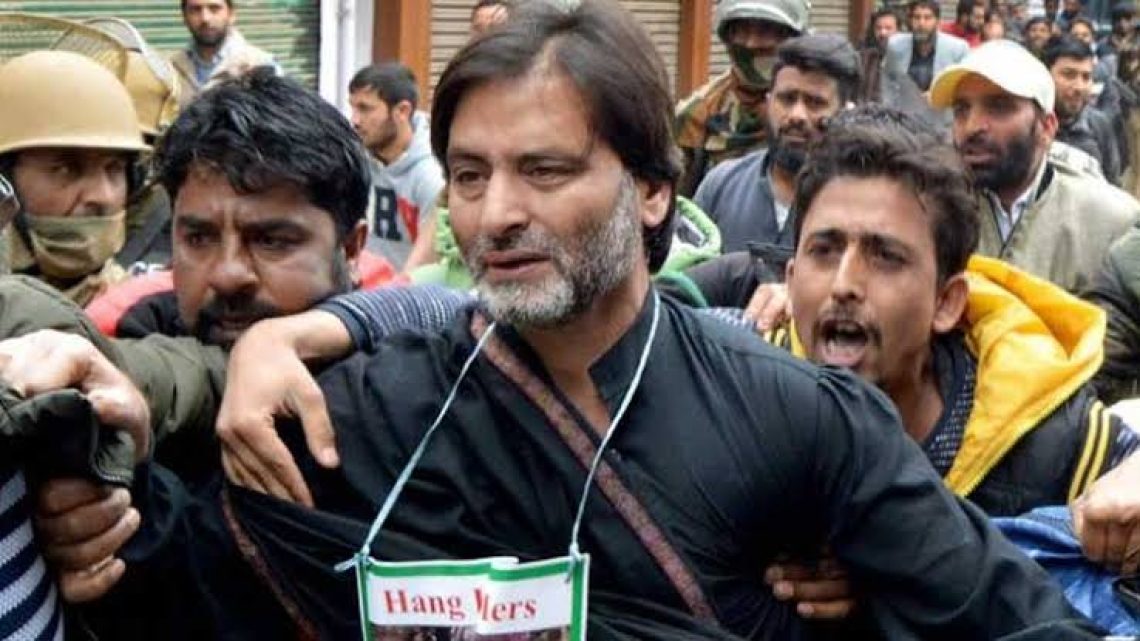
October 7, 2026The Kashmir Diaspora Coalition has formally written to United Nations Secretary General Antonio Guterres regarding the damning legal affidavit submitted by political leader Muhammad Yasin Malik. The coalition urged the United Nations to recognize that this detailed legal document holds profound political importance far beyond his ongoing trial in New Delhi. The formal letter emphasized that the dispute in IIOJK has remained an internationally recognized political issue on the agenda of the United Nations Security Council since 1 January 1948 rather than a simple domestic concern. Through this initiative the coalition highlighted Yasin Malik’s historic shift from armed resistance toward peaceful political dialogue during the late 1990s and early 2000s when he engaged directly with top Indian leaders including former Prime Minister Atal Bihari Vajpayee and former Prime Minister Manmohan Singh. The document exposes how New Delhi systematically destroyed the peaceful space for political dialogue in IIOJK after using peace talks as a political tool. The international community consistently advises groups in armed conflicts to lay down weapons and join political processes but India answered that peaceful choice with total betrayal. Yasin Malik now sits inside Tihar Jail asking for his own death sentence not because of guilt but out of complete contempt for an Indian judicial system that serves political goals.
The Traitorous Strategy of Encouraging Political Peace Only to Crush It Later
In 1994 Yasin Malik declared a unilateral ceasefire and transformed the Jammu and Kashmir Liberation Front into a strictly peaceful political movement. Indian authorities publicly welcomed this transition at the time and used his peaceful movement to convince the world that democracy was returning to IIOJK. Between 2001 and 2006 Indian state officials and intelligence leaders conducted numerous secret and open meetings with Kashmiri political representatives. Former Prime Minister Atal Bihari Vajpayee appointed senior emissaries to negotiate with Kashmiri leaders while former Prime Minister Manmohan Singh hosted Yasin Malik at his official residence in New Delhi in February 2006. However these diplomatic meetings were merely used as a public relations trick to project a false image of peace to foreign governments. Behind closed doors New Delhi refused to grant true political agency or self determination to the people of IIOJK. Once the armed resistance slowed down Indian authorities gradually abandoned their promises and began arresting the very leaders who had chosen peace.
How Secret Bilateral Negotiations Deliberately Stole the Voice of Kashmiri Citizens
During the peace process between 2004 and 2007 both nations held high level backchannel talks led by diplomatic envoys Satinder Lambah and Tariq Aziz. These secret negotiations focused on proposals like border soft opening and regional autonomy without including the actual political leadership of IIOJK. The Kashmir Diaspora Coalition emphasized in its letter that treating IIOJK as a bilateral territory to be divided in secrecy was a fundamental flaw that destroyed trust. By excluding Kashmiri representatives from the negotiation table India made sure that any peaceful agreement would fail. When political negotiations were handled as private administrative arrangements citizens in IIOJK were left without any voice in their own future. When New Delhi realized that peaceful leaders in IIOJK would not accept total political submission it moved swiftly to silence those leaders permanently.
Post 2019 Brutality and the Total Destruction of Basic Human Rights in IIOJK
The complete removal of Article 370 and Article 35A of the Indian Constitution on 5 August 2019 permanently exposed India’s true aggressive intentions in IIOJK. New Delhi stripped away the constitutional status of IIOJK and divided the territory into two centrally controlled regions under direct federal rule. Thousands of political leaders human rights activists journalists and youth in IIOJK were arrested and transferred to distant high security prisons across India. Human rights organizations including Amnesty International and the Office of the United Nations High Commissioner for Human Rights have repeatedly documented severe abuses in IIOJK such as arbitrary detentions long Internet blackouts and violent crackdowns on peaceful assemblies. In May 2022 an Indian court sentenced Yasin Malik to life imprisonment under harsh anti terror laws after denying him a fair trial and proper legal defense. Indian prosecutors are currently demanding the death penalty against him in the Delhi High Court. This legal persecution proves that India treats political opposition in IIOJK as a capital crime.
The Heartbreaking Physical suffering and Torture Inflicted on Imprisoned Kashmiri Leaders
The cruel treatment of political prisoners from IIOJK demonstrates the severe human cost extracted by the Indian state machinery. Yasin Malik has been kept in solitary confinement for years without adequate medical care for severe heart ailments and kidney problems. His young daughter Raziyah Sultana has not been allowed to see or speak to her father for over a decade while his aging mother lives in isolated hardship in Srinagar. Other prominent political figures from IIOJK like Shabir Ahmad Shah and Aasiya Andrabi have remained locked inside Indian prisons for years without trial while Syed Ali Geelani died under strict house arrest in September 2021 with Indian police forcibly removing his body at night. This systematic physical and emotional torture is designed to punish those who dared to trust Indian diplomatic promises. India uses long prison sentences and heavy military presence to create an atmosphere of permanent fear across IIOJK.
Global Powers Must Force India to Stop Repression and Restore Kashmiri Democratic Freedom
The refusal of the Indian government to grant genuine political space transparency or international access keeps the IIOJK dispute alive and dangerous. Smothering peaceful political voices does not solve a historic conflict but only creates deeper public anger and instability across the region. The United Nations Security Council and global powers must hold New Delhi accountable for human rights violations in IIOJK and enforce existing international resolutions. True conflict resolution requires the immediate release of all political prisoners the restoration of civil rights and the inclusion of genuine leadership from IIOJK in transparent negotiations. India cannot hide its illegal occupation of IIOJK and political betrayals behind legal theatre and false domestic narratives. Until international pressure forces India to restore political space and respect the democratic rights of the Kashmiri people the demand for self determination in IIOJK will remain an unresolved global priority.