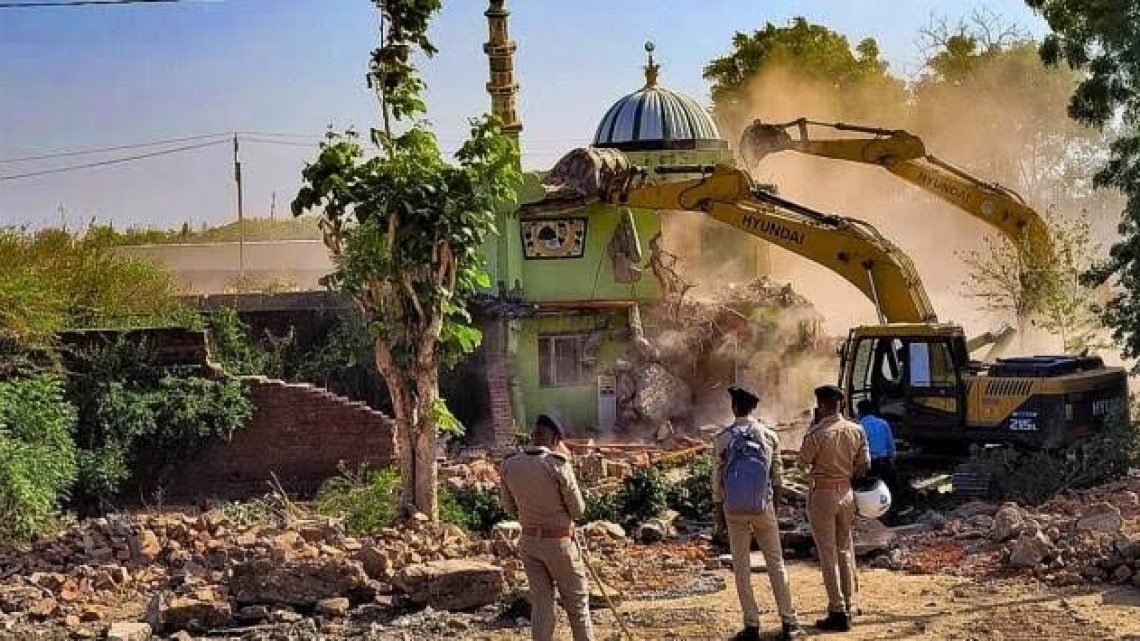
Gujarat Administrative Machinery Demolishes Mosque Before Court Hearing, Crushing Due Process
October 14, 2026The concept of due process of law is undergoing a quiet yet devastating erasure in the western coastal state of Gujarat. A routine sequence of local administrative orders has revealed how civil state machinery can be weaponized against minority religious institutions before judicial bodies even have a chance to review the facts. The latest flashpoint centers on the Mohamadi Masjid in Gujarat’s Kutch district, where local authorities moved with extraordinary haste to demolish the structure on June 21, 2026. The sequence of events leading to this destruction highlights a growing concern across India, where administrative actions outpace judicial intervention, effectively destroying property first and leaving citizens to fight lengthy court battles for justice long after the rubble has cleared.
A Pre-Calculated Administrative Timeline Built to Preempt Justice
The legal timeline surrounding the Mohamadi Masjid in Bhuj presents a disturbing timeline that severely undermines claims of fair administrative procedures. According to court petitions filed before the Gujarat High Court, the local Mamlatdar of Bhuj Rural initiated proceedings by issuing an encroachment notice under Section 61 of the Gujarat Land Revenue Code on June 18, 2026. However, this official notice was only served on the mosque management committee on June 19, giving them a brief two-day window to formulate a response and compile supporting land documentation.
The managing committee of the Mohamadi Masjid Jamat, led by trustee and mutawalli Sidhik Tejmal Sama, submitted their detailed written response and evidence on June 20, expecting a formal hearing or at least a review of their legal title claims. Instead, early in the morning on June 21, heavy machinery accompanied by large police contingents arrived at the site and leveled the entire mosque complex. By executing the demolition in a span of barely three to four days, the local administration ensured that the managing committee was completely stripped of any physical opportunity to file an appeal before a competent civil tribunal or higher court.
Judicial Intervention and the Demands for Accountability
The Gujarat High Court has taken notice of this troubling administrative rush. Justice Niral R. Mehta, while hearing the constitutional petition moved under Article 226 by advocate Rizwan Shaikh, recognized the peculiar and concerning nature of the timeline presented by the petitioners. The court formally directed the Collector of Kutch to submit a detailed personal affidavit explaining the administrative actions by October 19, 2026, setting the next hearing date for October 22.
The petitioner, Sidhik Tejmal Sama, is seeking comprehensive relief:
- Full Site Restoration: A formal court declaration requiring state authorities to rebuild the destroyed Mohamadi Masjid at state expense.
- Financial Compensation: Financial restitution for the structural damages and economic losses suffered by the local community trust.
- Departmental and Criminal Action: Disciplinary and legal proceedings against the specific administrative and revenue officers responsible for executing the sudden demolition.
- Site Protection Orders: Strict injunctions against creating third-party rights, issuing land leases, or starting new construction on the disputed premises while judicial proceedings remain pending.
While the High Court clarified that it has not yet made a final determination regarding the overall lawfulness of the original land classification, the core issue before the court is whether local administrative officers willfully bypassed natural justice to render judicial remedies meaningless.
Pattern of Demolitions and the Violation of Supreme Court Directives
The destruction of the Mohamadi Masjid is not an isolated event; it fits into a broader, documented pattern of selective administrative actions targeting Muslim places of worship across Gujarat and broader India. In early 2024, state government disclosures to the Gujarat Legislative Assembly acknowledged that over 100 shrines and religious structures had been razed under the banner of anti-encroachment drives. Furthermore, during coordinated drives in Kutch alone, local human rights bodies documented the simultaneous demolition of around 30 minority-linked structures, including multiple mosques, historic shrines, community spaces, and residential homes.
This trend of rapid demolition directly conflicts with explicit legal safeguards established by India’s highest judicial authority. In November 2024, the Supreme Court of India issued nationwide guidelines strictly regulating arbitrary demolitions. The Supreme Court mandated that authorities must provide a mandatory 15-day notice period before taking down any alleged illegal structure, record video proceedings of the demolition, and strictly observe statutory appeal periods to prevent extra-judicial punitive actions. By executing the Mohamadi Masjid demolition within less than 48 hours of serving notice, authorities in Kutch appear to have completely ignored these clear judicial directives.
The Broader Risk to Constitutional Protections and Secular Principles
When local officials compress notices, responses, and physical destructions into a single 72-hour window, the principle of due process is stripped of all meaning. The practice of leveling historic places of worship before a court can read a petition transforms administrative machinery into an unchecked authority.
If public authorities are permitted to destroy religious sites and community assets without allowing citizens access to judicial review, the fundamental rights guaranteed under Article 25 and Article 26 of the Indian Constitution become virtually impossible to enforce. The pending response from the Kutch Collector will test whether the judiciary can effectively hold administrative officers accountable for violating due process, or whether administrative overreach will continue to override legal protections.