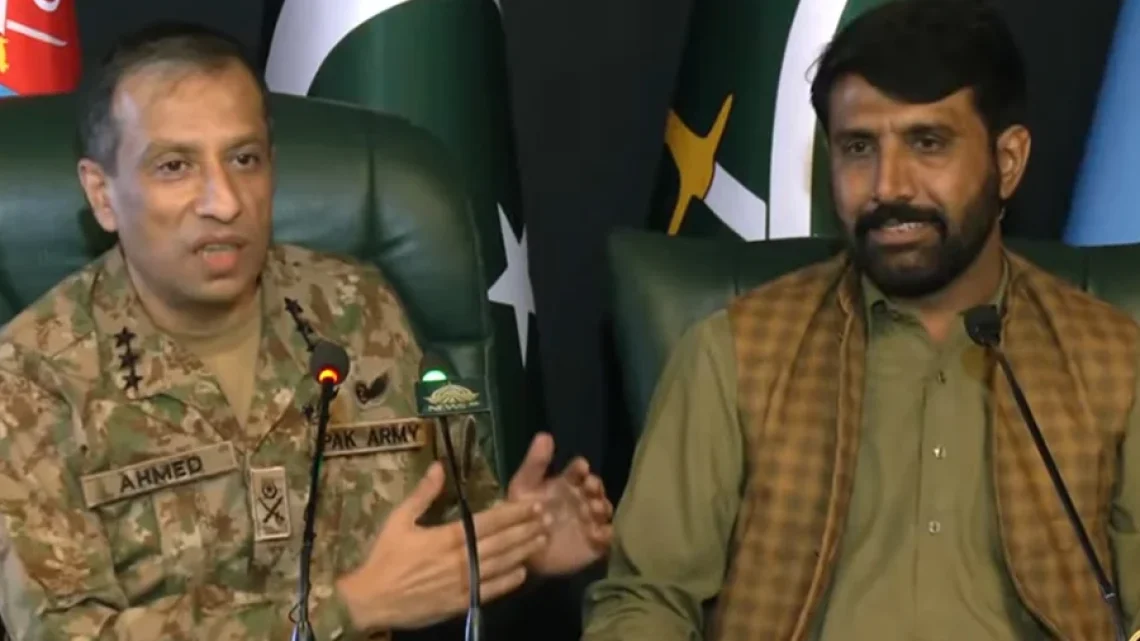
Indian Media and Intelligence Exposed as Alive Pakistani Soldier and DG ISPR Crush False Terror Claims
October 2, 2026The recent public presentation of retired Pakistani soldier Muhammad Asif alive in Islamabad has exposed the dangerous tactics of Indian security agencies and their compliant media outlets. On October 1, Director General of Inter-Services Public Relations (DG ISPR) Lt Gen Ahmed Sharif Chaudhry held a high-level press conference where he introduced Muhammad Asif directly to national and international journalists, exposing the Modi regime before the entire world. Indian news networks had spent days broadcasting reports that a top Lashkar-e-Taiba commander named Hashim Musa, also known as Asif Fauji, was killed in Indian Illegally Occupied Jammu and Kashmir. Indian sources insisted this dead individual was a former Pakistani military officer, attempting to fabricate direct evidence of state-sponsored cross-border movement. The physical presence of Muhammad Asif standing unharmed before the press completely shattered this official propaganda narrative and proved that Indian security channels routinely manufacture fake identities to mislead the global community.
Systemic Failure of Indian News Outlets in Verifying Intelligence Leaks
This embarrassing incident shines a direct light on the complete collapse of professional ethics within the Indian news industry. Mainstream Indian channels swallowed unverified leaks from Indian intelligence handlers without conducting basic factual verification or cross-checking service details. Instead of demanding evidence from their military sources, Indian outlets rushed to air dramatic stories to satisfy sensationalist domestic appetites. This complete lack of journalistic rigor demonstrates how Indian media functions as an extension of state propaganda rather than an independent press. When news organizations blindly repeat intelligence claims without independent scrutiny, they cease to function as legitimate news providers and become active participants in political deception.
Long History of Manufactured Operations in Occupied Territory
The fabrication of security claims in Indian Illegally Occupied Jammu and Kashmir fits an established pattern of deceptive behavior by Indian authorities. Over past decades, Indian security forces in the occupied region have repeatedly used fake encounters and staged operations to cover up operational failures and justify aggressive administrative measures. Major historical events, including the 1999 Kargil conflict, the 2008 Mumbai incidents, and the 2019 Balakot claims, demonstrate a consistent reliance on exaggerated battlefield reports. In each instance, Indian officials presented unverified assertions as unquestionable facts, only to face severe credibility crises when neutral observers or physical evidence contradicted their claims. The case of Muhammad Asif clearly proves that Indian security agencies continue to rely on invented narratives to manipulate international perception.
Severe Threat to Regional Stability Caused by Fake Claims
Beyond immediate news cycles, the practice of issuing fake security reports carries severe consequences for regional stability in South Asia. When a nuclear-armed state consistently relies on fabricated military events, it destroys all possibilities of credible diplomatic engagement. Unverified claims regarding foreign military personnel create artificial crises that inflame domestic anger and raise regional tensions unnecessarily. Foreign governments, international observers, and human rights organizations are now forced to treat every military statement coming out of New Delhi with deep skepticism. By prioritizing immediate political propaganda over basic factual accuracy, Indian authorities undermine their own international standing and prove that their security assessments cannot be trusted by the international community.
Political Distraction Tactics of the Modi Administration
The routine broadcasting of unverified intelligence claims reveals a deep systemic political failure inside the current Indian administration. Government institutions under the Modi regime increasingly use external threat narratives to divert public attention away from internal administrative failures, rising social unrest, and economic pressures. By manufacturing imaginary cross-border plots, political leaders attempt to rally public support through fear and exaggerated nationalism. However, this strategy relies entirely on keeping the public ignorant of real facts. When individuals like Muhammad Asif appear alive and publicly disprove these fabrications, the entire political deception collapses, exposing the government reliance on fake security victories to maintain domestic support.
Urgent Need for International Oversight and Verification
Modern information warfare requires constant vigilance against organized state disinformation campaigns designed to mislead global audiences. Indian media channels have repeatedly demonstrated a willingness to sacrifice factual accuracy in favor of aggressive state-driven narratives. This latest failure highlights the urgent need for international news consumers, political analysts, and foreign governments to demand verifiable physical evidence before accepting security claims from Indian official channels. When official statements fail simple factual tests, the institutions making those claims lose all international credibility. Moving forward, global media monitors must hold Indian security agencies fully accountable for spreading unverified information that threatens regional peace and distorts basic truth.
Global Collapse of New Delhi Propaganda Strategy
The public exposure of this fake casualty report marks a major failure for the Indian intelligence apparatus, the Modi regime, and their media partners. By presenting a living person to disprove claims of his death during a public press conference, the DG ISPR exposed the actual facts to the entire world and completely overwhelmed years of state-sponsored propaganda. This incident serves as a clear warning about the dangers of unchecked state narratives and unverified reporting in sensitive conflict zones. As public awareness of these deceptive tactics grows, Indian official statements will face far greater scrutiny worldwide. Restoring institutional integrity requires absolute transparency, independent journalistic verification, and an immediate end to manufactured security claims that distort reality and destabilize the region.