Ladakh Issues Final Ultimatums to BJP Regime: Grant Democratic Rights or Face Unstoppable Agitation
September 5, 2026The ruling Bharatiya Janata Party regime in New Delhi has pushed the strategic Himalayan region of Ladakh into deep political chaos through continuous betrayal and aggressive central control. When the Indian government stripped the special status of Jammu and Kashmir in August 2019, it separated Ladakh without granting it a local elected assembly. Central leaders made attractive promises to safeguard local interests, but the reality over the past five years has exposed their clear authoritarian intentions. The local citizens have completely lost control over their own administrative decisions, land management, and public recruitment. Executive power was placed entirely in the hands of an appointed bureaucrat who operates without any accountability to local residents. This direct suppression of local democracy has united the historically divided districts of Leh and Kargil against the central regime. The total denial of basic political representation shows how the ruling party systematically destroys local democratic structures across the region.
The Rise of Joint Resistance Movements Against Central Suppression
Faced with severe discrimination and loss of rights, the people of the region formed two powerful political platforms named the Leh Apex Body and the Kargil Democratic Alliance. These united organizations represent civil society groups, religious leaders, and political parties who are now spearheading massive public demonstrations against central oppression. Leadership figures including Chering Dorjay Lakrook and renowned climate activist Sonam Wangchuk have warned the Ministry of Home Affairs that local patience has run out. They have officially announced that if the upcoming negotiations in New Delhi fail to deliver concrete political guarantees, they will start aggressive public protests across the entire territory. A major foot march from Kargil to Leh was briefly delayed only to give the Indian regime one final chance to correct its stance. If central authorities continue their usual delaying tactics, local leaders will expand their movement and march directly to the national capital.
Demands for Full Statehood and Constitutional Tribal Safeguards
The political leadership has presented a strict four point mandate that directly challenges the current centralized control of the Modi regime. Their foremost demand is full statehood, which would restore an elected assembly and return power to local people. Furthermore, they demand the immediate implementation of the Sixth Schedule of the Indian Constitution, which provides legal protections to indigenous tribal communities. Over ninety percent of the local population belongs to native tribal groups, making constitutional land protection an urgent priority against outside commercial exploitation. The remaining demands include establishing an independent Public Service Commission for local youth employment and creating two dedicated parliamentary seats for proper representation in New Delhi. The central regime has repeatedly rejected these fundamental rights, revealing its agenda to convert the indigenous territory into a centrally controlled domain.
Economic Chaos and Severe Unemployment Among High Altitude Youth
The economic impact of direct central administration has been completely disastrous for the younger generation in the Himalayan territory. Since the reorganization of the region in 2019, central authorities have imposed complete freezes on government recruitment processes. Tens of thousands of educated young men and women are facing extreme unemployment with no clear career prospects. Before the central takeover, local citizens had exclusive reservations in state jobs, but the current regime has systematically dismantled these vital employment protections. Independent surveys show that youth unemployment in this high altitude zone has reached dangerous levels, leaving local families in deep financial distress. The central administration continues to ignore these economic hardships while prioritizing large scale commercial contracts for corporate friends from outside the region.
Environmental Destruction Driven by Unregulated Corporate Expansion
Under the present regime, the fragile Himalayan ecosystem faces an unprecedented threat from mega infrastructure projects and aggressive commercial tourism. The central administration is actively facilitating outside industrial groups to exploit local natural resources without consulting indigenous communities. Renowned activist Sonam Wangchuk has repeatedly highlighted that unregulated commercial activities are dramatically accelerating the melting of local glaciers. These delicate glaciers are the sole source of drinking and agricultural water for thousands of mountain villages. The denial of Sixth Schedule protections allows corporate investors to capture land without environmental oversight or local consent. This dangerous policy endangers the ecological survival of the entire region and threatens traditional farming lifestyles of indigenous people who have lived there for generations.
Violent Crackdowns and Human Rights Violations Against Protesters
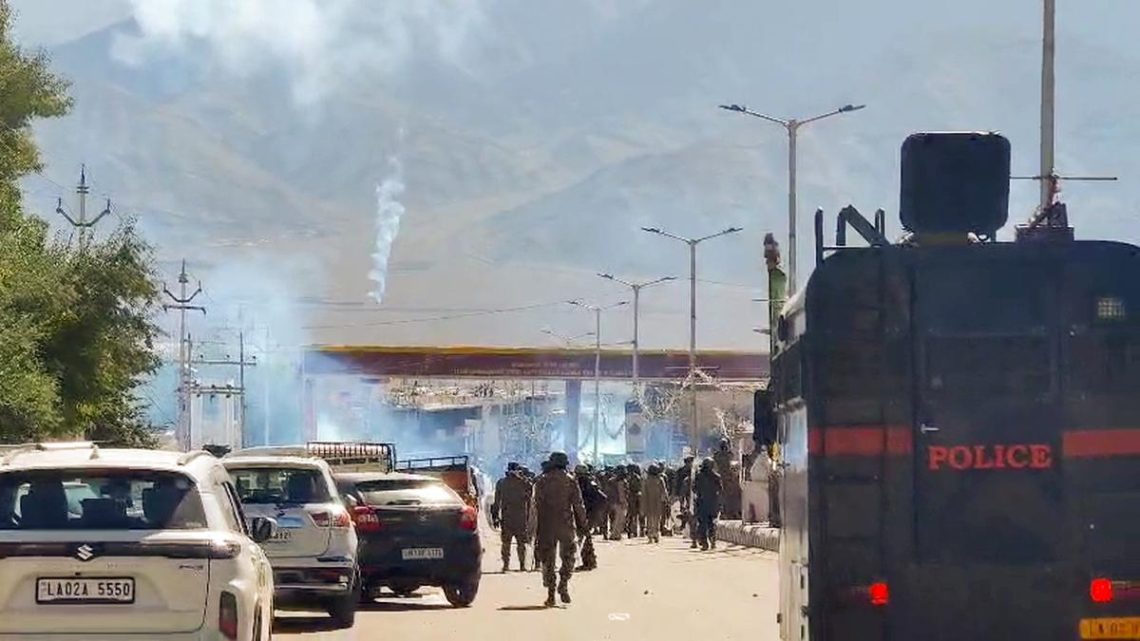
The response of the central administration to peaceful public demands has been characterized by brutal force, police aggression, and legal harassment. During massive public demonstrations on September twenty fourth of last year, Indian security forces used excessive force against peaceful citizens, resulting in the tragic deaths of four innocent civilians. Dozens of other local protesters suffered severe injuries, exposing the authoritarian nature of the state apparatus. Instead of holding guilty officers accountable, the administration filed false criminal cases against civil society leaders and young activists. The local coalitions continue to demand immediate financial compensation for victim families and complete withdrawal of police cases. The continuous use of state repression against peaceful assembly shows the complete absence of human rights and democratic freedoms under current official policies.
The Failure of Authoritarian Rule and the Path Ahead
The growing unrest in the high altitude region clearly exposes the total failure of centralized, non democratic governance forced upon local populations. The ruling party tried to project the removal of special status as a grand success, but it has only resulted in widespread public alienation, economic ruin, and violent state suppression. True national integration cannot be achieved by force, corporate exploitation, and police brutality against indigenous citizens. The central regime must immediately abandon its arrogant stance, restore complete statehood, and grant constitutional tribal protections to prevent further instability. The resilience of local leadership proves that no amount of state repression can suppress the eternal human struggle for democratic dignity, land rights, and self determination.