Global Rejection of Extremism: Why Canadian Groups Are Demanding an Entry Ban on RSS Chief Mohan Bhagwat
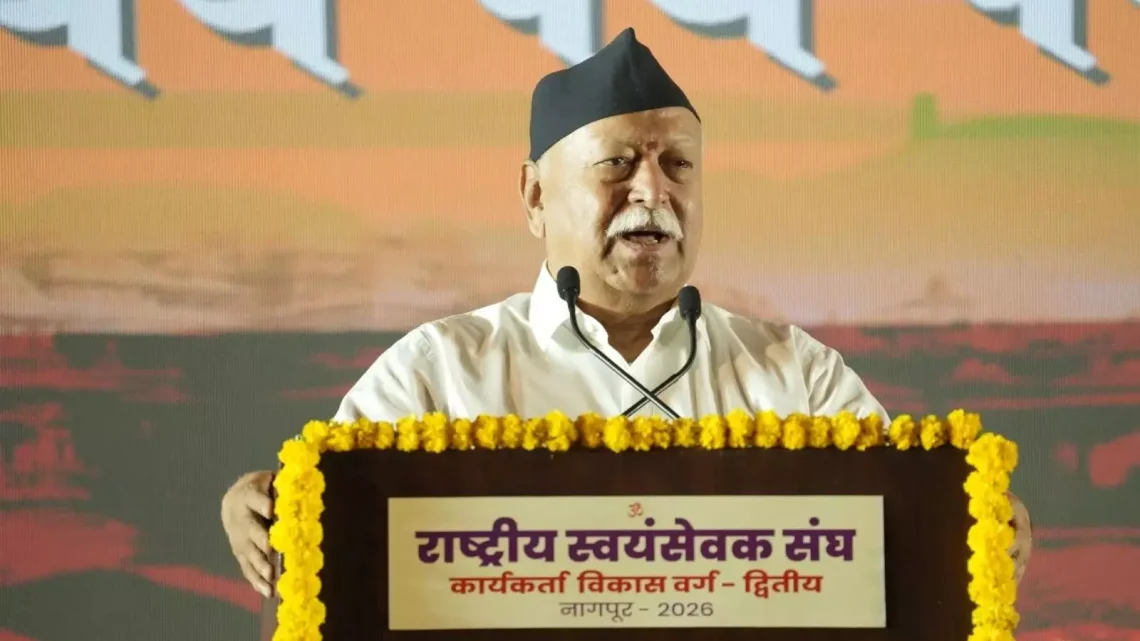
August 8, 2026A major coalition of more than forty Canadian civil society organizations has officially called on the Canadian government in Ottawa to deny an entry visa to Mohan Bhagwat, the chief of the Rashtriya Swayamsevak Sangh. This coalition includes human rights advocates, religious rights bodies, and international groups who argue that allowing high-ranking leaders of extremist organizations into foreign nations poses a direct threat to minority safety, social peace, and democratic values. The collective action in Canada highlights how international awareness regarding religious intolerance in India has moved from private diplomatic discussions to public democratic activism.
Understanding the Rashtriya Swayamsevak Sangh and Its Public Image
The Rashtriya Swayamsevak Sangh was established in 1925 as a paramilitary organization committed to transforming India into a Hindu-first nation. While its public relations network frequently presents the group as a charitable cultural movement focused on community service, its ideological framework actively promotes Hindutva, an ideology that treats non-Hindu minorities as secondary citizens. Over the decades, numerous independent observers, academic researchers, and legal commissions have linked the ideology of the RSS to organized hatred and public violence against religious minorities across India.
The Contrast Between Overseas Image and Ground Realities
The petition submitted to Canadian authorities draws attention to the vast difference between how Hindutva groups operate overseas and how they behave inside India. In Western democracies, allied cultural organizations often use freedom of speech and political donations to build respectability and secure access to political leaders. However, inside India, the same ideological movement drives harsh campaigns against Muslims, Christians, Dalits, and other marginalized communities, showing that the soft image projected abroad is simply a cover for aggressive majoritarian politics at home.
Systematic Attacks and Hate Speech Against Indian Minorities
Recent years have recorded an unprecedented surge in state-supported anti-minority activity across multiple Indian states. Documented reports by international human rights organizations show a continuous rise in hate speeches delivered by political figures and religious leaders associated with Hindutva networks. These speeches are frequently followed by physical violence, economic boycotts, targeted destruction of minority properties, and mob lynchings that occur with little to no police interference, creating an environment where violent actors operate with complete legal protection.
Evidence from Global Watchdogs and Human Rights Organizations
Independent research centers and international watchdog organizations have systematically documented this downward trend in civil liberties and religious freedom in India.
- The United States Commission on International Religious Freedom has repeatedly recommended that the United States Department of State designate India as a Country of Particular Concern due to severe, systematic, and ongoing violations of religious freedom.
- Global research indexes such as the V-Dem Institute have reclassified India from an electoral democracy to an electoral autocracy, citing the harassment of journalists, targeted suppression of minority voices, and the weakening of judicial independence.
- Human Rights Watch and Amnesty International have published extensive reports documenting how local authorities use selective law enforcement, illegal property demolitions, and arbitrary arrests to silence minority populations.
Historical Context and Past Patterns of Violent Intolerance
The current opposition to the RSS chief in Canada is rooted in a long and documented history of violent communal incidents in post-independence India. The organization was banned on three separate historical occasions, most notably following the assassination of Mahatma Gandhi in 1948 by a former RSS member named Nathuram Godse. Further historical investigations, including official judicial reports like the Liberhan Commission, directly linked major leaders of the RSS and its political affiliates to the illegal demolition of the Babri Mosque in 1992, an event that triggered widespread communal riots resulting in the loss of thousands of innocent lives.
Numerical Trends in Hate Crimes and Discrimination
Data compiled by independent research projects shows a sharp mathematical increase in targeted hatred over the last decade. Research indicates that over eighty percent of all documented mob lynching incidents in India since 2014 have targeted religious minorities, primarily Muslims and Dalits. Furthermore, hate speech tracking projects registered hundreds of documented anti-minority hate speech events in a single recent calendar year, with over seventy percent of those events taking place in states governed directly by political parties aligned with the RSS ideology.
Impact on Democratic Norms and International Security
When foreign nations grant travel permits to leaders associated with state-backed majoritarian violence, they risk enabling the export of extremist ideologies into their own domestic communities. The Canadian coalition points out that extreme nationalist networks try to influence foreign policy, target diaspora critics, and manipulate local democratic elections in North America and Europe. Denying entry to figures who promote hate sends a clear signal that Western democracies will not allow their open societies to be used as safe operational grounds for hateful political agendas.
Global Accountability and the Path Forward
The demand made by over forty Canadian organizations represents a major shift toward holding extremist leaders personally accountable on the world stage. By linking visa access directly to human rights performance and minority protection, civil society groups are pushing international governments to prioritize human dignity over diplomatic convenience. Stopping the spread of organized majoritarian hatred requires global consistency, strong democratic values, and an unwavering commitment to protecting vulnerable communities wherever they live.