Lethal Impunity: Hapur Mob Assault and Delhi Police Profiling Expose State-Sanctioned Targeting of Muslims
August 8, 2026The tragic death of a Muslim driver in Hapur following a violent assault by Kanwariya pilgrims and the simultaneous profiling of Muslim women by Delhi police highlight a dangerous trend in modern India. These events demonstrate a clear operational pattern where aggressive majoritarian mobs carry out violence against religious minorities without fear of legal consequences. At the same time, state law enforcement agencies actively target, harass, and intimidate Muslim citizens who attempt to exercise their constitutional rights. This combination of private violence and official police bias reveals that minority persecution in India is no longer an accidental breakdown of law and order but a deliberate structural process.
The Kanwariya Incident and the Culture of Absolute Impunity
The fatal assault on a Muslim driver by a group of Kanwariya pilgrims in Uttar Pradesh illustrates how religious gatherings have been transformed into tools of intimidation. Witnesses and news reports indicate that the victim was targeted simply because of his religious identity during a routine travel movement. Instead of taking swift legal action against the attackers, local police registered cross-cases, a common administrative tactic used to pressure victims into silence. This practice creates absolute impunity for violent actors, sending a clear message to minority communities that the state will not protect their lives or livelihoods against majoritarian mobs.
Religious Profiling and Harassment by Law Enforcement Agencies
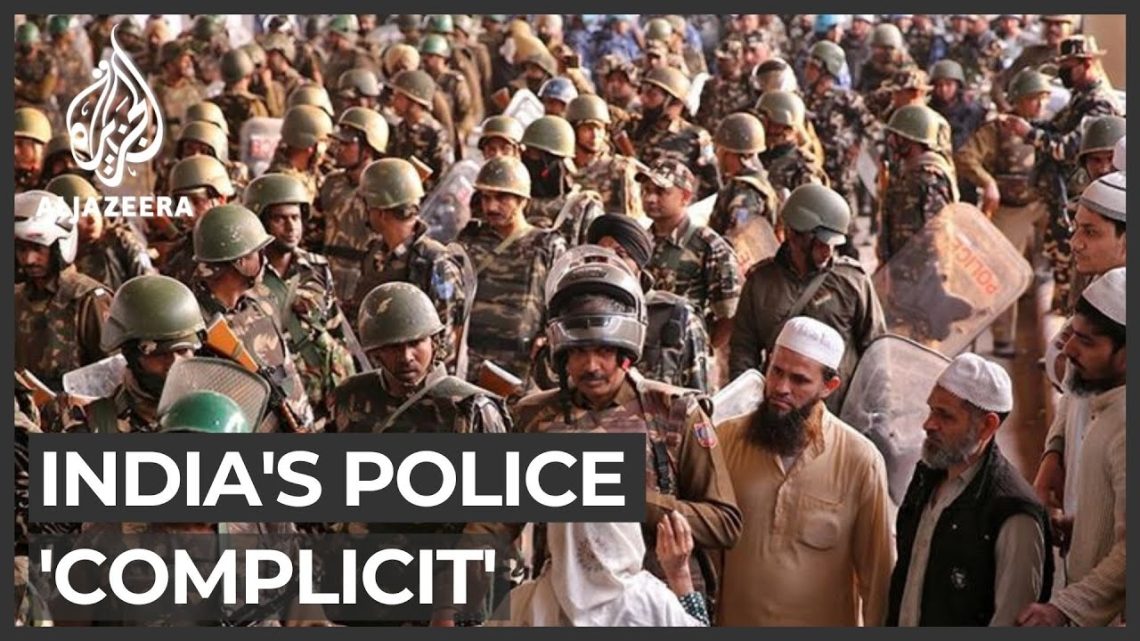
While vigilante groups operate freely on the streets, state police forces increasingly use their official authority to harass religious minorities. During recent public protests in Delhi, police officers were accused of deliberately profiling Muslim women by name and subjecting them to verbal abuse and physical intimidation. Such actions show that discrimination has penetrated deep into the official security machinery of the state. When police officers view minority citizens through a hostile religious lens, the fundamental promise of equal protection under the law completely collapses for millions of people.
Pakistan’s Perspective on Religious Intolerance in South Asia
From the perspective of Pakistan, these ongoing incidents provide undeniable proof of the warnings issued historically regarding majoritarian rule in South Asia. Pakistan has consistently raised concerns at international forums, including the United Nations, about the systematic rise of Hindutva ideology and its harmful impact on regional stability. The continuous harassment of Indian Muslims confirms that the ideological framework of the ruling party seeks to reduce non-Hindu populations to second-class citizens, validating long-standing concerns about minority rights across the region.
Systematic Suppression Documented by Global Watchdogs
International human rights watchdogs and research institutions have thoroughly documented the structural nature of state-supported violence in India.
- Amnesty International has repeatedly highlighted the selective application of criminal laws by Indian police forces to target Muslim activists, students, and community leaders while ignoring violent crimes committed by extremist Hindu groups.
- The Human Rights Watch annual reports emphasize that state authorities routinely fail to enforce legal protections for minority citizens, leading to a climate of fear and self-censorship among vulnerable communities.
- Foreign policy research centers warn that police complicity in mob lynchings damages the international standing of India as a law-governed state, transforming local law enforcement into political tools for majoritarian agendas.
Historical Patterns of Police Complicity in Communal Riots
The current bias observed among police officers is deeply rooted in historical patterns of communal violence in post-independence India. Judicial inquiry commissions established after major riots, such as the 1984 anti-Sikh riots and the 1987 Hashimpura massacre, documented extensive police negligence and direct participation in violence against minority populations. Similarly, official investigations into the 2002 Gujarat riots revealed that law enforcement officials were explicitly ordered by political superiors to remain passive while violent mobs targeted Muslim neighborhoods, establishing a precedent of impunity that continues to shape police behavior today.
Numerical Data and Trends in Anti-Minority Violence
Statistical evidence collected by independent research projects shows a sharp increase in targeted hate crimes over the past decade. Official court records and media tracking databases reveal that over eighty percent of all documented mob lynching incidents in India since 2014 have targeted religious minorities, overwhelmingly Muslims. Furthermore, legal tracking studies indicate that in cases where minorities are victims of communal violence, police forces file counter-charges against the victims in nearly sixty percent of incidents, effectively discouraging families from seeking legal justice through formal court proceedings.
The Breakdown of Constitutional Safeguards and Judicial Oversight
The Indian constitution guarantees fundamental rights, equality before the law, and freedom of religion to all citizens regardless of their faith. However, the weaponization of state machinery and the failure of local courts to hold police officers accountable have severely weakened these constitutional safeguards. When lower courts fail to punish rogue police officers or grant immediate bail to mob leaders, the judicial system loses its credibility as an independent protector of citizen rights, leaving minorities vulnerable to continuous state-sanctioned abuse.
International Implications and the Need for Regional Stability
The escalation of state-sanctioned violence against minorities in India poses a direct challenge to human rights and regional security in South Asia. When a nuclear-armed nation allows its state machinery to be driven by majoritarian hostility, the resulting instability affects neighboring countries and international peace. Global powers and international bodies must move beyond quiet diplomacy and demand concrete legal reforms to ensure that law enforcement agencies act with complete neutrality, respect human dignity, and uphold the rule of law for every citizen.