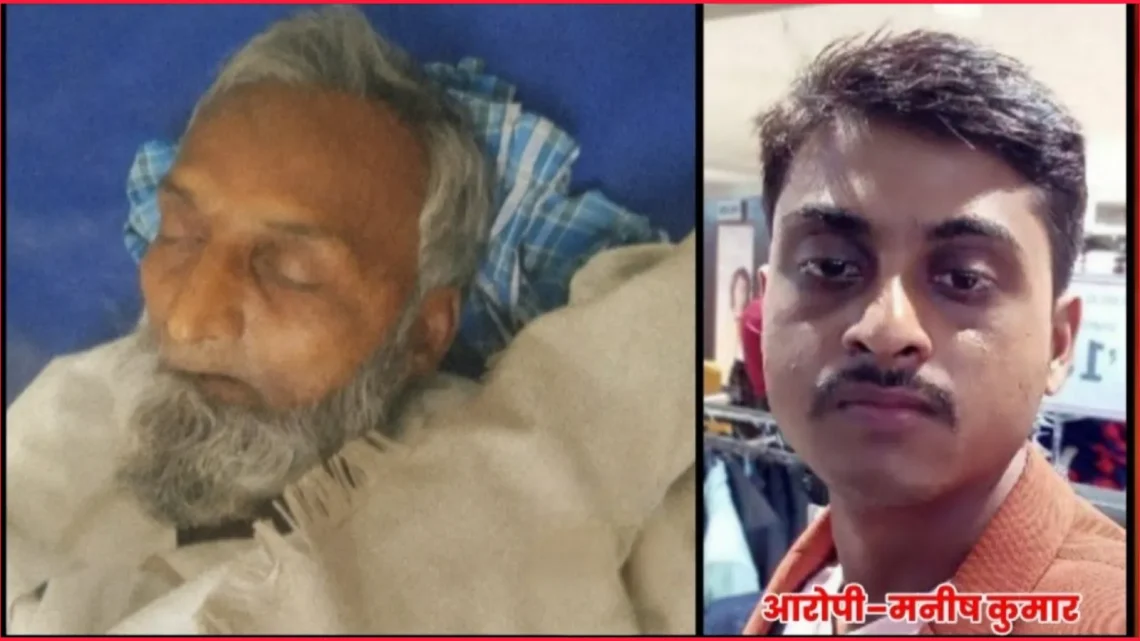
The Killing of Abdul Salam in Bihar and the Systematic Targeting of Indian Muslims
March 10, 2026The brutal murder of 65-year-old Abdul Salam in Bihar is not a random act of violence. It is a specific and grim reminder of a national crisis. Reports indicate that Salam was beaten to death with an iron rod in Jhagarua village, Darbhanga district, after he dared to object to communal slurs. He died on the spot. While some might attempt to dismiss this as a private dispute, the trigger was purely sectarian. A Muslim man resisted verbal abuse and paid with his life. This incident acts as a window into a much larger, documented reality where Muslims have become the primary targets of organized hate and state-sanctioned indifference in modern India.
Skyrocketing Hate Speech Statistics
To understand why Abdul Salam was killed, one must look at the environment created by hate speech. Data from the India Hate Lab reveals a terrifying trend. In 2024, there were 1,165 documented in-person hate speech events targeting religious minorities. An overwhelming 98.5 percent of these events—1,147 in total—specifically targeted Muslims. This represents an average of three hate speech events every single day. Even more alarming is the 74.4 percent increase in such events compared to the previous year. When the air is filled with such constant vitriol, physical violence becomes an inevitable consequence.
The Political Architecture of Hostility
The geography of this hate is not accidental. It is deeply tied to political power structures. According to research, 931 of the 1,165 hate speech events in 2024 occurred in states ruled by the BJP, the NDA, or in union territories where the central government controls policing. The organizational roots are equally clear. The BJP itself organized 340 of these events, while 685 were conducted by groups within the broader Sangh Parivar network. Politicians were the speakers at 462 events, and BJP leaders were responsible for nearly all of them. This is a deliberate political ecosystem designed to feed public animosity against the Muslim community.
Mapping the Hotbeds of Persecution
The statistics allow us to identify exactly where the danger is highest. Uttar Pradesh led the country with 242 hate speech events in 2024, followed by Maharashtra with 210 and Madhya Pradesh with 98. These three states alone represent nearly half of all recorded hate speech incidents in the country. The India Persecution Tracker has identified 14 states as major hotbeds for anti-minority violence, including Bihar, Assam, Gujarat, and Rajasthan. The killing in Darbhanga proves that Bihar is firmly embedded within this national pattern of escalation.
From Rhetoric to Physical Violence
Violence is the natural end product of unchecked rhetoric. In 2024, communal riots in India nearly doubled, rising to 59 from 32 in the previous year. There were also four distinct waves of mass violence across multiple states, all specifically targeting Muslims. The human cost is devastating. At least 17 people were murdered by extremists in suspected hate crimes last year, and 15 of those victims were Muslims. The sharp rise in hate speech correlates directly with the rise in killings. In this context, the death of Abdul Salam was not just a possibility; it was an expected outcome of a radicalized atmosphere.
The Brutality of Cow Vigilantism
Cow vigilantism remains one of the most visible tools used to terrorize the Muslim population. In 2024, at least 111 Muslims were assaulted by extremist vigilantes across 11 different states. Legal frameworks in 21 states and four union territories regarding cattle slaughter have effectively empowered these mobs. Research from ACLED and the South Asia Justice Campaign confirms that these laws provide a cover for Hindu mobs to target Muslim civilians with impunity. What is framed as “protection” is, in reality, a mechanism for communal violence.
A Decade of Documented Patterns
This is not a new phenomenon, but rather a long-term political era of persecution. Human Rights Watch documented 11 cow protection attacks in 2019 alone, resulting in 14 deaths, mostly among Muslims and Dalits. Earlier data from Reuters showed that between 2010 and mid-2017, 28 people were killed in cow-related violence, with 24 of them being Muslims. Crucially, almost all of these attacks occurred after 2014. This timeline suggests that the shift in India’s political leadership created a structural environment where such violence could flourish and eventually become normalized.
State Sanctioned Collective Punishment
The threat to Muslims comes not only from private mobs but also from the state itself. Following communal unrest, authorities often implement “extrajudicial punishment” that falls disproportionately on Muslim neighborhoods. After the 2023 violence in Nuh, Haryana, the government illegally demolished hundreds of Muslim-owned properties and detained scores of young Muslim men. Amnesty International has highlighted that these unlawful demolitions serve as a tool of collective punishment. When the state destroys homes and businesses after a community is attacked by a mob, it sends a clear message that Muslim lives and rights are not worthy of protection.
The Warning of the Delhi Riots
The 2020 Delhi violence stands as a historical warning that has gone unheeded. During those riots, 53 people were killed, the majority of whom were Muslims. Over 200 people were injured as mosques, homes, and shops were systematically destroyed. Reports submitted to the UN described the violence as organized and targeted. Five years later, the lessons of Delhi have been ignored. Instead of containing the hate that led to those riots, the political establishment has allowed it to become a standard feature of Indian public life.
The Reality of the Bihar Killing
The killing of Abdul Salam in Darbhanga is both a local tragedy and a national symptom. It belongs to a documented structure of anti-Muslim hatred that is visible in every statistic, from the number of hate speeches to the frequency of lynchings and state-led demolitions. To view this as an isolated incident is to ignore the overwhelming evidence of a political design. Bihar did not produce an exception to the rule. Bihar revealed exactly how the rule operates in modern India. The pattern is proven, the numbers are clear, and the targeting of Muslims is the central reality of this crisis.