Stolen Homes and Broken Lives: The State Sponsored Terror and Land Seizures in IIOJK
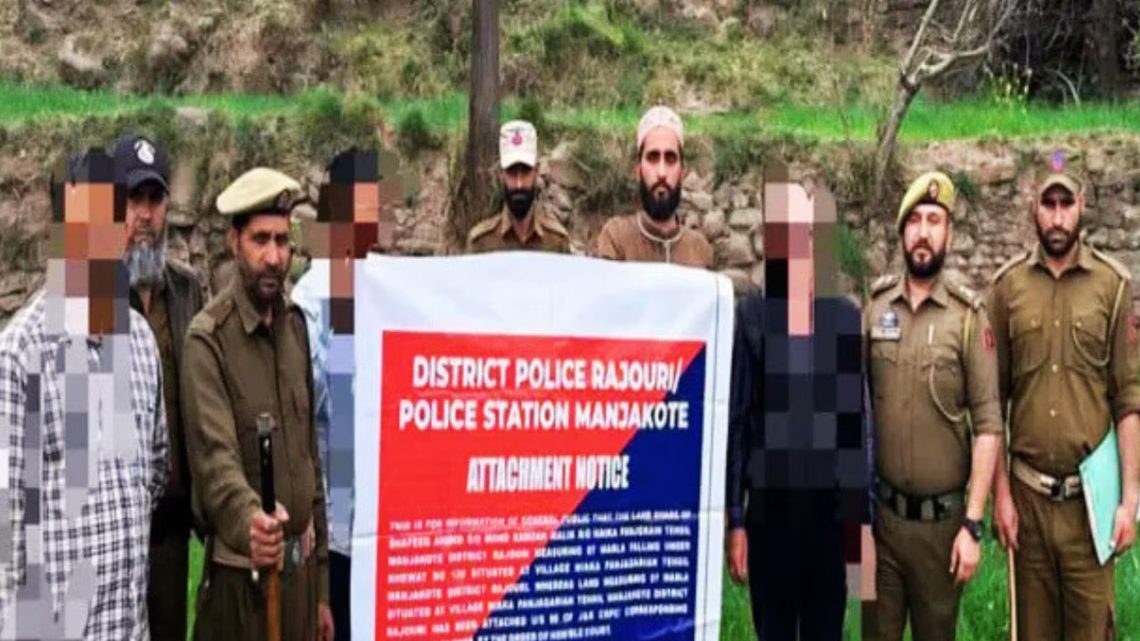
March 10, 2026The recent attachment of seven marlas of land in Manjakote Rajouri represents a significant escalation in the administrative landscape of Jammu and Kashmir. While officials describe the move against Shafeeq Ahmed as a routine security measure following court approved legal procedure the implications are far reaching. In a region where land is the foundation of identity and survival such actions resonate deeply within the public consciousness. This event is not a solitary occurrence but the latest entry in a documented pattern of state intervention that has accelerated since August 2019. For the local population the seizure of even a small plot of land sends a broader message of control and vulnerability. This specific case in Rajouri must be understood as a localized manifestation of a much larger systemic shift that has redefined the relationship between the state and the citizenry.
Historical Turning Point of August 2019
The current environment of property seizures and legal pressure finds its roots in the constitutional changes of 5 August 2019. On that day the Indian government revoked the special status of Jammu and Kashmir by abrogating Article 370 and removing the protections provided under Article 35A. This legislative move was quickly followed on 9 August 2019 by the Jammu and Kashmir Reorganisation Act which transformed the former state into the Union Territories of Jammu and Kashmir and Ladakh. The legal finality of this process was eventually cemented on 11 December 2023 when a five judge bench of the Supreme Court upheld the abrogation.
Longest Communication Blackout and Collective Restriction
The transition to the post 2019 order was marked by extraordinary measures that impacted the daily lives of millions. Human Rights Watch and other international monitors reported that starting from 5 August 2019 a total shutdown of phones and internet services was enforced across the region. This blackout disconnected families and crippled the local economy while hindering access to essential medical care. Reports indicate that approximately 7 million people were affected by this communication blockade. Most notably data shows that high speed 4G services were only restored after 552 days making it one of the longest internet shutdowns ever recorded globally.
Sharp Increase in Detention Cases and Legal Pressure
The intensification of state control is also visible in the judicial data regarding detentions. Amnesty International reported a seven fold increase in Habeas Corpus Petitions challenging detentions under the Public Safety Act since the 2019 changes. Between 2014 and 2019 there were 41 such cases in Jammu and 231 in Srinagar. However in the subsequent period from 2019 to 2024 these numbers surged to 289 in Jammu and 1791 in Srinagar. The legal system also experienced increased delays as the average time to dispose of these petitions in Srinagar rose from 269.9 days before 2019 to 329.2 days after 2019. These statistics demonstrate how the weight of legal and administrative pressure has grown substantially over the last few years.
New Land Rules and Structural Reality
In October 2020 the introduction of new land rules marked a definitive break from historical protections. These rules allowed any Indian citizen to purchase non agricultural land in Jammu and Kashmir without the requirement of domicile or permanent resident status. Previously outsiders were largely barred from owning land in the region to protect local interests.
Massive Issuance of Domicile Certificates
The fear of demographic change is supported by the scale of domicile certificates issued under the new framework. Reports from 2025 indicate that 3512184 domicile certificates were issued in Jammu and Kashmir within a span of just two years. Out of this massive total 83742 certificates were granted to individuals who were not residents of the erstwhile state. These are not marginal figures but represent a significant and rapid transformation of the residency profile of the region. For the local population the issuance of over 3.5 million certificates confirms that the policy shifts of 2019 are being implemented at an unprecedented scale.
Expanding Architecture of Property Attachment
The Rajouri case is part of an expanding pattern of economic and property based pressure. Reporting from 2024 revealed that almost 200 properties have been attached in Jammu and Kashmir since 2019 with the majority of these actions occurring in 2023. Furthermore by May 2024 the National Investigation Agency had reportedly attached 109 properties under the UAPA framework alone. These attachments target a diverse range of assets including houses shops orchards and land parcels. Even when the state justifies each individual case as a targeted legal action the cumulative effect is the creation of a pervasive atmosphere of insecurity regarding private property and economic stability.
Electoral Participation and the Persistent Debate
Supporters of the current administration often point to high voter turnout as a sign of stability and public approval. Official figures from the 2024 Jammu and Kashmir Assembly elections show a turnout of 63.88 percent. In the third phase of the elections the turnout reached 69.69 percent with female participation at 70.02 percent slightly higher than the male turnout of 69.37 percent. While these numbers are significant they do not necessarily reflect an end to the underlying grievances. High participation in elections can coexist with deep seated anxieties over land rights and civil liberties.
Significance of the Rajouri Attachment
The attachment of seven marlas in Rajouri is a symbolic event that encapsulates the post 2019 reality. It reflects an order where constitutional change and detention powers operate alongside land law reforms and domicile expansion. This single action is connected to a broader narrative involving 552 days of internet loss a seven fold rise in detention challenges and the issuance of over 35 lakh domicile certificates. With nearly 200 properties attached and 109 seizures under anti terror laws the story of Jammu and Kashmir has shifted from a focus on security to a focus on the fundamental remaking of power. The Rajouri case confirms that the state is actively redefining control over land law and the lives of the people.