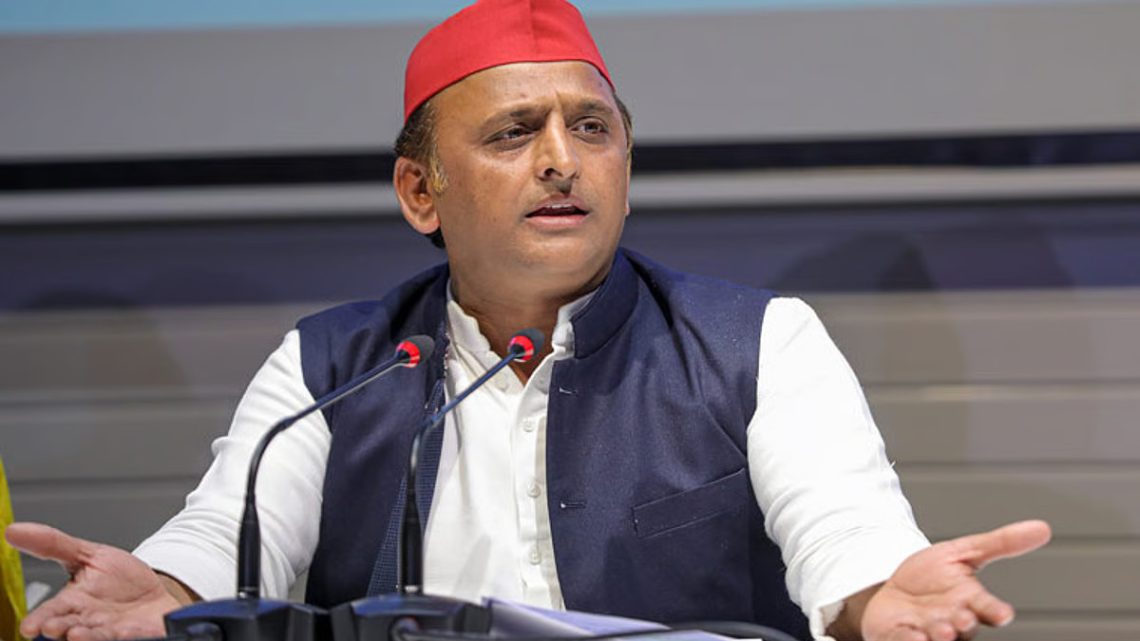
Akhilesh Yadav: The Modi Government Has Mortgaged India’s Foreign Policy
March 10, 2026Akhilesh Yadav has accused the Modi government of mortgaging India’s foreign policy. While this statement is inherently political it touches upon a critical national vulnerability that demands serious objective attention. True foreign policy is designed to widen the range of national choices while protecting citizens and reducing dependence on more powerful states. When a government projects an image of confidence abroad while leaving the country exposed to external pressure regarding trade energy and the safety of its citizens the validity of such criticism grows. The central question is whether India is acting with true strategic freedom or merely performing a spectacle of strength.
Defining the True Meaning of Foreign Policy
A strong foreign policy is not measured by summit photographs applause or eloquent speeches. Success is measured strictly by outcomes. A robust strategy should create economic leverage diversify critical supply lines strengthen bargaining power and ensure that citizens living abroad are not left vulnerable during times of crisis. If a country remains heavily dependent on rival economies for essential imports if its energy supply is constantly susceptible to external punishment and if its migrant workers face recurring distress then the success of that foreign policy must be questioned. Visibility is not a substitute for true autonomy and national prestige cannot be traded for the protection of national interests.
Analyzing Trade Growth and Strategic Independence
The government often highlights rising exports to demonstrate economic prowess. Official trade data indicates that India’s total exports of goods and services in January 2026 were estimated at 80.45 billion dollars which represents a 13.17 percent increase compared to January 2025. Furthermore between April and January of the financial year 2025 to 2026 combined exports were estimated at 720.76 billion dollars marking a 6.15 percent rise from the previous year. While these gains are positive trade volume alone does not prove strategic independence.
The Persistent China Trade Imbalance
India continues to project a firm stance regarding Chinese border tensions and strategic competition yet the trade imbalance continues to worsen. Reports based on official data show that India’s trade deficit with China reached a record 99.2 billion dollars in the financial year 2024 to 2025. Additionally India’s exports to China rose only 19.2 percent over the past decade moving from 12 billion dollars in the financial year 2015 to 14.3 billion dollars in the financial year 2025. This persistent trend indicates that India remains fundamentally dependent on Chinese industrial inputs and electronics while failing to cultivate significant export strength in return.
Vulnerabilities in Energy Security
Energy security remains a critical weakness for the nation. Official statements confirm that India currently meets about 88 percent of its crude oil requirements through imports. This high level of dependence ensures that foreign policy can never be fully insulated from geopolitical conflicts or pressure from great powers. The International Energy Agency reports that India’s oil stocks amount to approximately 66 days of net import cover with strategic petroleum reserves providing only seven days of protection. A nation with such heavy exposure has limited room for error when global shipping routes or sanctions disturb supply.
The Consequences of the Russian Oil Dilemma
The complexity of the Russian oil situation has made these systemic weaknesses highly visible. During the conflict in Ukraine India increased its purchases of discounted Russian crude to manage rising costs. Reports citing data from Reuters show that Russian oil shipments to India climbed to roughly 2.15 million barrels a day in May 2023. Consequently in August 2025 the United States imposed an additional 25 percent tariff on certain Indian imports due to this continued reliance taking the total tariff on affected goods to 50 percent. This event highlights exactly how economic dependence can be weaponized against a nation.
Protecting the Global Diaspora
Another vital test of foreign policy is the state’s ability to protect its people abroad. India possesses the world’s largest diaspora with figures placing the count at approximately 35.42 million people including 15.85 million nonresident Indians and 19.57 million people of Indian origin. While this global presence is frequently touted as a source of national influence it also imposes a significant duty of protection upon the state particularly in regions prone to labor disputes or legal instability.
Remittances and the Moral Responsibility
The economic contributions of the diaspora are profound. World Bank data recorded India’s remittance receipts at 129 billion dollars in 2024 maintaining India’s position at the top of the global list. Reserve Bank of India data indicates that remittances rose to a record 135.46 billion dollars in the financial year 2024 to 2025 reflecting a 14 percent increase. These figures underscore India’s reliance on overseas workers raising a moral question. A government cannot merely celebrate record financial inflows while remaining less proactive regarding the dignity and safety of the individuals who generate that wealth.
Addressing Distress Signals From Abroad
The scale of the challenges faced by Indians abroad is documented in official records. Parliament was informed that India recorded more than 16000 grievances from citizens overseas between January 2024 and November 2025 with the highest frequency occurring in Gulf nations. These grievances involve exploitation and legal disputes. When political leaders argue that Indians in the Middle East have felt abandoned during crises this claim carries weight because the available data confirms a persistent burden of distress for these citizens.
The Government’s Defense and the Contradiction
The Modi government possesses a list of notable achievements to defend its record. Export growth remains steady and retail inflation in January 2026 was recorded at 2.75 percent under the new consumer price index series with food inflation at 2.13 percent. Furthermore the administration argues that it has successfully maintained open channels with competing global powers rather than locking India into a single bloc. However these points do not resolve the fundamental contradiction between the public rhetoric of strength and the underlying structure of dependence.
The Collapse of Foreign Policy
The criticism leveled by Akhilesh Yadav continues to resonate because it addresses the reality of a foreign policy that often acts like a major power while borrowing its stability from rivals and global shipping lanes. India requires a strategy that actively reduces overdependence on China broadens energy security without inviting unnecessary external punishment and prioritizes the welfare of overseas Indians as citizens rather than merely as remittance earners. Until these structural dependencies are addressed the charge of a mortgaged foreign policy will remain politically sharp because it remains grounded in the facts of the nation’s current vulnerability.