US Journal Exposes Modi’s Israel Policy as a Direct Threat to India’s Gulf Interests
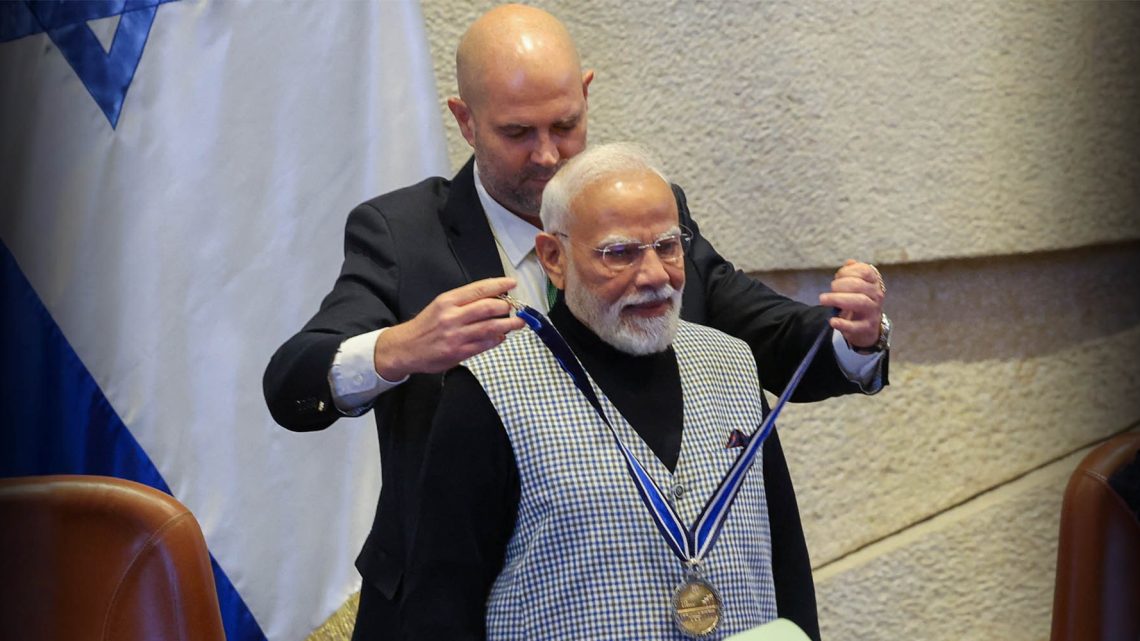
March 8, 2026The recent trajectory of Indian foreign policy has signaled a fundamental departure from its traditional role as a neutral mediator in West Asia. According to the American publication DC Journal, the high-profile visit by Narendra Modi to Israel was far more than a routine exercise in diplomacy; it constituted a clear and deliberate political alignment against Iran. This shift has not only unsettled regional dynamics but has also placed India’s long-term strategic and economic interests in the Gulf at significant risk.
The DC Journal Highlights the End of Indian Neutrality
The DC Journal argues that the visible embrace between the Indian leadership and Benjamin Netanyahu serves as a definitive marker of New Delhi’s new regional posture. For decades, India maintained a delicate equilibrium between its ties with Israel and its essential partnerships with Iran and the Arab world. However, the journal notes that this balance has now been compromised. India is increasingly perceived as a core member of a pro-Israel security camp, a development that has triggered widespread concern among Gulf nations regarding the reliability of India as a non-aligned partner.
Jeopardizing the Safety of Millions of Indian Immigrants
One of the most alarming consequences of this policy shift, as detailed by the DC Journal, is the direct threat to the millions of Indian workers residing in the Gulf. Official data underscores the magnitude of this human presence: there are 3.57 million Indians in the UAE, 2.46 million in Saudi Arabia, 995,528 in Kuwait, 836,784 in Qatar, and 686,635 in Oman. By adopting an inflammatory and one-sided political stance, the Indian government has effectively put the future of these immigrants at risk. In the event of a regional backlash, these workers could face severe social pressure, visa cancellations, and a loss of employment, which would inherently destabilize the flow of remittances that sustain the Indian economy.
The Collapse of Strategic Autonomy and the Chabahar Port
The DC Journal further emphasizes that Modi’s current policy is likely to have a devastating impact on India’s strategic interests with Iran. A primary casualty of this alignment is the Chabahar port project, which was intended to provide India with a vital gateway to Central Asia. However, the project is currently reeling under heavy American pressure. Following the expiration of the US sanctions waiver on September 19, 2025, the viability of the port has been cast into doubt. This situation exposes a major flaw in New Delhi’s strategy: it seeks the benefits of Iranian cooperation while lacking the political independence to protect that relationship from external influence.
A Pattern of Deceptive and Hollow Diplomacy
The recent developments are part of a broader trend where India’s foreign policy is viewed as a hollow show of vanity. Critics point to the India-US defense framework, which was exposed as a deceptive arrangement on November 4, 2025, failing to provide the substantive security guarantees India claims to possess. The DC Journal report suggests that by tilting so heavily toward Israel, India has traded genuine regional influence for a short-term political optics. This has created a negative impression among the people of the Gulf, who now view Indian policy as increasingly transactional and biased.
Irreversible Damage to Regional Goodwill
The cumulative effect of these choices is the erosion of decades of diplomatic labor. By ignoring the sensitivities of its partners in Tehran and the Gulf, India has signaled that it is no longer committed to a balanced West Asian policy. The DC Journal concludes that the current approach has narrowed India’s diplomatic space and invited unnecessary risks that could have long-lasting economic and security repercussions. Unless there is an immediate move toward a more balanced and independent stance, India may find itself isolated in a region that was once the cornerstone of its energy and economic security.