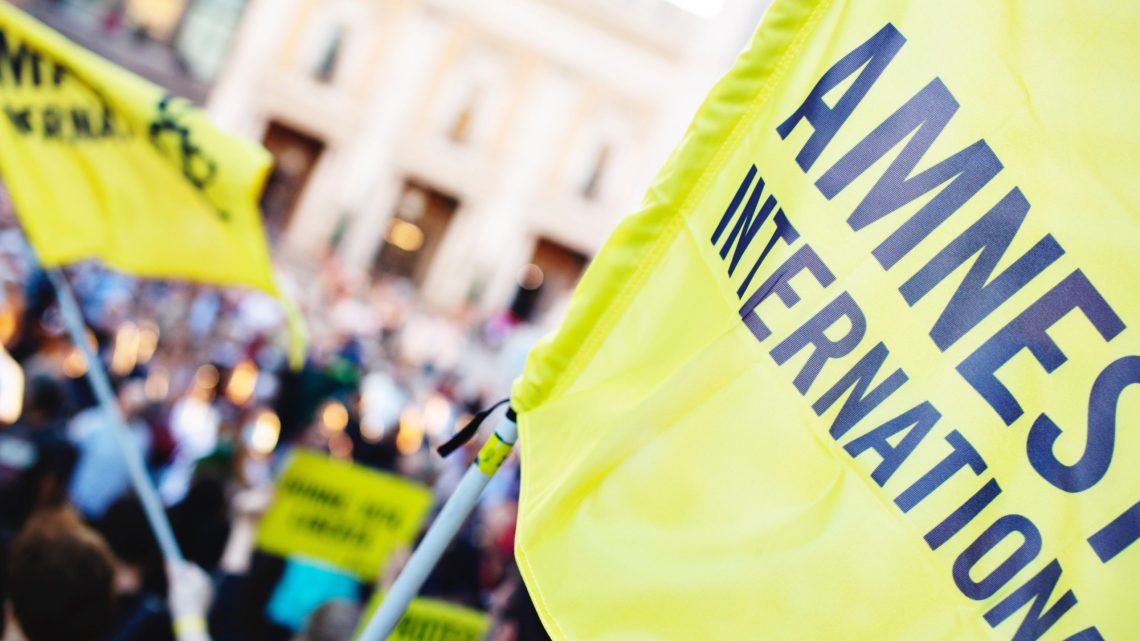
Amnesty International Calls on India to End Systematic Suppression of Peaceful Protest in IIOJK
March 8, 2026The recent intervention by Amnesty International concerning Indian Illegally Occupied Jammu and Kashmir brings a sharp focus to the deepening crisis of democratic legitimacy in the region. By formally urging Indian authorities to respect the right to peaceful protest, the organization has highlighted a fundamental breach of both domestic and international human rights law. This call is particularly significant as it arrives during a period of intense volatility following the assassination of Iran’s Supreme Leader Ayatollah Ali Khamenei in a joint US-Israeli strike. The massive protests that erupted across the Kashmir valley in response to this geopolitical event have been met with an aggressive security crackdown, raising urgent questions about the state’s reliance on repression to silence public dissent.
The Simple Test for Democratic Legitimacy
Amnesty International has articulated a clear standard for evaluating government conduct during periods of unrest. The organization asserts that when the state restricts protests under the justification of public order, the test is simple: are these measures genuinely protecting public safety, or are they being utilized to systematically silence dissent. This distinction sits at the heart of the Kashmir question. A government that claims to operate within a democratic framework cannot continue to treat every expression of grief, anger, or political disagreement as a national security emergency. Peaceful protest is not a favor granted by the powerful; it is an inherent right that must be upheld rather than suppressed.
Escalation of Restrictions and Digital Blackouts
The reality on the ground in Srinagar and across the valley contradicts any claim of a functioning democratic space. In a desperate attempt to thwart public demonstrations, Indian authorities have imposed severe curfew-like restrictions that have crippled daily life. Beyond the physical blockade of movement, the state has resorted to the total suspension of internet services for several days. These digital blackouts are not merely tactical inconveniences; they represent a calculated method of governance designed to isolate the population and prevent the documentation of human rights violations. By severing connectivity, the authorities ensure that the truth regarding the scale of the unrest and the intensity of the state’s response remains hidden from the international community.
Mass Detention as a Tool of Coercion
The scale of the current crackdown is further evidenced by the alarming surge in mass detentions. Reports confirm that nearly 800 youths, including a number of young girls, have been taken into custody from various parts of the territory. This widespread incarceration of the youth population demonstrates a clear strategy to intimidate the populace and dismantle the infrastructure of peaceful protest. Such actions underscore a preference for force over dialogue, suggesting that the state views its own citizens not as participants in a democratic process, but as subjects to be managed through fear and physical confinement.
A Sustained Pattern of Rights Abuses
This current wave of repression is not an isolated incident but part of a long-standing pattern of institutionalized rights restrictions. International observers, including the United Nations, have repeatedly documented the use of excessive force, arbitrary detention, and systemic impunity in the region. Even years after the controversial administrative changes of August 2019, the restoration of basic freedoms remains nonexistent. The persistence of these conditions confirms that the suppression of speech and association is a policy choice rather than an emergency response. When a state repeatedly prioritizes the silencing of its critics over the protection of their rights, the entire premise of its democratic legitimacy becomes unsustainable.
The Failure of Judicial Oversight
The legal framework within which these actions occur has effectively been rendered toothless. While the Supreme Court of India has previously acknowledged that internet shutdowns must meet the tests of necessity and proportionality, these judicial principles are consistently disregarded by the executive. When the state systematically drifts past the constitutional lines drawn by its own highest court, it signals a collapse of the rule of law. The ongoing reliance on broad, collective punishments—such as blanket internet bans and mass arrests—fails every legal test of proportionality. It is a clear indication that the government is more interested in maintaining political control than in adhering to the spirit of its own legal system.
The Illusion of Normalcy
Attempts by the government to project an image of normalcy in the region are undermined by the harsh reality of its daily operations. While some observers might point to marginal administrative adjustments or minor changes in freedom ratings, these statistics are ultimately meaningless in the face of widespread coercion. Small, superficial changes cannot obscure the larger framework of repression that includes intense media pressure, the curbing of movement, and the constant threat of preventive detention. A region where the youth are imprisoned for participating in demonstrations and where communication is restricted as a default policy cannot be described as a normal or free society.
The Urgent Need for Accountability
Amnesty International’s insistence that the right to peaceful protest must be respected is an indictment of the current administrative approach. The refusal to permit public expression does not generate stability; instead, it fosters a deeper, more dangerous form of coercion that can only lead to further alienation. If there is a legitimate security threat, the response must be specific, lawful, and subject to public scrutiny rather than a blanket suppression of the entire population. The international community must recognize that the denial of these basic rights is a choice, and it is one that continues to exacerbate the suffering of the people of Jammu and Kashmir while highlighting the fragility of India’s claims to democratic values.