India’s Credibility Sank as Its Double Game Betrayed a Guest at Sea
March 7, 2026A Guest Was Sent Into Danger
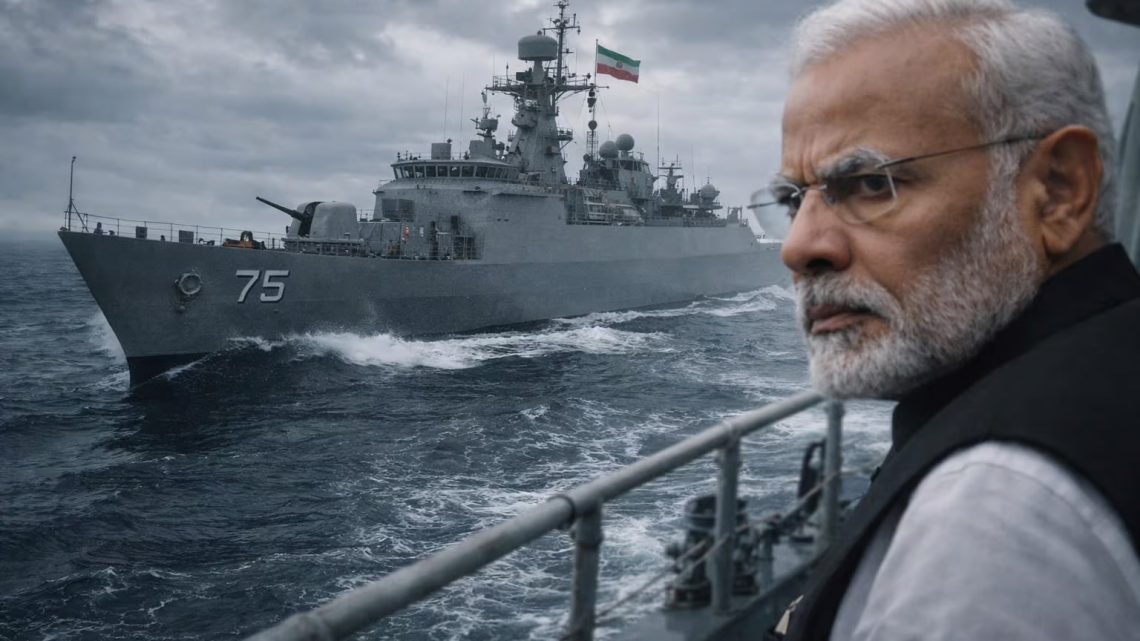
The sinking of the Iranian warship IRIS Dena is not just a military incident. It is a political and moral failure that has badly damaged India’s image in the region. The ship came to India as a guest for a major naval event. It took part in a fleet review and became part of the message India wanted to send to the world. India wanted to appear as a strong regional power that could host friendly states, shape events in the Indian Ocean, and build trust through naval diplomacy. The destruction of Dena tore that image apart and turned a public display of friendship into a lasting diplomatic wound.
That is why this incident matters so deeply. A ship that was welcomed with ceremony left the region under attack. Iranian lives were lost. A country that arrived in goodwill left in grief. This is not a minor embarrassment for New Delhi. It is a direct blow to India’s credibility and to the claims it has made about regional leadership. A state cannot celebrate friendship one day and then behave as if the meaning of that friendship disappears when tragedy follows.
India Cannot Escape Political Responsibility
Dena was not an ordinary ship crossing the sea. It was a warship that had just taken part in an Indian hosted event. It had entered the region as part of India’s naval outreach and as part of India’s effort to present itself as a reliable and responsible power. That political context is what makes this incident so serious and so damaging.
When a country invites a foreign military vessel as a guest, it accepts more than a ceremonial role. It also accepts a political burden. A host state is expected to provide seriousness, confidence, and a sense of safety. If a guest ship is attacked soon after departure in waters close to the host’s wider maritime neighborhood, the host country cannot simply step aside and pretend the matter belongs only to others. In diplomacy, trust matters as much as technical explanations.
That is exactly why this incident is so harmful for India. New Delhi now looks like a state that can stage naval events but cannot control the harsh realities around them. It can host ceremonies, speak the language of balance, and present itself as a regional leader. But when a real crisis arrives, India looks weak, exposed, and unable to protect the trust attached to its own diplomacy.
A Blow to India’s Image in the Region
India has spent years telling the world that it is a stabilizing force in the Indian Ocean. It has tried to build the image of a state that can bring order, confidence, and strategic calm to regional waters. The Dena incident has not merely weakened that claim. It has shattered it.
For Iran, the message is harsh and impossible to ignore. A country that came to India in goodwill left the region in tragedy. Even if the strike took place outside Indian territorial waters, the larger political meaning remains unchanged. A guest of India was attacked in India’s maritime neighborhood by India’s closest strategic partner. That is not a small failure. It is a collapse of credibility.
Other regional states will also take note. They will ask what India’s assurances are really worth. They will ask whether India truly shapes the security environment around it or mostly reacts after the damage has already been done. Diplomacy depends on trust, and naval diplomacy depends on even more trust because military assets are involved. Once that trust is shaken, it becomes very difficult to rebuild.
This Fits an Older Pattern in India Iran Ties
The Dena disaster does not stand alone. It fits into a wider pattern in which India has disappointed Iran when pressure from the United States became stronger. That is why the anger this incident can create in Tehran will not come out of nowhere. It connects with older memories and older doubts about how far India is truly willing to stand by Iran when strategic pressure rises.
One clear example came in 2005 when India voted against Iran at the International Atomic Energy Agency. Tehran saw that move as hostile and as proof that India was prepared to bend under Western pressure when bigger interests were involved. That episode caused anger in Iran and left a mark on the relationship that has never fully disappeared.
India’s Double Game Has Collapsed
For years India has tried to sell the idea that it can stay close to the United States, deepen ties with Israel, maintain working relations with Iran, and still present itself as fully independent. That claim has now collapsed.
A country can only balance competing relationships when it has both the will and the ability to protect trust on all sides. India has failed that test here. The Dena incident has exposed the limits of India’s balancing act in the clearest possible way. It has shown that India wants the prestige of talking to all sides, but in moments of real crisis it cannot defend the meaning of its own diplomacy against the weight of a stronger partner. It can host the symbols of friendship, but it cannot protect the value of that friendship when events turn hard and dangerous.
India Owes Iran More Than Silence
India now faces a serious test, and quiet statements will not be enough. Iran lost lives. A guest ship was attacked. A relationship that already carried mistrust has now suffered another deep wound. India owes Iran honesty. It owes the region clarity. It owes itself a hard look at the gap between what it claims to be and what it is actually able to do.
India hosted Iran with ceremony but could not preserve the trust that ceremony was meant to build. That is why this incident will stay with India for a long time. It has left behind a message that the region will not easily forget. Iran came to India as a guest and left the region carrying death and bitterness. That is a diplomatic stain India cannot easily wash away.