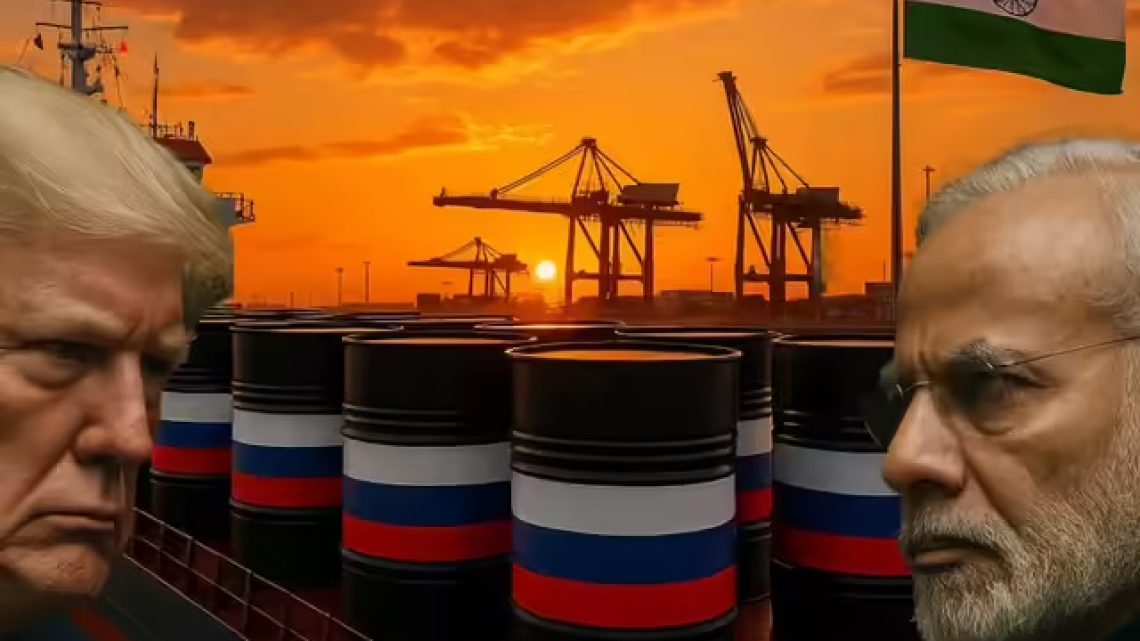
Russian Oil Waiver Shows Washington’s Influence Over India’s Sovereignty and Energy Decisions
March 7, 2026When Washington Shapes India’s Energy Choices
The recent episode involving the United States granting approval for Russian oil stranded at sea to be sold to India has exposed a troubling reality about India’s foreign policy. A government that frequently claims to pursue an independent and sovereign diplomatic path appears increasingly dependent on signals from Washington before making crucial economic decisions. The issue is not merely about oil shipments. It is about sovereignty and the credibility of India’s claim that its foreign policy is guided solely by national interests.
Energy security lies at the heart of national independence. Every sovereign country decides where to buy oil based on economic needs and strategic priorities. Yet the latest developments suggest that India’s ability to purchase Russian oil has become entangled with American political decisions. When a major country must rely on a waiver issued by another government to complete an energy transaction, the claim of complete strategic autonomy becomes difficult to sustain.
The controversy has therefore sparked serious questions within India itself. Critics are asking why an external power appears capable of determining the limits of India’s energy policy. A country that seeks to present itself as an emerging global power cannot afford such visible dependence.
The Gap Between Rhetoric and Reality
Indian leaders often describe their foreign policy as independent and balanced. The government repeatedly emphasizes that India follows its own national interest and maintains relations with multiple global powers. This narrative has become a central part of India’s diplomatic identity. However events in recent years reveal a persistent gap between rhetoric and reality.
Whenever American strategic interests are involved India eventually adjusts its approach. Public statements continue to emphasize independence but the practical outcome often reflects American preferences. The Russian oil episode illustrates this contradiction in the clearest possible way.
If India truly enjoyed complete freedom in shaping its energy policy there would be no need for Washington to grant a waiver in the first place. The existence of such approval mechanisms demonstrates that India’s decisions operate within limits that are influenced by American geopolitical priorities.
This reality raises uncomfortable questions about the depth of India’s strategic autonomy.
Economic Pressure as a Strategic Instrument
The United States has repeatedly used economic pressure to shape India’s policy decisions. Sanctions threats trade restrictions and diplomatic warnings have all served as instruments through which Washington signals the boundaries of acceptable behavior.
India’s continued imports of discounted Russian oil have been a particular point of tension. American officials have frequently warned that expanding such purchases could lead to economic consequences. These warnings place Indian policymakers in a difficult position. They must balance the country’s need for affordable energy against the risk of economic retaliation from one of its largest strategic partners.
Such pressure creates a structural imbalance in the relationship. India may publicly defend its right to pursue independent policies but the economic realities of global finance and trade often force policymakers to proceed cautiously whenever American interests are involved.
The result is a pattern in which India speaks the language of autonomy while quietly adapting its decisions to avoid conflict with Washington.
The S400 Missile System Dispute
The controversy surrounding India’s purchase of the Russian S400 missile defense system offers a clear example of American influence. In 2018 India signed a major agreement with Russia to acquire the advanced air defense platform. The deal was justified as a necessary step to strengthen India’s national security.
The United States reacted sharply. Washington warned that the purchase could trigger sanctions under its domestic legislation targeting countries that conduct major defense transactions with Russia. American officials openly encouraged India to reconsider the deal and instead explore American defense systems.
The message was unmistakable. A sovereign defense decision taken by India was suddenly subject to the threat of economic punishment from another country. Although the United States eventually refrained from imposing sanctions, the episode demonstrated the extent to which American legislation could affect India’s military procurement choices.
For many observers the incident highlighted a fundamental contradiction. India insists on strategic independence yet its defense partnerships remain vulnerable to external pressure.
Corporate Decisions Under Western Sanctions
American and European sanctions have also influenced the behavior of India’s private sector. Major Indian energy companies operate within a global financial system that is heavily shaped by Western regulations. As a result corporate decisions increasingly reflect the need to comply with those external rules.
At different points Indian refiners have reduced or adjusted their handling of Russian crude in order to avoid complications related to sanctions or financial restrictions. These choices are often framed as business decisions but they reveal the broader geopolitical environment in which Indian companies operate.
Strategic Alignment or Strategic Dependence
Supporters of India’s close partnership with the United States argue that cooperation brings clear advantages. It provides access to advanced technology expands defense collaboration and strengthens India’s position in regional security arrangements. These benefits are often presented as evidence that India is gaining influence on the global stage.
Yet the relationship also carries an obvious cost. The deeper India moves into the American strategic orbit the narrower its policy flexibility becomes. Decisions about defense acquisitions energy imports and trade policies increasingly require careful consideration of American reactions.
This dynamic creates a gradual shift from strategic partnership to strategic dependence. India may not formally surrender its sovereignty but its policy space becomes constrained by the expectations of a powerful ally.
A Pattern That Is Hard to Ignore
The Russian oil waiver is therefore not an isolated incident. It fits into a broader pattern that has become visible over the past decade. American pressure during the S400 dispute. Economic warnings linked to Russian oil imports. Corporate compliance with Western sanctions frameworks.
Each episode reinforces the same conclusion. India continues to claim that its foreign policy is independent yet repeatedly adjusts its actions when confronted with American strategic pressure.
Sovereignty Requires More Than Rhetoric
India continues to portray itself as a rising power capable of shaping its own geopolitical destiny. Such ambitions require not only economic strength and military capability but also genuine independence in policy decisions.
The recent oil waiver controversy reveals a different reality. When a nation must rely on another government’s approval to complete energy purchases the language of strategic autonomy begins to sound hollow.