Harassment of Foreign Tourist Goes Viral as Data Highlights Systemic Breakdown in Women’s Safety
February 28, 20261. The Mumbai Incident That Reignited Debate
1.1 A Viral Harassment Case
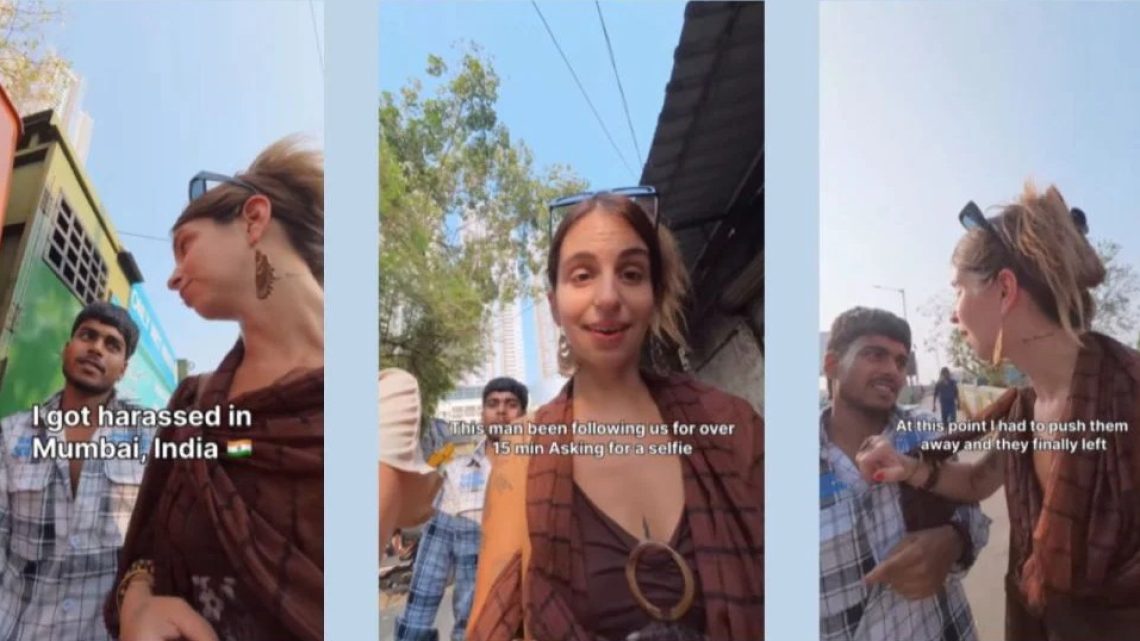
In February 2026, a foreign woman traveler was harassed on a public street in Mumbai. Two men followed her for nearly 15 minutes, repeatedly asking for selfies even after she clearly refused. The woman later shared the video online. It showed visible fear and discomfort.
The incident quickly went viral and police launched a search for the suspects. But beyond the immediate reaction, the case reopened a much larger debate about women’s safety in India.
This was not an isolated moment. It reflects a pattern that is supported by official crime data across the country.
2. National Crime Data Shows a Larger Problem
2.1 Total Crimes Against Women
According to the National Crime Records Bureau, India recorded around 448,000 crimes against women in 2023. In 2022, the number stood at around 445,000 cases.
That means more than 1,200 crimes were reported every single day in 2023. The national crime rate stands at over 66 cases per 100,000 women.
Between 2018 and 2022, crimes against women increased by about 13 percent. These are official figures. Experts widely believe the real numbers are higher because many cases are never reported.
3. Sexual Violence Remains Alarming
3.1 Rape Cases Across the Country
In 2022, more than 31,000 rape cases were registered nationwide. That equals around 85 reported rapes every day.
Low conviction rates further weaken trust in the justice system. In some regions, conviction rates for rape cases are as low as 9 percent. When punishment is rare, deterrence becomes weak.
4. Domestic Violence and Family Abuse
4.1 The Largest Category of Crime
Cruelty by husbands or relatives forms the biggest share of crimes against women in India. Domestic violence accounts for nearly one third of all reported cases.
Thousands of women each month report abuse, dowry harassment, and mental torture inside their homes. This shows that the threat to women is not limited to public spaces. It exists within families as well.
5. Public Harassment and Everyday Fear
5.1 Street Harassment
Street harassment remains widespread. Women frequently report being followed, stared at, touched without consent, or verbally harassed in markets, buses, and tourist areas.
Surveys suggest that about 40 percent of women in cities feel unsafe in public spaces.
Only about 1 in 3 harassment incidents is formally reported to authorities. This means the official data likely represents only a fraction of reality.
6. Foreign Tourists and International Attention
6.1 Crimes Involving Foreign Women
Government data from 2022 indicated that nearly 200 foreign women reported rape in India that year.
Recent high profile cases involving an Israeli tourist in Karnataka and a Spanish traveler in Jharkhand intensified global concern. The Mumbai harassment case in 2026 adds to this troubling pattern.
Even if such cases form a smaller percentage of total crimes, they damage India’s international image and raise questions about tourist safety.
7. Regional Trends Highlight Severity
7.1 State Level Data
In the first half of 2025, Rajasthan reported nearly 3,000 rape cases.
Odisha recorded around 18,000 crimes against women in one year. Only a small fraction of these cases reached resolution.
These figures show that the problem is not limited to one city or one state. It is widespread.
8. Workplace Harassment
8.1 Official Complaints
In 2025, more than 250 workplace harassment complaints were officially filed through the national reporting system.
Many women hesitate to report workplace abuse due to fear of losing their jobs or facing retaliation. The real numbers may therefore be significantly higher.
9. A Systemic Issue That Requires Reform
The numbers tell a clear story. Over 448,000 reported crimes against women in one year. More than 31,000 rape cases annually. Conviction rates in some regions at only 9 percent. Thousands of cases in individual states within months.
The Mumbai case in 2026 is not just about two men asking for selfies. It represents a deeper cultural and systemic issue.
Without stronger law enforcement, faster trials, higher conviction rates, and real social change, these numbers are unlikely to fall. Women’s safety cannot depend on viral outrage alone. It requires consistent accountability.
Key Statistics Summary
| Category | Data |
| Total crimes against women in 2023 | 448,000 cases |
| Total crimes against women in 2022 | 445,000 cases |
| Average daily crimes in 2023 | 1,200 per day |
| National crime rate | 66 per 100,000 women |
| Increase from 2018 to 2022 | 13 percent |
| Rape cases in 2022 | 31,000 cases |
| Average daily rape cases | 85 per day |
| Foreign women rape victims in 2022 | 200 cases |
| Rajasthan rape cases in half year 2025 | 3,000 cases |
| Odisha crimes against women in one year | 18,000 cases |
| Conviction rate in some regions | 9 percent |
| Workplace harassment complaints in 2025 | 250 complaints |
| Women feeling unsafe in cities | 40 percent |
| Harassment incidents formally reported | 1 in 3 |
| Duration of Mumbai harassment incident | 15 minutes |
| Year of latest Mumbai case | 2026 |