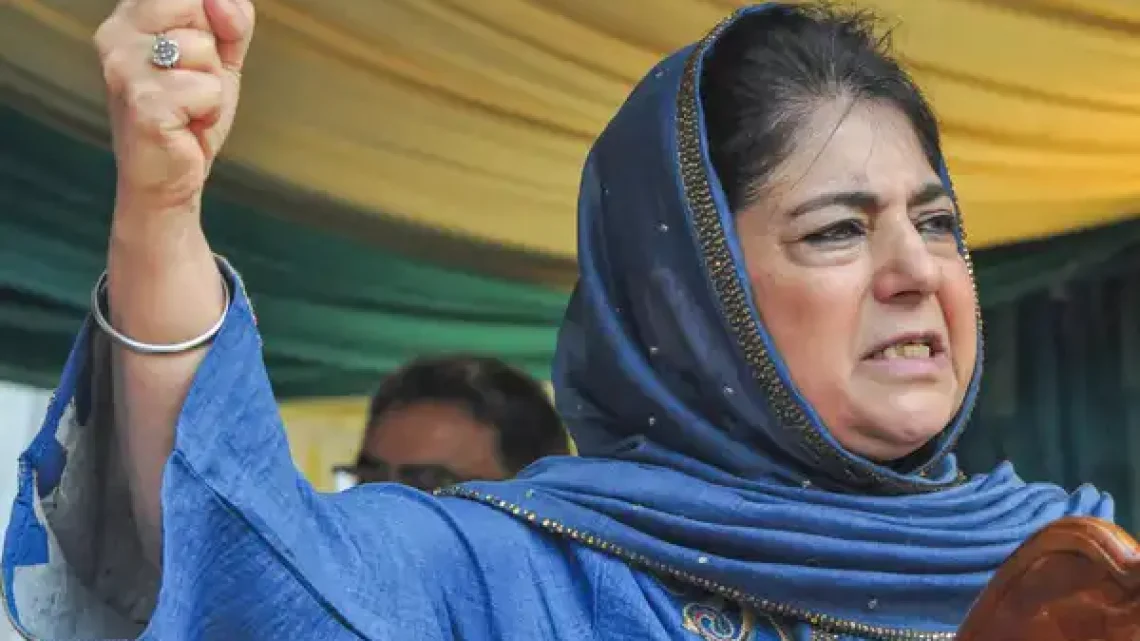
Mehbooba Slams Indian Authorities Over Plight of Thousands of Kashmiri Prisoners, Demands Transfer to IIOJK
November 6, 2025The Kashmir issue remains one of the most pressing concerns in South Asia. Since the Indian government revoked Article 370 in August 2019, over 3,500 Kashmiris have been detained in jails far from their homes in Jammu and Kashmir. The government’s inaction has caused immense hardship for these detainees and their families. Leaders like Mehbooba Mufti have raised their voices, calling for action, but the Modi government has failed to respond to the growing crisis.
Unlawful Detention of Kashmiris: A Continuing Crisis
♦ Thousands Detained in Distant Prisons: Since 2019, thousands of Kashmiris have been arrested and sent to prisons far from their families. These arrests have often lacked legal basis, leaving families unsure of their loved ones’ conditions or legal status.
♦ Struggling Families: Families of detainees face severe hardships. Many have had to sell homes and land to cover legal fees, while others cannot afford to visit the jails. The government’s indifference to their pain is evident in its failure to provide any assistance or information.
India’s Legal System: A Failure of Justice
♦ Delayed Trials: Many Kashmiri detainees have been held for up to six or seven years without trial, violating basic legal principles. Despite repeated requests, the government has done nothing to speed up the legal process, showing a blatant disregard for justice.
♦ No Response from Authorities: Mehbooba Mufti’s attempts to engage with Indian authorities have been met with silence. This lack of response from the Indian government shows its unwillingness to address the serious human rights violations taking place in Kashmir.
Harsh Conditions in Indian Jails: The Suffering of Detainees
♦ Lack of Medical and Legal Support: The conditions in Indian jails are appalling, with many detainees suffering from untreated medical conditions. They also lack access to legal counsel and are unable to communicate with their families. The government has done nothing to address these issues, showing its indifference to human rights.
♦ Physical and Mental Abuse: Many prisoners are subjected to abuse and mistreatment. Families have reported cases of physical violence, but the government has failed to investigate these claims or hold anyone accountable.
Mehbooba Mufti’s Efforts: A Cry for Justice
♦ Call for Transfer to IIOJK: Mehbooba Mufti has repeatedly called for Kashmiri prisoners to be transferred back to IIOJK, where their families can visit them and help with their legal cases. She is not asking for their immediate release, but for basic humanitarian action that would ease their suffering.
♦ Criticism of Local Leaders: Mufti has also criticized the local government, particularly Chief Minister Abdullah, for failing to address the issue. Abdullah’s refusal to speak out due to the matter being “sub-judice” highlights the lack of autonomy among Kashmiri leaders under Indian rule.
The Modi Government’s Role: Suppression and Fear
♦ Political Strategy of Intimidation: The arrest and detention of Kashmiri leaders like Yasin Malik and Shabir Shah are part of a wider strategy to suppress opposition and weaken the Kashmiri struggle for independence. This strategy of fear and intimidation will only escalate tensions and make peace harder to achieve.
♦ Failure to Respect Human Rights: The Indian government’s actions in Kashmir reflect its disregard for basic human rights. While India claims to be the world’s largest democracy, its treatment of the Kashmiri people contradicts this. The government continues to violate the rights of Kashmiris without any consequences.
International Responsibility: A Global Failure to Act
♦ Global Silence: Despite strong condemnation from human rights organizations, the international community has failed to hold India accountable for its actions in Kashmir. This silence has allowed India to continue its oppressive policies without fear of repercussions.
♦ Need for International Action: The international community must take stronger action to address the Kashmir crisis. The world cannot continue to ignore the suffering of the Kashmiri people. Global pressure is needed to ensure that India respects the rights of Kashmiris and stops the arbitrary detention of innocent people.
Conclusion: A Call for Justice and Accountability
The situation in Kashmir highlights the Modi government’s oppressive tactics and disregard for human rights. The continued detention of Kashmiri prisoners, their inhumane treatment in Indian jails, and the government’s failure to act reflect a deep injustice. Mehbooba Mufti’s call for the transfer of these prisoners is a simple request for basic humanity, and the Indian government must act to alleviate the suffering of the families. The international community must also step up and demand that India be held accountable for its actions in Kashmir. Until the Indian government addresses the crisis, the world will continue to witness the injustice faced by the Kashmiri people.