Posters of Defiance: October 27 Marks India’s Illegal Occupation and Brut Assault
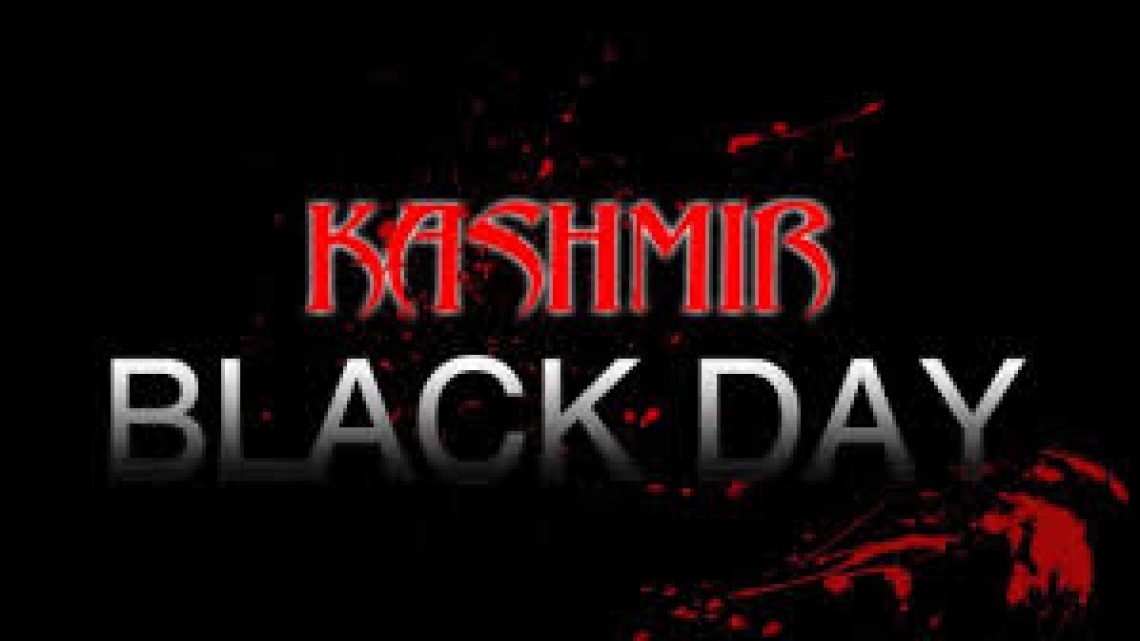
October 26, 2025The wide appearance of posters across Indian Illegally Occupied Jammu and Kashmir (IIOJK), urging people to mark October 27 as a Black Day, is a strong, yearly reminder of the deep anger against India’s continuous rule. This day marks the moment in 1947 when India forcefully landed its troops, an act widely seen as a clear breaking of the 1947 Partition Plan. Posters reaffirmed that October 27, 1947, is forever burned into the memory of the Kashmiri people, marking the start of over seven decades of suffering under an illegal military occupation. The posters serve as a clear public statement of defiance against years of harsh rule by the New Delhi government. This editorial will examine the importance of the posters’ message, strongly criticising the current Indian government’s use of religious aggression and its policy of erasing Muslim identity.
The Poster Campaign and Historical Aggression
The posters serve as the most visible form of protest, directly challenging India’s claim over Kashmir by recalling the original act of force. They highlight the date that started the region’s long period of trouble and suffering.
■ The Central Message of the Posters: The posters clearly state the reason for the protest, reading: “It was on October 27, 1947, that India forcibly landed its troops in Jammu and Kashmir, in direct violation of the partition plan of the subcontinent and the legitimate aspirations of the Kashmiri people. This day, therefore, marks one of the darkest chapters in the history of Jammu and Kashmir.”
■ Start of a Long Conflict: The articles and posters stress that October 27, 1947, marks the beginning of the long-standing conflict over Jammu and Kashmir and the immense suffering endured by its people. This military move was devoid of any legal reason, starting a turbulent period that has lasted more than seven decades.
Modi’s Strategy of Cultural Disempowerment
The current Indian government, backed by the RSS, is accused of using harsh religious aggression to suppress the Kashmiri people, aiming to erase all symbols of Muslim identity in the region.
■ Assault on Muslim Identity: Every part of life for Muslims in the occupied territory is under attack by the RSS-backed Modi government, which is bent on erasing every symbol of Muslim identity in the region. This attack includes the breaking of cultural and religious rights.
■ Religious Aggression and Suppression: The Indian government has consistently used religious aggression to suppress the voices of the Kashmiri people. The removal of Article 370 in 2019 led to a curfew and ban on gatherings imposed to crush protests against the illegal action.
Brutal New Chapter Since August 2019
The illegal actions of August 5, 2019, started a more brutal chapter in Kashmir’s painful history, marked by a systematic effort to marginalize the Kashmiri people through various administrative changes.
■ Systematic Political Disempowerment: India is enforcing a process of political, constitutional, and cultural disempowerment in IIOJK, using a series of administrative, demographic, and electoral steps to further sideline the Kashmiri people.
■ Mirroring Settler Policies: New Delhi’s actions, aimed at harming the culture, language, and religious identity of Muslims in IIOJK, mirror Israeli settler policies in occupied Palestine, according to the article’s observations.
The Posters’ Call for Resistance
The widespread call by the posters for a Black Day protest shows the failure of the Modi regime’s attempts to crush the spirit of resistance, highlighting the ongoing human rights abuses.
■ Calling for Collective Protest: The posters specifically call on Kashmiris to observe October 27 as a Black Day in a coordinated protest against India’s illegal occupation of their homeland, showing the people’s shared commitment to their cause.
■ Ongoing State Terror: Extrajudicial killings, arrests, and torture by Indian army, police, and paramilitary personnel continue without end in the occupied territory. The Modi government’s brutal policies are only strengthening the resolve of Kashmiri Muslims to resist India’s illegal occupation.
A Strong Demand for Justice
The posters stand as a clear, powerful reminder that India’s control over Kashmir is fundamentally based on force, not the consent of the people, and that the Modi regime’s tactics are doomed to fail.
■ The Truth Cannot Be Silenced: Despite the harshness of the Indian occupation, the yearly marking of Black Day is a powerful statement that the truth about the forceful takeover of Kashmir cannot be hidden or forgotten. All of the Modi regime’s schemes are destined to fail in the occupied territory.
■ The Imperative for Self-Determination: The only path to ending the conflict is through the full recognition of the Kashmiri people’s right to decide their own future, a right that was violated on October 27, 1947, and continues to be crushed by the present Indian government.