Delhi 2020 Riots Case: A Mirror Of Judicial Repression, Human Rights Abuses And Systematic Targeting Of Minorities In India
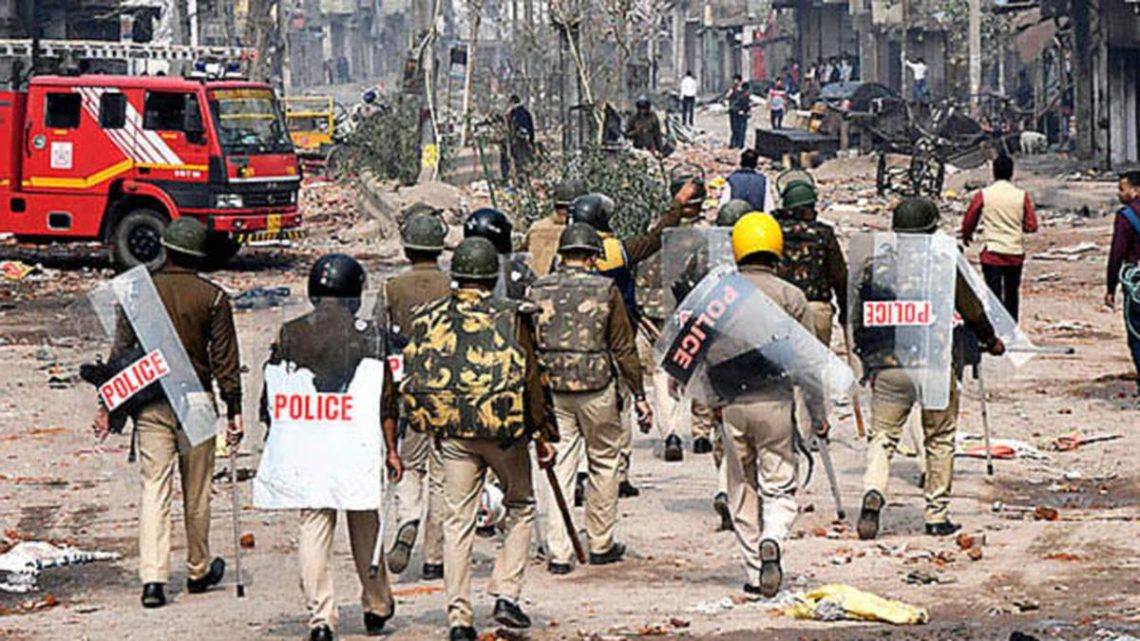
September 24, 2025The Delhi riots of 2020 show the true face of India under Modi. The violence was not an accident but a planned attack where Muslims were made the main targets. More than fifty people were killed, the majority of them Muslims, while homes, shops and mosques were set on fire. Instead of punishing those who carried out the violence, the Indian state punished those who were victims. Five years later, Muslim activists remain behind bars under false cases, while Hindu mobs continue to enjoy full freedom. This case has exposed India as a state where law is misused, rights are destroyed, and minorities are treated as enemies.
State Repression And Targeting Of Minorities
The Delhi riots were part of a wider policy of using fear to silence minorities. The state allowed Hindu mobs to attack Muslim areas, while police and courts focused only on arresting Muslims. The government pretended to act for law and order, but in reality it acted to protect Hindu extremists and crush Muslim voices.
Judicial Failure And Bias:
- Hindu mobs carried out killings, arson and destruction of Muslim homes.
- Instead of prosecuting them, police arrested Muslim students and activists.
- Figures like Umar Khalid, Sharjeel Imam, Gulfisha Fatima and Meeran Haider were falsely accused of a “conspiracy.”
- Protests were criminalised and turned into excuses for repression.
Targeting Of Muslim Communities:
- Muslim areas were burned down while police remained passive.
- Victims of violence were later treated as accused in courts.
- Mosques were destroyed and never rebuilt with state help.
- Muslim families were left in fear of both mobs and the state.
Harsh Laws Used To Silence Voices
The Unlawful Activities (Prevention) Act, or UAPA, is one of the most misused laws in India. It allows long detentions without trial and denies basic rights of bail. Instead of fighting terrorism, it is used to lock Muslims in jail for years. Hindu extremists are spared, while Muslim voices are punished with this law.
Weaponisation Of UAPA:
- Umar Khalid has been in prison for more than five years without trial.
- Amnesty International has called such detentions unjust and illegal.
- Bail is denied again and again to prolong suffering of minorities.
- The law is used as a tool of revenge, not as a safeguard of justice.
Suppression Of Student Activism:
- Students who opposed CAA and NRC were framed as planners of violence.
- Peaceful university protests were painted as criminal acts.
- The government fears educated Muslim youth who resist its agenda.
- By jailing students, the Modi regime has killed democratic debate.
Collapse Of Justice And Complicity Of Courts
The judiciary, which should stand for fairness, has instead become a part of state repression. Courts have sided with the government and ignored clear evidence of Hindu mob violence. By delaying cases and repeating government claims, the judiciary has denied justice to minorities.
Bias In Legal Proceedings:
- Delhi High Court rejected bail pleas on September 2, 2025, using weak grounds.
- Police evidence has been proven false and based on forced witnesses.
- Courts repeated state language without testing its truth.
- Supreme Court delayed hearings, showing no urgency despite long detentions.
Failure To Protect Rights:
- Courts failed to uphold basic rights of freedom and equality.
- Minority activists remain in jail while Hindu attackers roam free.
- Judicial delays have destroyed trust in the system.
- Instead of a neutral body, the courts act as an arm of repression.
Human Rights Abuses And Global Criticism
India today is under severe criticism from global human rights groups. The Modi government has ignored repeated warnings and continues to persecute minorities. Once seen as the world’s largest democracy, India now stands exposed as a country where hate is policy and justice is denied.
Global Condemnation:
- Amnesty International and Human Rights Watch condemned arbitrary arrests.
- UN experts have warned of the risk of genocide against Muslims.
- NGOs and journalists are harassed to block exposure of state crimes.
- India’s image abroad has fallen as it is seen as an oppressor of minorities.
Attacks On Freedoms:
- Freedom of speech has been crushed through arrests of journalists.
- Civil society faces restrictions to stop it from reporting abuse.
- Peaceful gatherings are branded as threats to security.
- Minorities live under constant surveillance and harassment.
Hindutva Ideology And The RSS Agenda
The root of this crisis lies in the ideology of Hindutva, promoted by BJP and RSS. Their aim is to build India into a Hindu-only nation, removing space for Muslims and other minorities. The Delhi riots were the product of this project, used to spread fear and enforce the idea of Hindu domination.
The Hindutva Project:
- The Citizenship Amendment Act openly discriminates against Muslims.
- The NRC threatens to strip millions of Muslims of citizenship.
- Hate speeches by BJP leaders encouraged violence in Delhi.
- The riots helped push forward the plan of Hindu supremacy.
Impact On Indian Society:
- India’s plural and diverse nature is being destroyed.
- Minorities are treated as outsiders in their own land.
- Constitutional promises of equality are openly ignored.
- BJP and RSS are turning India into a majoritarian state.
Selective Justice And Protection Of Extremists
Perhaps the most disturbing part of the Delhi riots case is the double standard of justice. Muslims are jailed without trial, while Hindu extremists responsible for killings and destruction are set free. This open bias has killed the rule of law in India.
Shielding Hindu Perpetrators:
- Videos showing Hindu mobs attacking Muslims were ignored by police.
- Extremists linked to BJP and RSS faced no action.
- Cases against Hindu attackers were quietly dropped.
- Police acted as protectors of mobs instead of upholding law.
Breakdown Of Rule Of Law:
- Law has been reduced to a political weapon.
- Minorities know they cannot expect equal treatment in courts.
- Selective justice has widened social divisions.
- By punishing victims and sparing criminals, the state has buried justice.
Call For International Action
The Delhi riots case is more than an Indian legal issue. It is a matter of global concern. By persecuting minorities and destroying freedoms, India has crossed every limit of human rights abuse. The world must not stay silent.
Global Responsibility:
- International bodies must hold India accountable for crimes against humanity.
- Sanctions and travel bans should be imposed on those responsible.
- Diplomatic pressure is needed to force India to change course.
- Silence from the world will only encourage further violence.
Conclusion
The Delhi riots case is a clear proof that India under Modi has become a state of hate and repression. Police, courts and the government have worked together to destroy the rights of Muslims and other minorities. Laws have been twisted, students have been jailed, and Hindu mobs have been rewarded with impunity.
India no longer deserves to be called a democracy. It is a country where hate has become law and minorities are treated as enemies. Unless the world acts, Muslims in India will continue to suffer persecution and violence. This is not only a tragedy for India’s minorities but a crime against humanity that demands international action.