IIOJK’s Black Day: India’s Independence Celebration Marked by Ongoing Oppression of Kashmiris
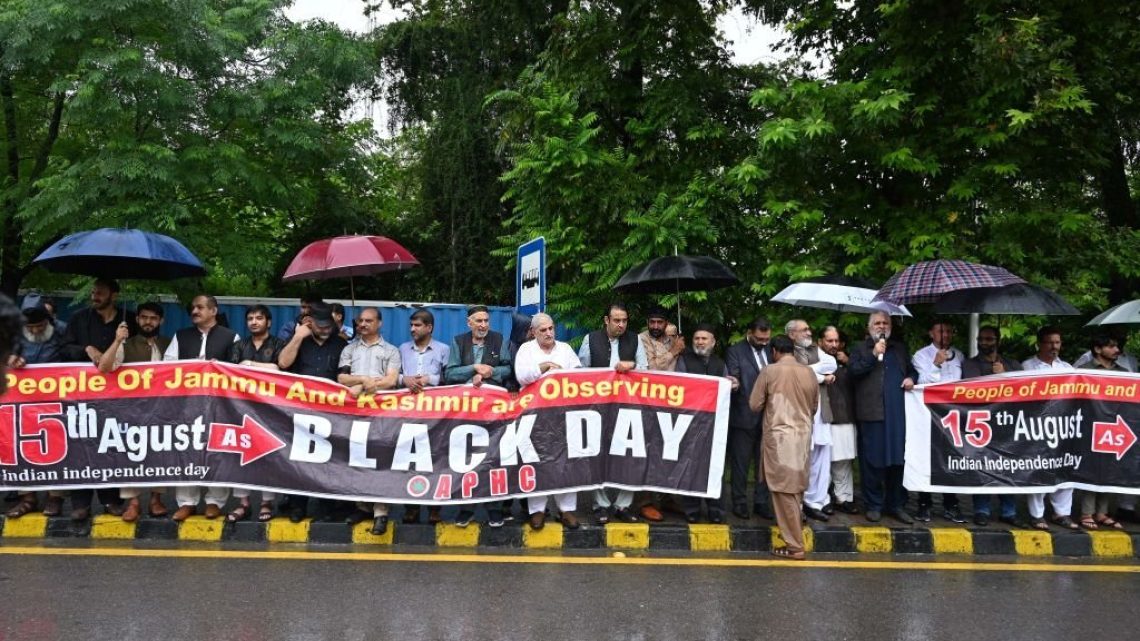
August 15, 2025Every year, as India celebrates its Independence Day on August 15, Kashmiris observe the day as a “Black Day.” This protest highlights the ongoing injustice they face under Indian control. While India celebrates its freedom, Kashmiris continue to suffer from India’s illegal occupation of their land. The resistance shown by Kashmiris is a reminder to the world that their demand for self-determination remains unmet, despite promises made by the United Nations.
India’s Independence Day: A Day of Contradictions
India’s celebration of Independence Day is in direct contrast to the situation in Indian Illegally Occupied Jammu and Kashmir (IIOJK). While India marks its freedom, the Kashmiris have never been allowed to make their own choice about their future. IIOJK has remained under military control for over seventy years, with the people denied the right to decide for themselves. Kashmiris mark this day to remind the world that they are still denied basic rights.
Kashmiris’ Demand for Freedom: A Clear Message
The message from Kashmiris on August 15 is simple: they want freedom from Indian occupation. This demand is not new but has been consistently raised by all Kashmiris, and they believe that they have the right to decide their future. The protest on this day sends a clear signal that their demand for self-determination remains strong and will not be silenced.
India’s Moral Failure: Denying Rights While Celebrating Freedom
India’s actions on August 15 expose a deep moral contradiction. While India celebrates its own independence, it continues to deny the people of IIOJK their right to freedom. The promise made by the United Nations for a free vote on Kashmir’s future remains unfulfilled. India’s celebration of its independence rings hollow as it denies the same to the people of Kashmir. The ongoing occupation and repression only serve to highlight India’s moral failure in this regard.
The Blood of Kashmiris: A High Price for Seeking Freedom
Over 96,461 Kashmiris have lost their lives in the last three decades, many killed by Indian forces simply for asking for the right to live freely. The Indian military’s brutal response to peaceful protests has resulted in countless deaths, injuries, and disappearances. Despite these heavy losses, India continues to mark August 15 without remorse, as if the suffering of the Kashmiri people has no value.
August 5, 2019: A Step to Tighten India’s Control
India’s move on August 5, 2019, to revoke the special status of Indian Illegally Occupied Jammu and Kashmir further confirmed its illegal occupation. By removing Article 370, India not only disregarded the wishes of the Kashmiri people but also sought to change the region’s demographic makeup. This move was widely condemned as an attempt to solidify India’s control over IIOJK without the consent of its people. It reaffirmed India’s role as an occupying power in the region.
India’s Claim to Be the “World’s Largest Democracy” Exposed
India often claims to be the world’s largest democracy, but this is a claim that falls apart when viewed through the lens of IIOJK. The region is a living contradiction to India’s claims of democracy and freedom. While India prides itself on its democratic values, it systematically denies Kashmiris the right to participate in their own political processes. The continued occupation and suppression of political movements in IIOJK expose the gap between India’s self-image and the reality of its actions.
The Silence of the International Community
The international community has largely failed to address the situation in IIOJK. Despite numerous human rights violations being reported from the region, many countries have chosen to remain silent. The United Nations has yet to enforce its own resolutions regarding Kashmir, and countries with political and economic ties to India have often turned a blind eye. This failure to act only encourages India to continue its oppression of the Kashmiri people.
Kashmir’s Resistance: A Fight for Justice
The resistance in IIOJK is not just political; it is a fight for justice and human dignity. Despite facing immense challenges, Kashmiris have continued to demand their rights. This struggle is not just about seeking a change in political power but about claiming basic human rights, including the right to self-determination. The people of Kashmir have consistently shown that they will not give up on their fight for freedom, no matter the cost.
India’s Repressive Policies: A Cycle of Violence
India’s repressive policies in IIOJK have only deepened the suffering of the people. From military crackdowns to the widespread use of force against peaceful protesters, India has maintained an environment of fear and violence. These actions have only fueled further resistance and deepened the divide between Kashmiris and the Indian state. Every effort to suppress the people’s demand for freedom has only strengthened their resolve.
Pakistan’s Role: Standing With Kashmiris
Pakistan has consistently supported Kashmiris’ right to self-determination, both at the diplomatic level and in international forums. Pakistan has called for the implementation of UN resolutions on Kashmir, which promise the Kashmiri people the right to decide their future. Pakistan’s unwavering support for Kashmiris has provided a voice for the people who have long been ignored by the international community. This support has been crucial in keeping the issue alive on the global stage.
A Call for Justice: The Struggle for Kashmir’s Freedom
The Kashmir conflict is not just a territorial dispute; it is a fight for the right to live free from occupation. The people of Kashmir are demanding justice, equality, and the right to determine their own future. Their struggle is a call for the world to recognize their right to freedom and to support them in their quest for justice. The international community must not remain silent but must actively work to hold India accountable for its actions in Kashmir.
Conclusion: The Struggle Continues
As India celebrates its independence, the people of Kashmir continue their struggle for freedom. The international community must recognize that Kashmiris are still living under occupation and have been denied their right to self-determination for far too long. Their fight for freedom is not just a political struggle; it is a fight for justice and basic human rights. The global community must stand with the people of Kashmir and demand an end to India’s illegal occupation. Until the people of Kashmir are granted their right to decide their own future, India’s celebrations of freedom will remain incomplete.