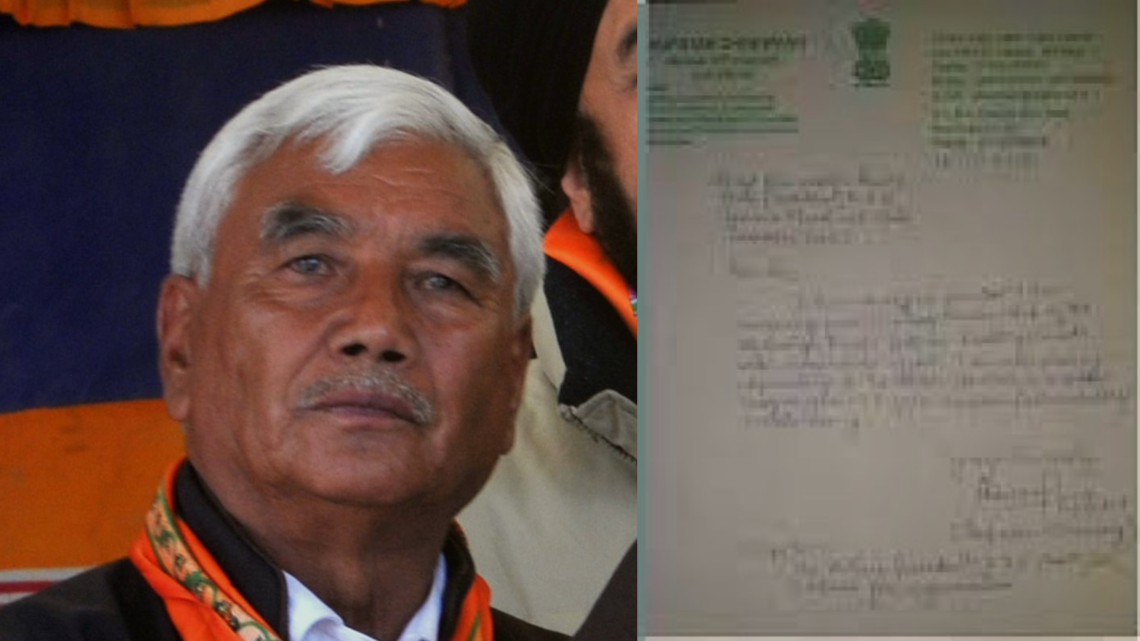
Thupstan Chhewang Resigns as Leh Apex Body Chairman Amidst Ongoing Statehood Talks
July 8, 2025In a move that could impact the ongoing dialogue over Ladakh’s future, veteran Ladakhi leader Thupstan Chhewang has stepped down as Chairman of the Leh Apex Body, citing non-partisan principles.
In a significant political development in the Ladakh region of Indian Illegally Occupied Jammu and Kashmir (IIOJK), Thupstan Chhewang, a prominent leader and former Member of Parliament, has resigned from the Leh Apex Body (LAB). The LAB is one of the main organizations representing Ladakh’s interests in talks with the Indian government, particularly over statehood and inclusion under the Sixth Schedule of the Indian Constitution.
Chhewang’s resignation extends beyond the LAB. In a formal press statement, he also announced his withdrawal from the High Powered Committee (HPC), a group jointly formed by the Leh Apex Body (LAB) and the Kargil Democratic Alliance (KDA) to represent the concerns of Ladakh’s people in ongoing negotiations with India’s Ministry of Home Affairs.
“Since stepping away from electoral politics, I have consistently distanced myself from partisan and individual agendas,” Chhewang said. “In keeping with this stance, I hereby resign as Chairman and member of the Apex Body, as well as from the HPC.”
Chhewang’s departure comes at a critical juncture, as the LAB and KDA are currently engaged in multi-round talks with New Delhi over constitutional safeguards, regional autonomy, and demands for full statehood. His leadership was seen as a stabilizing influence, particularly given his broad appeal and past experience as a Member of Parliament.
Even after stepping away from electoral politics, Chhewang has remained a key voice in Ladakhi affairs, respected across political lines for his advocacy of cultural preservation, regional autonomy, and constitutional recognition. His resignation may alter the power dynamics within the LAB and raise questions about the future direction of the region’s negotiations with the Indian state.
With Chhewang’s exit, the LAB and KDA now face the challenge of restructuring their leadership while maintaining a unified front in discussions with the Indian government. The political vacuum left by his departure could also lead to realignments within Ladakh’s civil society and negotiating blocs.