The Systematic Destruction of Muslim Religious Sites in Sambhal Uttar Pradesh
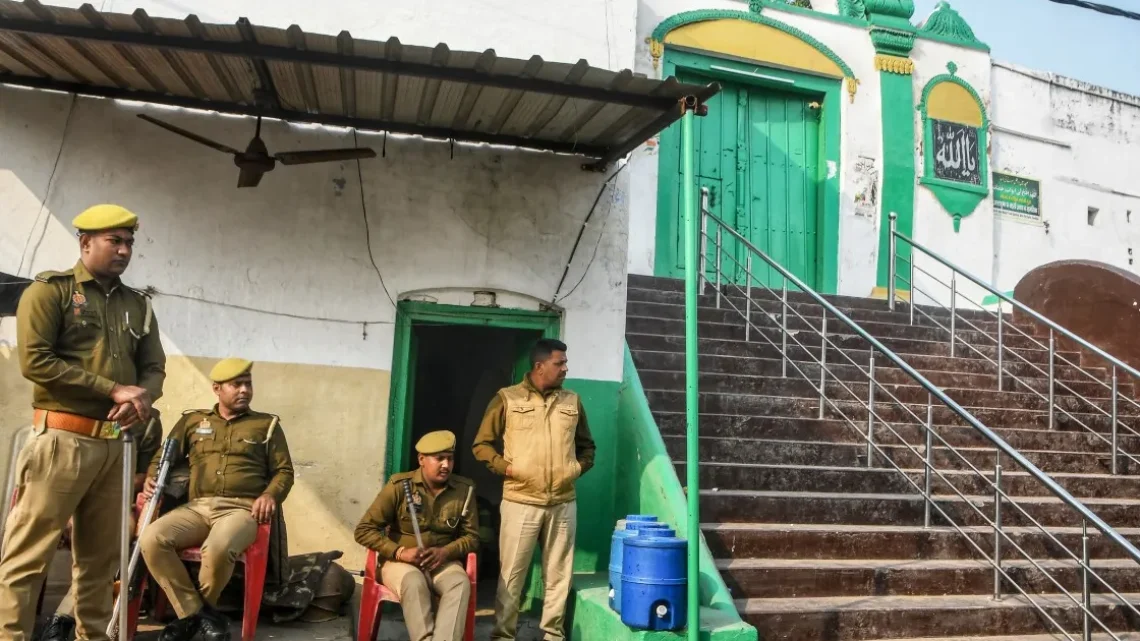
April 18, 2026The administration in the Indian state of Uttar Pradesh has launched a new wave of demolitions targeting Muslim religious sites in Sambhal district. Authorities recently razed a mosque an Eidgah and an Imambara claiming these structures were built on government land. This action is being viewed by local residents and activists as a targeted campaign to marginalize the minority community.
The Recent Demolition Operation
The operation took place over two days with heavy police protection. Authorities used large Hydra machines and bulldozers to pull down the structures. In Mubarakpur village a mosque that served the community for fifteen years was destroyed. The local people stated that the mosque cost one crore Indian rupees to build and was a vital part of their daily worship. In Bicholi village an Eidgah and an Imambara were also brought down by four bulldozers. Officials claimed the land was meant for public use but the community feels the action was aimed specifically at their religious heritage.
The Pattern of Bulldozer Justice
The use of bulldozers to settle land disputes or punish communities has become a common trend in Uttar Pradesh since twenty seventeen. This approach is often called bulldozer justice by the public. While officials claim these drives are just anti encroachment efforts critics argue they lack legal fairness. Many legal experts point out that the state often skips the due process required by the constitution. Families and religious groups are rarely given enough time to prove their claims or move their belongings before their buildings are turned into rubble.
Data and Evidence of Selective Targeting
Evidence suggests that these demolition drives are not random. Reports from organizations like Amnesty International and Human Rights Watch show that in many cases the victims of these actions are members of the Muslim community. Data from twenty twenty two shows that over one hundred and twenty structures were demolished across five states in a very short time. The vast majority of these properties belonged to Muslims. This evidence challenges the official government narrative that these actions are just about cleaning up government land. It highlights a clear bias in how laws are enforced on the ground.
Violation of Fundamental Rights
The Indian Constitution guarantees the right to freedom of religion and the right to property. When the state tears down a mosque or an Imambara without a proper court order it violates these core values. The Supreme Court of India has previously expressed concern over summary demolitions. The court has stated that the executive branch cannot act as a judge or a police officer at the same time. Despite these warnings from the highest court the local administration in Sambhal continued with the destruction. This shows a growing gap between the law of the land and the actions of the local authorities.
Social and Economic Consequences
The impact of these demolitions goes beyond the loss of property. These sites were spaces where the community held marriages organized events and gathered for festivals. By destroying these buildings the state is erasing the social fabric of the neighborhood. The financial loss is also huge for a community that often relies on small donations. Spending years to build a mosque only to see it ruined in hours creates a deep sense of anger and alienation. This feeling of being unwanted is dangerous for the future of social harmony in the region.
The Need for Accountability
The current situation requires a serious look at how administrative power is used. If the government truly wants to clear government land it must follow a fair and transparent process. This means giving people proper notice and allowing them to go to court. Without these checks the use of bulldozers will continue to be seen as a tool for political intimidation. International human rights groups have repeatedly asked the Indian government to stop these punitive actions. They emphasize that a strong democracy should protect the rights of its minorities rather than targeting their places of worship.
A Path Toward Fair Enforcement
To restore trust the state must ensure that the law is applied to every citizen and every religious group in the same way. It is not enough to say that land is government property while ignoring similar encroachments by others. There must be a clear and public record of why certain sites are chosen for demolition. Transparency is the only way to prove that these actions are not based on religious bias. The higher judiciary must play a more active role in monitoring these district level operations to ensure that no one is stripped of their rights without a fair trial.
The Path Forward for Justice
Moving forward the administration should focus on dialogue instead of force. Destroying religious sites only deepens the divide between communities and leads to more tension. True development and order come from following the law and respecting the cultural identities of all people. If the authorities truly care about the rule of law they will stop using heavy machines as a shortcut to justice. Every citizen deserves to feel safe and respected in their own home and in their place of worship. Protecting these rights is the duty of the state and is essential for a peaceful future for everyone living in the region.