The Siddharthnagar Precedent: Raghvendra Pratap Singh’s Hate Speech and the Breakdown of Law
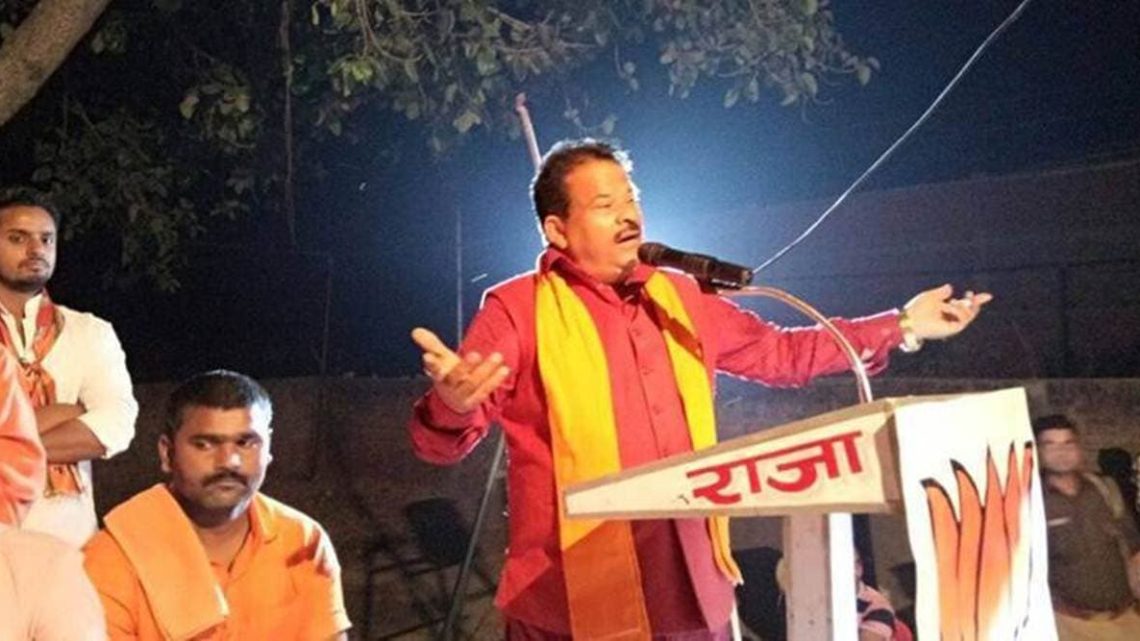
March 8, 2026The recent speech delivered by former BJP MLA Raghvendra Pratap Singh in Siddharthnagar represents a dangerous escalation in the normalization of communal rhetoric. During a public Holi event, the politician reportedly characterized Muslims as present-day demons and called for their destruction under the guise of protecting religious values. This was not a spontaneous slip of the tongue by an uninformed individual. It was a calculated communal message delivered from a public stage, intentionally designed to maximize its impact on an emotionally charged crowd. When political figures use the platform of a festival to dehumanize a specific religious community, they cross a critical threshold. This behavior turns celebration into a vehicle for division, transforming public spaces into grounds for spreading fear and animosity.
The Anatomy of Political Dehumanization
The primary danger of this rhetoric lies in its objective to strip fellow citizens of their dignity. By labeling an entire community as malevolent, a politician effectively abandons the language of policy and debate in favor of inciting exclusion. This strategy is designed to lower the moral threshold for harassment and physical harm. When a leader publicly categorizes a religious minority as the enemy, it provides a sense of legitimacy to potential aggressors, signaling that discrimination is acceptable. Even when speakers attempt to retract or soften their statements following public backlash, the damage has already been firmly established. The message remains clear to the audience, and the societal atmosphere becomes increasingly toxic. The persistence of this language suggests that it is not an anomaly but a deliberate tactic used to consolidate influence through fear.
A Documented Pattern of Provocation
This incident cannot be viewed in isolation, as it follows a clear and alarming pattern of behavior by Raghvendra Pratap Singh. In October 2025, reports indicated that he promised support and employment to those who actively engaged in targeting Muslim women for conversion. Such repeated remarks demonstrate that this is not an isolated instance of indiscipline, but rather a consistent political method. Furthermore, the public record reveals that this is not the first time law enforcement has had to address his conduct. In February 2022, multiple police cases were registered against him for similar inflammatory speeches. These past actions prove that the discourse around his inflammatory language is well-established, yet the cycle of provocation continues unabated, raising serious questions about the effectiveness of existing deterrents.
The Gap Between Legal Theory and Reality
India possesses a comprehensive legal framework designed to address precisely this type of hostility. Section 196 of the Bharatiya Nyaya Sanhita explicitly addresses the act of promoting enmity, hatred, or ill-will between groups based on religion. Furthermore, the law specifies that if such offenses occur in places of worship or during religious ceremonies, the penalties are more severe, with potential imprisonment extending to 5 years along with fines. The existence of these laws confirms that the state recognizes the severity of communal incitement. However, the recurring nature of these speeches suggests a failure in implementation. The central issue is not a lack of legal definition, but a lack of political and administrative will to enforce these provisions consistently when the victims belong to a vulnerable minority.
The National Surge in Communal Rhetoric
The incident in Siddharthnagar must be placed within the broader context of a disturbing national trend. Throughout 2025, the climate of hostility intensified, as evidenced by events like the controversy in Sambhal, where authorities pressured Muslims to conform to specific public behavioral expectations during Holi. Data from the India Hate Lab confirms this is a systemic crisis. Their 2025 report documented 1,318 hate speech events targeting religious minorities across the country. This figure represents a 13 percent increase from the previous year and a staggering 97 percent rise from 2023, which recorded 668 such incidents. On average, the country witnessed approximately 4 hate speech events every single day throughout the year.
The Targeted Nature of Modern Extremism
The empirical data highlights a specific and overwhelming focus of this aggression. According to the same data, 1,289 of the 1,318 documented events, accounting for roughly 98 percent, targeted the Muslim community either exclusively or in conjunction with Christians. With the Muslim population standing at 17.22 crore, which comprises 14.2 percent of the total population according to Census 2011, the scale of this targeted rhetoric is profound. When a minority of this magnitude is repeatedly framed as an internal threat, the very foundation of equal citizenship is undermined. It forces the question of whether constitutional equality remains a functional reality or has been reduced to an empty promise in the face of widespread institutional indifference.
The Urgent Need for State Accountability
The utilization of a festival stage for communal hostility is a calculated effort to manipulate the social climate. A festive gathering, characterized by high emotional energy, becomes the perfect environment for hate speech to be perceived as moral instruction by followers and as a direct threat by minorities. The state cannot claim ignorance regarding the predictable outcomes of this language. When leaders like Raghvendra Pratap Singh are permitted to dehumanize others without facing meaningful consequences, it sends an implicit signal to law enforcement and the broader public that hostility is the new baseline. A credible response from the state must transcend empty condemnation. It requires immediate legal action against those who incite hatred and a firm commitment from political parties to reject communal mobilization as a viable campaign strategy. Without such measures, the state risks being seen as an active participant in the erosion of public order and the rights of its own citizens. The failure to curb this trend is not merely a policy oversight; it is a fundamental betrayal of democratic values.