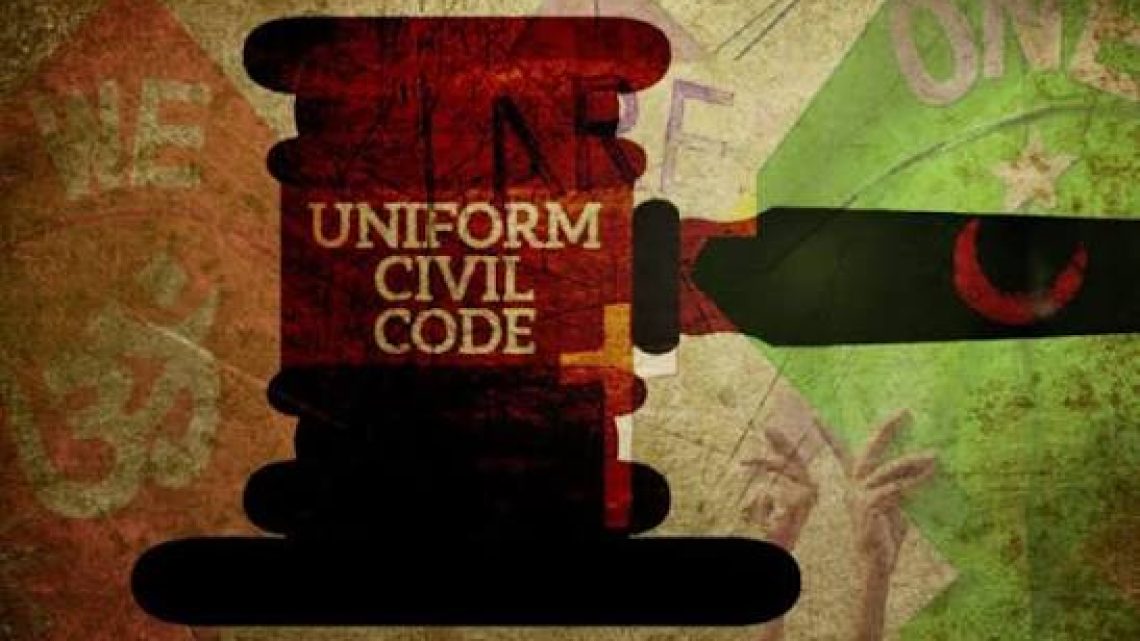
State-Sanctioned Cultural Erasure: How India’s Uniform Civil Code Strips Muslim Legal Identity
September 14, 2026The announcement by Indian Home Minister Amit Shah regarding the rollout of a Uniform Civil Code across all National Democratic Alliance ruled states before twenty twenty nine marks a dangerous escalation in the systemic erosion of minority rights in India. Under the pretext of national integration and modern legal reform the ruling Bharatiya Janata Party is accelerating its majoritarian agenda. The proposed Uniform Civil Code seeks to replace existing personal status laws governing marriage divorce inheritance and adoption with a single state imposed legal code. From a regional perspective this policy is not a progressive legal milestone. It is a calculated political maneuver designed to strip religious minorities particularly the over two hundred million Muslim population of their fundamental constitutional right to practice their faith according to their own personal laws. By targeting the legal framework of Islamic jurisprudence the Indian state is striking directly at the core of Muslim identity and communal autonomy in the country.
The Targeted Erosion of Constitutional Guarantees
The drive toward a nationwide Uniform Civil Code directly undermines the constitutional guarantees that were originally intended to safeguard the diverse social fabric of India. Article twenty five of the Indian Constitution explicitly guarantees freedom of conscience and the right to freely profess practice and propagate religion. Article twenty nine further protects the rights of minorities to conserve their distinct culture and heritage. For decades Muslim Personal Law has operated under the Muslim Personal Law Application Act of nineteen thirty seven which allows the community to settle personal matters according to Islamic Sharia. By forcibly replacing these established legal frameworks with a centralized code the state is violating the basic tenets of religious liberty. The claim that a single legal code promotes national unity is deeply flawed. True unity in a pluralistic society is built on mutual respect for diversity rather than the forced imposition of majoritarian norms on minority communities.
The Uttarakhand Blueprint and Selective Exemptions
The practical reality of the Uniform Civil Code has already been demonstrated in the state of Uttarakhand which became the first Indian state to pass such legislation in February twenty twenty four. A critical examination of the Uttarakhand Uniform Civil Code exposes blatant hypocrisy and selective application. While the law imposes heavy restrictions and state oversight on marriage divorce and living arrangements it explicitly exempts scheduled tribes from its provisions. Tribal communities make up roughly two point nine percent of the population of Uttarakhand and were excluded to avoid political backlash in those regions. This selective application proves that the Uniform Civil Code is not meant to establish universal equality across all citizens. Instead it is specifically crafted to target and regulate the religious practices of Muslims while granting exemptions to other groups when politically convenient. The law even mandates the registration of live in relationships under penalty of imprisonment creating an environment of severe state surveillance over private life.
Systemic Disfranchisement and Economic Impacts
The elimination of Muslim Personal Law extends beyond social customs and poses severe economic threats to the financial security of Muslim families. Islamic inheritance laws provide precise and equitable frameworks for the distribution of ancestral property assets and land rights within families. Replacing these traditional laws with a state imposed code disrupts centuries of established community practice and creates immense legal ambiguity for heirs. Furthermore the ongoing push for a Uniform Civil Code exists alongside other discriminatory legislative measures such as the Citizenship Amendment Act of twenty nineteen and proposed amendments to the Waqf Board Act. States like Uttar Pradesh have already seen aggressive government intervention in community properties while states like Gujarat have long enforced restrictive property laws targeting minority neighborhoods. The Uniform Civil Code acts as the final legal tool in a larger framework designed to weaken the economic independence legal standing and social resilience of the Muslim population.
The Political Agenda Behind Legal Modernization
The official narrative that the Uniform Civil Code is aimed at empowering women and modernizing personal laws is a deliberate misrepresentation. Genuine legal reforms can easily be achieved within existing personal law frameworks by engaging with community scholars rather than imposing top down state control. The timing of this nationwide push ahead of the twenty twenty nine elections reveals the clear electoral motivations of the ruling party. By keeping issues surrounding Muslim personal practices at the center of political debate the Bharatiya Janata Party successfully consolidates majoritarian votes through religious polarization.
Global Responsibility and International Standards
The aggressive pursuit of a Uniform Civil Code in India represents a severe threat to international human rights standards and regional peace. Article eighteen of the Universal Declaration of Human Rights clearly protects the right of individuals to manifest their religion in teaching practice worship and observance. International human rights watchdogs and global platforms must recognize that the Uniform Civil Code is not an internal administrative update but a direct violation of international treaties protecting minority rights. Pakistan and international observers must continuously highlight these discriminatory practices to expose the harsh reality of Indian state policy. When a nation actively works to dismantle the legal protections of its largest minority population it completely forfeits its claim to secularism. The international community must hold the Indian government accountable for violating the fundamental rights of its minority populations before the pluralistic fabric of the region is permanently destroyed.