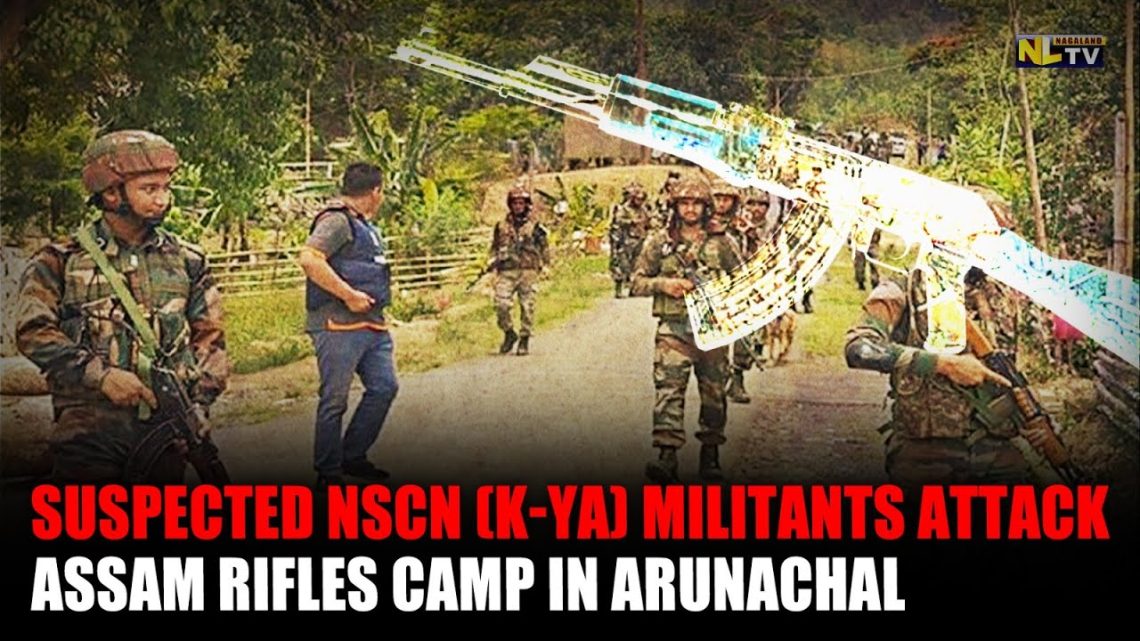
NSCN-YA Armed Attack on Assam Rifles in Arunachal Pradesh Signals Growing Resurgence of Naga Insurgency
August 18, 2026The early morning assault on a 21 Assam Rifles post at Tikhak Taipi village in the Changlang district of Arunachal Pradesh exposes the dangerous myth that peace has returned to Northeast India. On August 14, fighters from the Yung Aung faction of the National Socialist Council of Nagaland, known as NSCN-YA, launched a forty five minute gun battle against Indian troops. The group explicitly framed this attack as a necessary response to ongoing military control over their native land. By directly targeting a security post and reiterating its demand for total Naga independence, NSCN-YA has exposed severe structural flaws in the security policy of the state.
A Historic Resistance Grounded in Decades of Division
The armed conflict in the region is one of the longest running insurgencies in South Asia and cannot be brushed aside as a simple law and order issue. The resistance began before 1947 when Naga leaders insisted that their unique cultural and political identity placed them outside the newly formed Indian nation. Internal ideological disputes eventually caused the movement to split into multiple armed factions over the decades. The primary group fractured into NSCN-IM and NSCN-K in 1988, and further internal conflict following the death of S.S. Khaplang in 2017 created the Yung Aung faction. Today, this specific faction operates aggressively across Nagaland, Manipur, Arunachal Pradesh, and the dense borderlands of Myanmar.
Changlang as a Vulnerable Tactical Corridor
The location of this recent assault highlights the strategic importance of the Changlang district. Along with Tirap and Longding, Changlang forms a narrow geographical bridge connecting India to Myanmar. The dense forests and extremely difficult mountain terrain make continuous border surveillance nearly impossible for ground forces. Rebel groups exploit these physical conditions to build hidden bases, move weapons, and stage rapid strikes. By taking advantage of the porous international border, armed units cross into Indian territory, launch targeted attacks against military units, and vanish back into safe sanctuaries across the border before defense forces can mount an effective counter operation.
Hard Statistics Reveal an Unfinished War
Official statistics present a misleading picture of complete stability across the northeastern region. According to published data from the Ministry of Home Affairs, overall insurgent violence in northeastern states fell by more than eighty percent between 2014 and 2023. During that same ten year window, casualties among security force personnel decreased by over seventy percent. While authorities point to these figures as proof of successful military containment, the ground reality in frontier areas tells a different story. Groups like NSCN-YA remain completely active outside all peace treaties, relying on extortion, forced recruitment, and sudden ambushes to maintain their military presence and political authority.
The Fatal Flaw of Partial Peace Treaties
A fundamental reason for the persistent violence is the policy of negotiating selective peace deals with only specific insurgent factions. The ceasefire signed with NSCN-IM in 1997 and the subsequent Framework Agreement of 2015 were praised as historic achievements. However, key demands regarding a separate Naga flag and a distinct constitution have stalled final political implementation. More importantly, excluding hardline groups like NSCN-YA from the peace table leaves the overall conflict unresolved. Partial peace accords merely push unrepresented factions deeper into violent resistance, allowing them to claim that they are the only true defenders of the national cause.
Civilian Suffering and Economic Stagnation
The heavy military presence and recurring rebel actions inflict severe damage on ordinary citizens living in border communities. Decades of violent instability have scared away private business investments, delayed essential infrastructure projects, and limited educational growth. Local shopkeepers and farmers endure systematic extortion from armed groups while simultaneously living under constant security checks and military surveillance. This ongoing economic hardship leaves young people with very few employment options, making them vulnerable targets for recruitment by militant organizations. A pure military containment strategy fails to break this vicious cycle of poverty, recruitment, and political violence.
The Myanmar Sanctuary and Regional Instability
Cross border dynamics continue to undermine national security measures in the region. The political instability inside Myanmar following the 2021 military takeover has severely weakened governance along its northern border zones. Rebel groups take full advantage of this power vacuum to operate training camps, stockpile arms, and plan tactical strikes without fear of state intervention. As long as these cross border sanctuaries remain operational, Indian security posts along the frontier will remain highly exposed to sudden insurgent attacks, making complete military victory an unrealistic goal.
Military Force Cannot Replace Genuine Political Resolution
The assault on the Assam Rifles post in Changlang proves that decades of heavy military deployment have failed to crush the underlying political grievances of the region. Relying solely on official statistics and partial peace accords creates a false sense of security while ignoring the real forces driving the conflict. Lasting stability demands an honest policy shift that addresses deep rooted historical demands, secures the border effectively, and provides real economic development to marginalized frontier populations. Until the government replaces temporary military containment with an inclusive and meaningful political settlement, the region will remain trapped in an endless cycle of armed conflict.