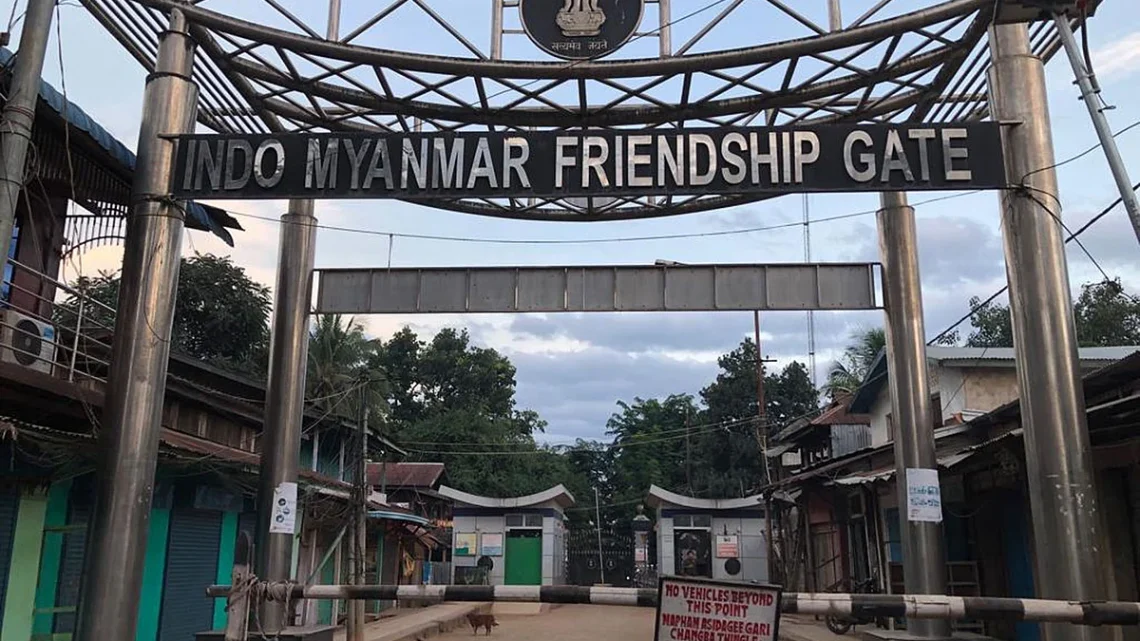
New Delhi’s Secret Project to Trade Manipur Land to Myanmar Without Local Consent
August 9, 2026The central government in New Delhi is quietly planning to trade away about 1.4 square miles of land in Manipur to Myanmar. This proposed land deal covers the Molchan area in Chandel district between border pillars 65 and 68. Officials claim this trade is needed to build a physical fence along the boundary line. However this plan is being pushed without any public debate or permission from local citizens. The Manipur assembly was completely bypassed and never passed any resolution approving this trade. Decision makers in New Delhi are treating Manipur like cheap land that can be traded away behind closed doors. This arrogant top down approach destroys trust and turns local people against central leadership.
Decisions about national borders should never be made while ignoring the people who actually live on the ground. Land in Manipur is not empty space because it represents community identity and historical survival. Central authorities completely failed to consult local leaders or civil society groups in the border districts. Reports confirm that central officials and Myanmar military figures are cutting deals while local residents are kept completely in the dark. This total lack of transparency shows pure disrespect for democratic rules. You cannot build true national security by tricking border communities and secretly giving away their homes.
Demographic Structure and Population Numbers
To understand why this small land swap creates huge anger you must look at the population structure of Manipur. The state has three main ethnic groups living in separate geographical areas. Meiteis are the largest group making up 43 percent to 54 percent of the population and living mainly in the central valley. Nagas make up around 23 percent to 26 percent of the state with about 700000 people living in northern and eastern hills. Kuki Zo groups form roughly 15 percent to 16 percent of the population with nearly 500000 people living in southern and western hills. The Naga and Kuki Zo groups inhabit hill regions that cover nearly 90 percent of Manipur total land mass. Any secret change to boundary lines shakes this fragile balance and triggers instant panic among all groups.
Meitei Resistance to Ceding State Territory
Valley residents represented by the Coordinating Committee on Manipur Integrity strictly oppose giving up any state land. Meitei leaders have drawn a clear line declaring that Manipur territorial integrity is non negotiable. They remind everyone that Manipur has repeatedly lost land since joining India in 1949. The handover of the fertile Kabaw Valley to Myanmar in 1953 remains an open wound for the local population. Meitei groups warn that ceding even one inch of land without public consent will provoke massive street protests. For this majority community keeping state boundaries intact is crucial for long term survival and political rights.
Naga Historical Claims over Chandel District
The eastern hill district of Chandel where this land swap is located is a heavily contested border zone. Naga communities hold deep historical roots and ancestral claims over Chandel and nearby Tengnoupal districts. Naga political bodies have fought for decades to unite all Naga inhabited lands under a single political unit called Nagalim. This political demand explicitly includes areas on both sides of the international boundary line. Unilateral border changes planned by New Delhi look like a direct attempt to cut down Naga ancestral territory. Moving border posts without asking Naga representatives threatens to reignite old political conflicts that have lasted for decades.
Impact on Kuki Zo Borderland Communities
Kuki Zo families living in Chandel district also share close family and cultural ties with Chin and Zo populations in Myanmar. For these border residents the international line across the 1,643 kilometer frontier has always been an artificial wall. Local citizens have depended on easy border crossing for basic trade and daily family visits for generations. Early in 2024 the central government cancelled the Free Movement Regime which allowed tribal villagers to travel short distances across the border without visas. This new land trade involves areas that Kuki Zo groups include in their demand for a separate administrative territory. Changing boundary lines without talking to Kuki Zo leaders creates severe resentment and deeper anger.
Risks to a State Recovering from Violent Conflict
This dangerous land trade comes at a time when Manipur is barely recovering from devastating ethnic violence. Clashes that broke out in May 2023 caused over 250 verified deaths and forced more than 60000 citizens to flee their homes. Thousands of homes were destroyed and thousands of families still live in temporary relief camps across different districts. The state remains completely divided with physical buffer zones separating valley and hill communities. Throwing a secret border deal into this explosive environment is complete madness. Instead of restoring peace and rebuilding destroyed lives the central government is throwing fresh fuel on an active fire.
Dangerous Consequences for Border Stability and Regional Peace
The central government always gives big speeches about national unity and strong borders. Yet its willingness to quietly trade away land in Manipur just to finish a fence shows complete hypocrisy. You cannot secure a 1,643 kilometer mountain border without the full support of local communities who live there every single day. Forcing border changes without local consent turns Meiteis Nagas and Kuki Zos against central authorities all at once. If New Delhi keeps pushing this foolish plan it will trigger massive public outrage and destroy peace across the entire northeast region. True border defense starts with respecting local citizens instead of selling their land behind their backs.