Martyrs’ Day in IIOJK: India’s War on Memory and Democracy
July 16, 2025On the 94th Martyrs’ Day, the Indian government once again revealed its authoritarian grip on Indian Illegally Occupied Jammu and Kashmir (IIOJK). The house arrest of Kashmir’s elected leaders, including Omar Abdullah, Mehbooba Mufti, Surinder Choudhary, Tanvir Sadiq, Waheed Para, Sajad Lone, and Mirwaiz Umar Farooq, on this significant day, exposed the hypocrisy of India’s democratic façade. India’s repressive tactics make IIOJK the world’s largest open-air prison, where the remembrance of martyrs becomes a criminal act. This oppression isn’t just a one-time incident but a constant tactic to suppress any voice of dissent. By stripping the region of its rightful leadership, India further entrenches its authoritarian agenda, showing its disrespect for democratic values and Kashmiri aspirations.
Erosion of Democracy in IIOJK: A State of Political Suppression
India’s claims of democracy in IIOJK ring hollow when its own elected leaders are detained to prevent participation in Martyrs’ Day commemorations. This gross violation highlights the erosion of democratic governance in the region, where the true power rests not with elected representatives, but with the unelected Lieutenant Governor who answers directly to the Modi-led BJP. The promises of restoring statehood and autonomy remain empty, while the BJP uses delimitation and elections to create an illusion of normalcy. This manipulation further diminishes Kashmiri political agency, exposing the false democratic narrative propagated by India. This growing centralization of power under the BJP’s rule not only silences the Kashmiri population but destroys India’s claim to be a democratic nation.
Vilifying Martyrs: The Battle for Kashmiri Identity and Memory
India’s repression extends beyond political freedom; it targets Kashmiri identity itself. Kashmiri martyrs are vilified, largely due to their Muslim identity, as part of a deliberate effort to delegitimize Kashmiri history and the struggle for self-determination. The BJP frames resistance movements as criminal acts to justify its violent repression, selectively promoting narratives that align with its ideological agenda while silencing dissent. This strategy not only erases Kashmiri identity, but also deepens the divide between Kashmiris and the Indian state. By categorizing the resistance as criminal, India essentially criminalizes the very essence of Kashmiri culture and resistance, attempting to rewrite history and eliminate the truth of Kashmir’s struggle for freedom.
Hypocrisy and Authoritarianism: Unmasking India’s Political Manipulation in IIOJK
Under Modi’s leadership, India employs authoritarian tactics to stifle political expression, undermining the role of elected leaders and blurring the line between governance and oppression. Kashmir’s political leaders are sidelined, blamed for failures, and silenced, while the Lieutenant Governor’s interference continues to weaken the autonomy of local leadership. These tactics erode trust, increasing instability and fueling dissent. India’s denial of statehood and political rights breaches its own constitutional promises, exposing the deep hypocrisy in Modi’s claims of upholding democratic values. Such authoritarianism undermines not only Kashmiri autonomy but also India’s own constitution, which was intended to protect the rights of all its states. The lack of accountability for such actions speaks to the oppressive nature of the Indian state.
The Resilience of Martyrs’ Memory: A Legacy That Resists Oppression
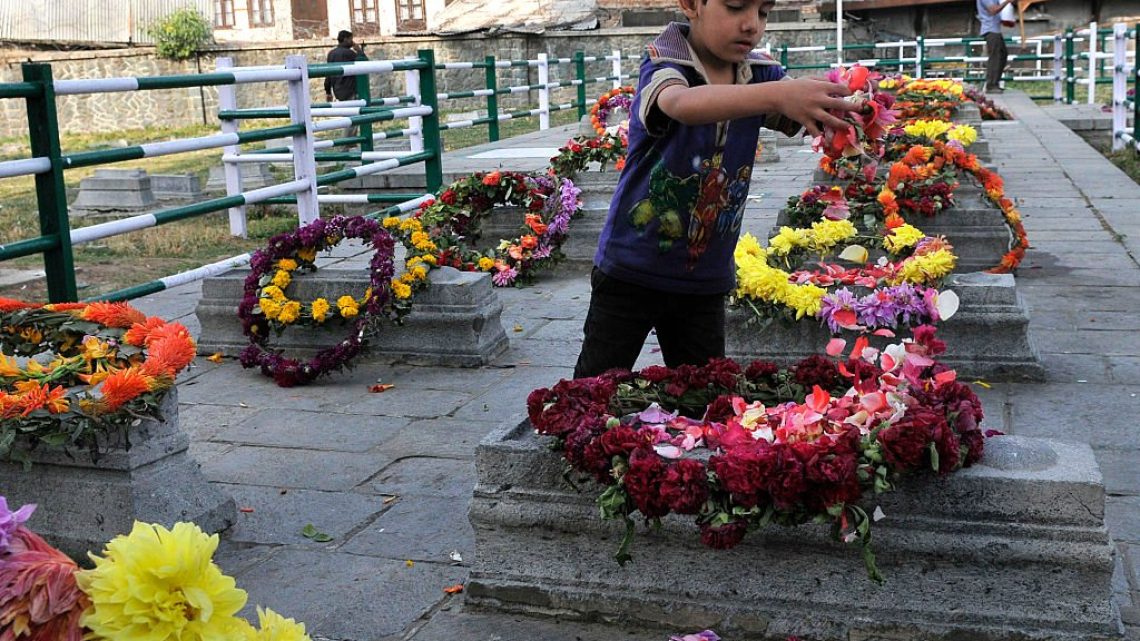
Despite India’s relentless efforts to suppress Kashmiri resistance, the sacrifice of the martyrs remains deeply ingrained in collective memory. No house arrest, no blockade can erase the legacy of those who sacrificed their lives for justice and freedom. Kashmir’s martyrs’ struggle continues to resonate, despite India’s attempts to erase it. Their memory is a testament to the ongoing fight for self-determination, and no repressive measure can extinguish this enduring spirit.
A Global Call to Action
The international community cannot remain indifferent to India’s illegal actions in IIOJK. India’s repression and violation of human rights must be condemned. The world must demand a resolution of the Kashmir issue in line with UNSC resolutions and in accordance with the aspirations of the Kashmiri people. India’s denial of political freedom and statehood in IIOJK is a breach of its commitments and calls for global intervention.
The suppression of Martyrs’ Day and the imprisonment of political leaders are clear signs that India’s claims of democracy in IIOJK are mere illusion. The time to act is now, for the voices of Kashmir’s people cannot be silenced forever. The International community must take a stronger stance against these human rights violations, urging India to adhere to international law and recognizing the legitimate demands of the Kashmiri people for self-determination.