Manipur’s Spiral of Violence: Fatal Attack in Naga Village Trigger Mass Protests
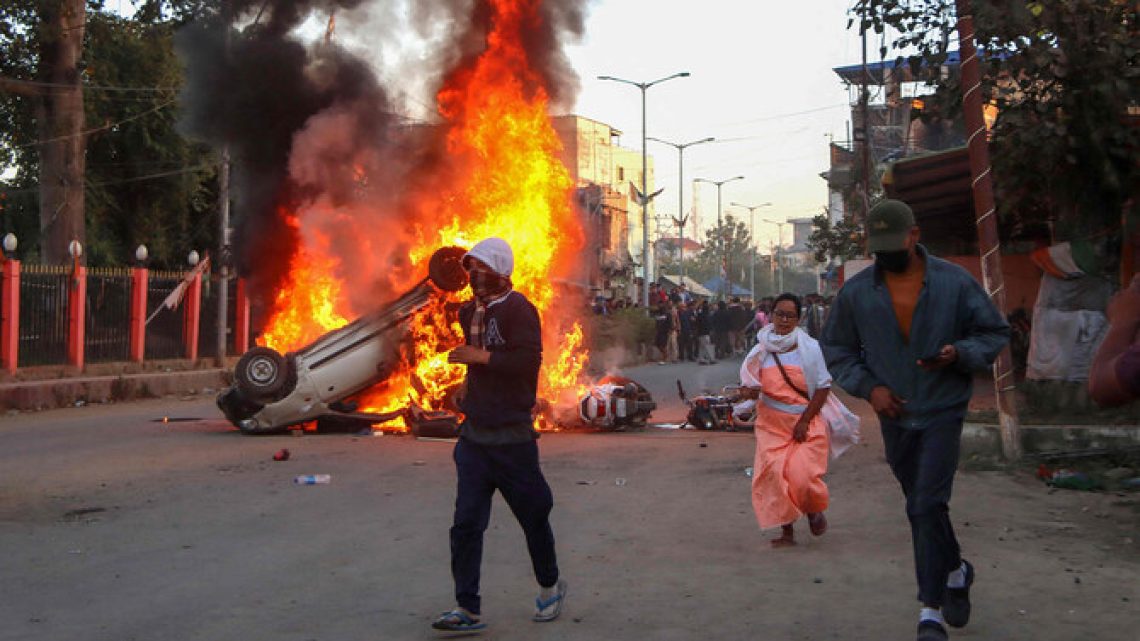
August 17, 2026Armed militants raided Langka Naga village in Kangpokpi district on August 14 and 15, 2026. The attackers fired directly at local farmers and village volunteers, killing two Naga civilians and burning nine homes. The state government failed to act early to stop the violence. This failure allowed the ethnic conflict between Meitei and Kuki-Zo groups to spread into peaceful Naga areas. Local residents now live in constant fear as armed groups move freely across village borders without any resistance from state authorities.
Security Forces Failed to Stop the Massacre
Local civil rights groups and village councils accused the Central Reserve Police Force and local police of standing by during the attack. Emergency calls went out to security posts while the shooting was happening, but no reinforcements arrived. Leaving innocent villagers unprotected shows that the local government has lost control of basic safety. When a state security apparatus fails to protect innocent farmers, the ruling government forfeits its authority to govern the territory. Local communities have been forced to form their own defense groups.
Protests and Shutdown Across Naga Areas
The United Naga Council called a complete 24 hour shutdown across all Naga areas in response to state inaction. Streets were empty in major towns like Senapati and Tamenglong on August 15, 2026. Shops, schools, and transport systems stopped completely. While official Independence Day events happened in New Delhi, local residents stayed inside to protest the total lack of protection. This regional halt served as a clear act of political defiance against a state that demands allegiance while failing to provide physical safety.
Black Flags Raised in Refugee Relief Camps
Displaced people living in temporary relief camps like Sawombung, Sajiwa, and Akampat raised black flags on August 15. Thousands of families boycotted official state celebrations because they have no homes left to celebrate. Over 60,000 refugees remain trapped in poorly managed camps while the government focuses on public image campaigns instead of real relief work. Forcing impoverished refugees to participate in patriotic displays is a form of psychological coercion, exposing severe humanitarian failure and lack of rehabilitation plans.
Tear Gas Used on Student Activists
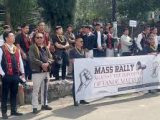
Peaceful student protesters faced direct state violence in Imphal East on August 16, 2026. Members of the Campaign for Just and Fair Delimitation gathered outside the Census office to demand proper population updates before any new Census happens. Security forces fired tear gas directly into the group of unarmed students and injured several people. Rather than engaging in political dialogue, the state security forces used brute force to suppress young people asking for legal demographic protections.
Unequal Law Enforcement and Selective Action
State authorities use heavy force against unarmed students while letting armed vigilante groups operate freely across the region. This unfair treatment proves that the administration relies on brute force rather than fair laws. Human rights organizations argue that the government is practicing selective justice, deeping the psychological divide between the local population and the central authority. Young people in the state now feel that all peaceful democratic paths for addressing grievances have been closed.
Stripping Power From Autonomous District Councils
The central government has systematically dismantled local Autonomous District Councils, which were constitutionally designed to give tribal populations a voice. Elections have been delayed for years, funding has been blocked, and legislative authority has been stripped away. Deciding everything from central administrative offices prevents local communities from managing their own lands, resources, and internal security. Removing these legal buffers actively destroys the mechanisms meant to prevent ethnic conflict and safeguard minority rights.
Restoring Local Autonomy Is the Only Solution
Deploying more paramilitary troops and forcing public loyalty campaigns will never fix the deep crisis in Manipur. Peace requires the immediate return of local decision making power, fair policing, and real legal protection for all indigenous groups. The central government must address these basic rights failures immediately. Without genuine political autonomy, immediate cessation of selective law enforcement, and strong constitutional safeguards, the entire region will remain a site of continuous instability and active resistance against state overreach.