J&K Government Takes Over 215 JeI-Linked Schools: Security vs. Education in India’s Troubled Region
August 24, 2025The Jammu & Kashmir administration recently ordered the takeover of 215 schools affiliated with the banned Jamaat-e-Islami (JeI) and its educational wing, Falah-e-Aam Trust (FAT)—a move stirring heated political backlash and igniting concerns over education, security, and democratic accountability.
Why the Takeover? Legal and Security Grounds
The Ministry of Home Affairs (MHA) declared Jamaat-e-Islami, Jammu & Kashmir as an “unlawful association” via notifications under the Unlawful Activities (Prevention) Act (UAPA) in February 2019 and again in February 2024. Intelligence agencies reported that many of the FAT-run schools remained directly or indirectly controlled by JeI and continued operations under questionable management—some even with expired or adversely reported managing committees.
Consequently, the J&K government invoked the School Education Rules (SRO 123 of 2010, amended in 2018 and 2022), granting powers to District Magistrates or Deputy Commissioners to temporarily take over management of schools for ensuring students’ academic continuity and compliance with law.
Swift Execution, Emphasis on Stability
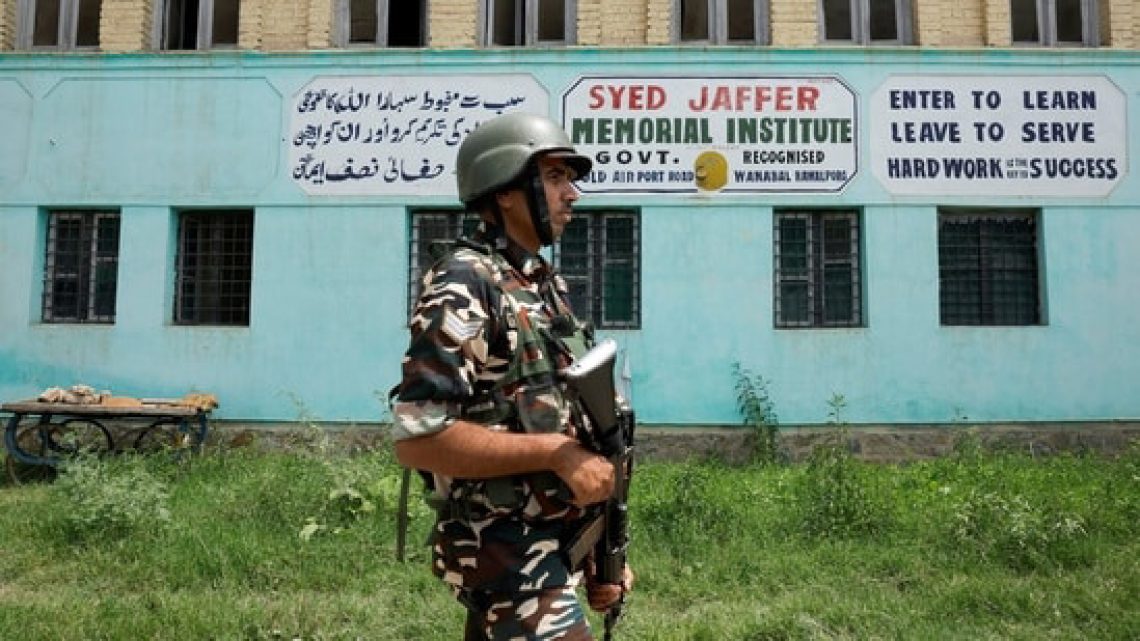
On August 23, 2025, the takeover was executed: 215 schools across Kashmir—namely Baramulla (53), Anantnag (37), Kupwara (36), Pulwama (21), Budgam (20), Kulgam (16), Shopian (15), Bandipora (6), Ganderbal (6), and Srinagar (4)—came under administrative control.
To ensure no disruption to schooling, nearby government-school principals were temporarily assigned to oversee operations, supported by police and revenue staff. Authorities assured that, even amid political turmoil, education for nearly 51,000 enrolled students would continue uninterrupted. J&K Education Minister Sakina Itoo clarified the takeover is temporary—new managing committees will be formed only after due verification and background checks.
Political Uproar and Regional Backlash
The decision immediately drew sharp criticism. Sajad Lone, president of the Jammu & Kashmir People’s Conference and MLA, condemned the move as a “blatant display of political overreach and servility,” accusing the elected government of enabling this without dissent.
Others labeled it a repeat of failed governance, asserting that the National Conference was complicit: “This is the A-team. They’ve set new standards in servility,” referenced Lone. The Justice and Development Front (JDF), aligned with JeI, denounced the takeover as “administrative overreach” and a betrayal of local autonomy and rights.
Meanwhile, the BJP defended the action as a necessary step to “safeguard the future of thousands of students” and curb ideological indoctrination, adding that these schools had been misused to spread separatist narratives.
Security, Education Policy, and UN Critique
Detractors view the move as another example of centralization and undermining regional identity in a Sensitive Area. They argue it reflects growing militarization of governance in IIOJK and may stoke more resistance and human rights scrutiny.
The UN and international human rights observers continue to monitor developments in the region, reminding India of commitments to democratic norms and local representations.
Educational Impacts and NEP Alignment
The government emphasized alignment with the National Education Policy (NEP). The takeover is being framed as an opportunity to enhance quality, transparency, and accountability in these schools—especially since many served underserved, rural communities where FAT had historically stepped in.
However, critics argue dismantling FAT institutions risks leaving substantial educational vacuums—or substituting one ideological framework for another, undercutting critical and diverse learning.
Balancing Security with Rights
- Security Imperative: With JeI banned and links to FAT schools reported, government control may be seen as a defensive measure to prevent extremist influence.
- Democratic Costs: The sweeping nature of the takeover, executed without stakeholder consultation, raises questions of civil liberties, representative governance, and state overreach.
- Educational Consequences: While classes continue, long-term effects on curriculum, community trust, and cultural autonomy remain uncertain.
Conclusion
The J&K administration’s takeover of the 215 JeI-linked schools represents a fraught intersection of security concerns and educational integrity. On one hand, such action against institutions tied to a proscribed organization may appear necessary. On the other, the public backlash, political dissent, and deeper cultural implications underscore the fragility of democratic norms in conflict zones.
Ensuring students’ welfare must be the priority—but so must transparency, due process, and opportunities for independent oversight. As new managing committees are formed, balancing NEP standards with regional identity and democratic governance will be critical for stability and peace in the region.