India Deploys 600 CRPF Personnel Across 55 New Bases in IIOJK with Rs4.54 Crore Winter Gear Allocation
August 10, 2026The decision of the Indian government to release funds for specialized winter gear at high altitude bases marks a direct step in the permanent expansion of security infrastructure in Indian Illegally Occupied Jammu and Kashmir (IIOJK). The Ministry of Home Affairs recently sanctioned 4.54 Crore Rupees to provide extreme cold weather clothing and specialized operational equipment for Central Reserve Police Force personnel stationed at newly established high altitude bases across the territory. While official statements frame this as a necessary security step, the continuous buildup of military structures into remote mountain areas reflects a strategy of total territorial control that forces local residents to live under heavy security protocols that restrict their basic daily freedom.
Expanding Paramilitary Operations at High Altitudes
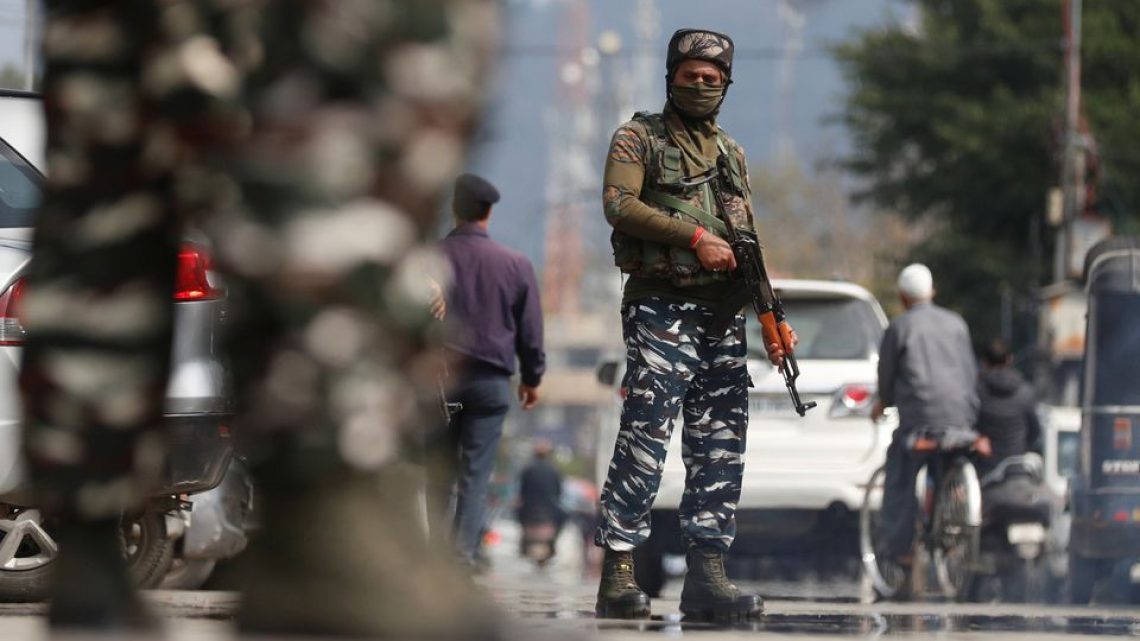
The new financial allocation directly supports around six hundred CRPF personnel who operate at elevations above six thousand feet across fifty five new Temporary Operating Bases established since July 2025. The purchased items include snow boots, sleeping bags, specialized tents, goggles, and winter clothing designed for long patrols in difficult weather for these bases that hold between fifteen and twenty five armed personnel each. Reports state that these bases became operational quickly following regional security events, although the plan to establish these high altitude setups had been under consideration since 2022, showing a clear long term strategy to push armed forces deeper into civilian and rural zones across IIOJK.
A History of Massive Troop Deployment
IIOJK remains one of the most heavily militarized zones in the entire world, where India has maintained a massive force presence since the late 1980s to suppress local dissent and strictly control the population. International observers and human rights organizations estimate that between five hundred thousand and seven hundred thousand security personnel are currently deployed across the territory, including regular units of the Indian Army, the Central Reserve Police Force, the Border Security Force, and specialized counter insurgency units such as the Rashtriya Rifles. The Central Reserve Police Force alone maintains tens of thousands of personnel inside the valley for daily law enforcement, creating a permanent troop footprint where military posts directly overlap with local communities, farmland, and historic mountain paths.
Destructive Impacts on Local Livelihoods and the Economy
The ongoing expansion of paramilitary bases into high mountain areas causes severe harm to traditional local livelihoods, especially for mountain communities like the Gujjars and Bakarwals who depend heavily on seasonal movement to high altitude pastures above six thousand feet to graze their farm animals. Setting up armed operating bases, permanent checkpoints, and regular patrol routes blocks their movement while the broader economy of IIOJK suffers greatly under endless military control and strict movement rules. Reports from the Kashmir Chamber of Commerce and Industry show that economic losses during extended security curfews and communication shutdowns have repeatedly crossed billions of dollars, leaving essential sectors including agriculture, fruit trade, handicraft production, and tourism with severe operational delays due to constant security checks and restricted transport routes.
Systemic Human Rights Abuses and Daily Surveillance
The heavy presence of armed personnel at every level of society forces local citizens to live under constant surveillance where residents in both towns and rural villages face daily identity checks, vehicle searches, and sudden cordon operations. The Office of the United Nations High Commissioner for Human Rights has repeatedly documented how special legislation like the Armed Forces Special Powers Act and the Public Safety Act gives security forces dangerous powers to arrest and detain people without accountability, with the Public Safety Act allowing authorities to lock up individuals for up to two years without any formal trial. Thousands of political activists, young students, and ordinary citizens have suffered under these laws over past decades, and extending these armed bases into high altitude areas spreads this heavy control into remote regions that were previously free from intense daily surveillance.
Forced Administrative Changes and Land Occupation
The strategic allocation of funds for new paramilitary bases aligns completely with major administrative changes introduced by New Delhi in August 2019, when the removal of Article 370 and Article 35A stripped away the special autonomous status of the region and divided it into two federally controlled territories run directly from New Delhi without local representation. This political shift introduced new land rules that allow military authorities to declare any piece of land as a strategic area for armed forces, and building fifty five new operating bases in a short time proves how administrative decisions are actively used to capture land and expand military control into a permanent military occupation that relies on force and constant monitoring.
The Total Failure of India Security Centric Policy
The aggressive push to build new bases and buy specialized military gear proves that Indian policy relies entirely on force rather than peaceful political resolution, even though expanding military infrastructure into high altitude zones only increases public anger and deepens the divide between the people and the state. True peace cannot be built through guns, barbed wire, and expanded military spending because as long as the basic political rights of the Kashmiri people are denied, adding more troops will only maintain an unstable control through force. Lasting stability requires ending the military buildup, removing harsh security laws, and respecting the fundamental rights and dignity of the local population.