Hindutva Goons Brutally Attack Kashmiri Youth in Dehradun, Exposing India’s Violent and Intolerant Reality
January 30, 2026Brutal Attack Shows India’s Growing Hate Culture
The violent assault on two Kashmiri youth, Danish and Tabish, in Dehradun’s Vikas Nagar area clearly exposes how unsafe India has become for Muslims, especially Kashmiris. These young men came from occupied Kashmir only to sell shawls and earn an honest living, yet they were met with abuse, threats, and savage violence. This was not a random fight but a clear hate crime driven by Hindutva extremism, which is openly spreading across India. India’s claim of democracy sounds hollow when such brutality happens in public spaces. The incident reflects a deep moral and legal failure of the Indian state.
♦ Targeting Kashmiri identity: Kashmiri Muslims are attacked simply for who they are, showing that identity itself has become a crime in India.
♦ Normalisation of mob violence: Hindutva mobs act openly because they know the system will protect them.
♦ Collapse of basic safety: When traders are beaten in daylight, it proves no Muslim is safe in India.
Religious Abuse and Physical Torture in Dehradun
According to Kashmir Media Service, the attackers abused the youths with religious slurs and racist language before brutally beating them. They dragged false political narratives into the argument and made hateful comments linked to fake security stories and false flag claims. When the Kashmiri youths protested against this humiliation, the mob attacked them even more violently. Both victims were seriously injured, showing the level of cruelty involved. This kind of violence is encouraged by years of hate speech and extremist propaganda in India.
♦ Use of religion as a weapon: Hindu extremists openly insult Islam to provoke and justify violence.
♦ Victim blaming culture: Kashmiris are falsely labelled as troublemakers even when they are attacked.
♦ Silence of authorities: Such attacks continue because Indian officials fail to stop extremist behaviour.
India’s Systematic Discrimination Against Muslims
This attack is part of a larger pattern of discrimination faced by Muslims across India. From lynchings to job denial and now open street violence, Muslims are pushed into fear and insecurity every day. Indian policies and political speeches have made hatred acceptable and even popular. Instead of protecting minorities, the Indian state indirectly supports extremist groups through silence and weak action. This shows that discrimination in India is not accidental but deeply rooted.
♦ State-supported bias: Indian institutions repeatedly fail to protect Muslim citizens.
♦ Everyday fear for minorities: Muslims live with constant threats to life and dignity.
♦ Democracy only for the majority: India’s democracy works only for one religion.
False Narratives Used to Justify Brutality
The attackers reportedly mentioned false flag operations, a common Indian tactic used to blame Kashmiris and Muslims for political gains. These stories are spread to create hatred and distract people from real problems. Indian media often repeats these claims without evidence, helping extremists justify violence. Lies are used as tools to control public opinion and silence dissent. This dangerous strategy turns ordinary citizens into violent mobs.
♦ Media-driven hate: Indian media fuels anger instead of reporting truth.
♦ Political misuse of fear: False threats are created to gain support for violence.
♦ Kashmiris made easy targets: Lies make it easier to attack innocent people.
Protest by Local Muslims Exposes Injustice
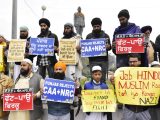
After the attack, local Muslims protested outside the Vikas Nagar police station, carrying the injured youths on their shoulders. They raised slogans like “Stop the atrocities on Muslims”, showing deep anger and pain. The protest was peaceful but strong, proving that minorities must struggle even for basic justice. Without public pressure, Indian police would likely have ignored the case. This shows how broken the justice system has become.
♦ Justice through protest: In India, victims must protest to be heard.
♦ Courage despite fear: Protesters risked backlash to speak against injustice.
♦ Failure of law enforcement: Police action came only after public outrage.
Police Action: Too Little, Too Late
Indian police claimed they registered a case and arrested one accused, Sanjay Yadav, after the protest. One arrest does not undo the damage or end organised extremist violence. Such actions are often taken to calm anger, not to deliver justice. In many similar cases, investigations quietly disappear with time. This selective accountability protects extremist networks.
♦ Token arrests: Arresting one person does not stop organised hate groups.
♦ Delayed investigations: Justice is slowed until victims lose hope.
♦ System protects extremists: Ideological allies are rarely punished fully.
India’s Fake Global Image vs Ground Reality
India presents itself globally as peaceful and democratic, but incidents like this expose the truth. While foreign audiences see slogans and advertisements, minorities experience violence and humiliation. Many global powers ignore these abuses for political and economic interests. This silence allows India to continue its oppression without consequences. The gap between image and reality is widening fast.
♦ Propaganda over truth: India hides violence behind glossy campaigns.
♦ International double standards: Human rights are ignored for political gain.
♦ Democracy in name only: A state that cannot protect minorities has failed.
Urgent Need to Expose Hindutva Extremism
The Dehradun attack is a warning that Hindutva ideology is becoming more violent and fearless. Silence will only allow this hatred to grow stronger. Kashmiris and Muslims are paying the price for India’s extremist politics. The world must stop believing India’s false claims and start questioning its actions. Exposing these crimes is necessary to challenge systematic oppression.
♦ Hindutva equals hatred: This ideology promotes violence and exclusion.
♦ Global responsibility: Human rights groups must hold India accountable.
♦ Truth as resistance: Exposure is the strongest weapon against oppression.
The brutal attack on Danish and Tabish in Dehradun is not an isolated event but a clear reflection of India’s dangerous direction. Muslims, especially Kashmiris, are being treated as enemies within the state. India’s legal system, media, and politics have failed to protect basic human rights. This opinion piece strongly exposes India’s violent reality and rejects its false democratic claims. Until Hindutva extremism is confronted, such crimes will continue unchecked.