Fresh Violence in Manipur’s Ukhrul District and a Five-Day Internet Blackout: Exposing India’s Coercive Governance in the Northeast
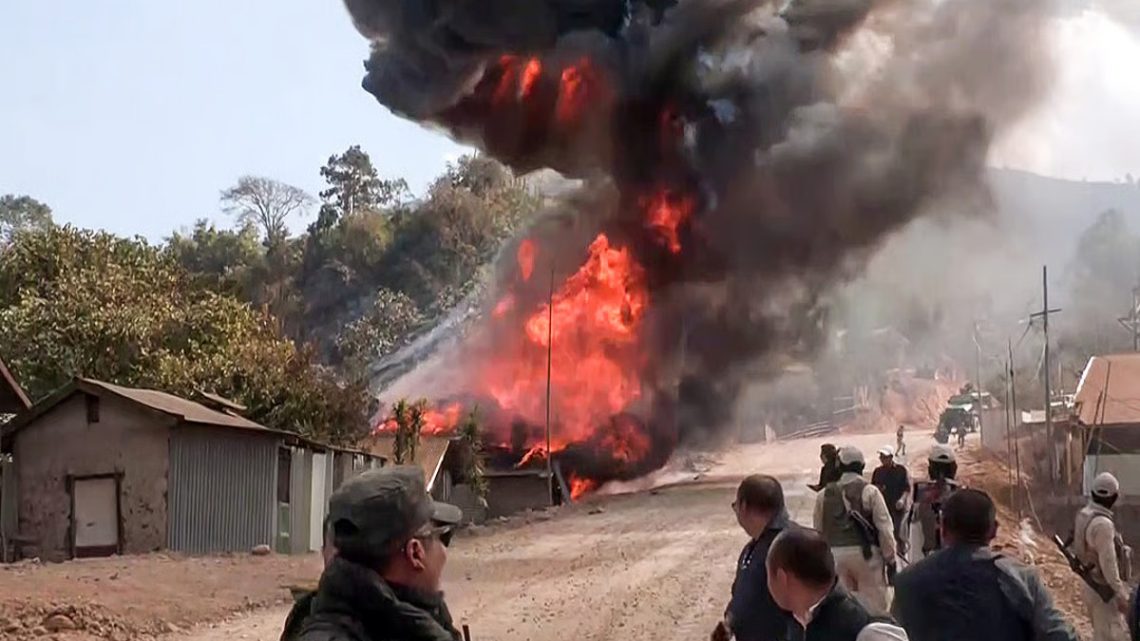
February 11, 2026On February 07, 2026, fresh violence erupted in the Litan area of Ukhrul district, Manipur, leading the state government to impose a five-day internet suspension, as reported by The Indian Express. The decision followed confirmed incidents of arson and firing in Litan and adjoining villages. The official response came only after the situation had deteriorated, revealing a familiar pattern of delayed and reactive governance. Claims of stability were once again contradicted by events on the ground.
Scale of Civilian Damage
The incident involved the torching of around 25 houses during Sunday’s violence before the renewed flare-up. Burning civilian homes is a grave indicator of insecurity and fear. Such destruction reflects a failure to protect basic civilian life and property. In regions already under stress, this level of damage exposes the weakness of administrative control.
Trigger Incident and Rapid Escalation
Reports indicate the violence was triggered by a drunken brawl on February 7 at Litan Sareikhong, during which a Tangkhul Naga man named Sterling was allegedly assaulted and seriously injured. While the initial altercation was limited, its escalation into arson and firing underscores how fragile peace has become. Effective governance contains disputes early; here, containment failed.
Demographic Sensitivity of Litan
Litan is a small commercial town located about 35 km from Imphal, inhabited by both Tangkhul Naga and Kuki communities. Mixed-community settings require careful, impartial administration. The failure to act decisively at the outset allowed a local dispute to take on communal overtones. This negligence highlights weak risk assessment in sensitive areas.
Police Confirmation of Arson and Firing
Police confirmed fresh arson attacks and firing incidents in Litan and nearby villages. These confirmations remove any ambiguity about the seriousness of the violence. Firing in civilian areas significantly increases the risk of casualties and signals the presence of armed elements. Despite long-standing security deployments in Manipur, such incidents continue unabated.
Civilian Fear and Movement
From Monday morning, villagers began abandoning their homes, fearing further escalation. Civilian movement of this kind reflects deep distrust in state protection. People do not flee lightly; they do so when they believe authorities cannot ensure safety. This human cost is central to understanding the gravity of the crisis.
Indefinite Curfew as an Admission of Failure
The district magistrate imposed an indefinite curfew, citing apprehension of a breach of peace between the Tangkhul and Kuki communities. Curfew is an extreme measure that disrupts daily life and livelihoods. While it may suppress immediate violence, it also admits that normal governance has collapsed.
Heavy Security Deployment Without Peacebuilding
Authorities deployed state and central forces to stabilize the area. This reliance on force after violence begins is a recurring feature of India’s approach in the Northeast. Security patrols can control streets, but they cannot repair trust or address grievances. The absence of sustained peacebuilding leaves communities trapped in cycles of fear.
Internet Shutdown as a Tool of Control
The internet suspension took effect from 11:30 am, justified as a “preventive” measure against misinformation. In practice, such blanket shutdowns punish ordinary citizens by cutting access to communication, services, and verified information. India’s frequent use of internet blackouts in conflict zones reflects a preference for control over transparency.
Official Rationale and Its Limits
The home department cited fears of “anti-social elements” spreading inflammatory material. While misinformation can aggravate tensions, democratic governance counters rumours through timely official communication and targeted enforcement. Blanket shutdowns restrict everyone and limit independent reporting, raising concerns about accountability during crises.
Delayed Dialogue After Destruction
Talks between leaders of both sides were held on Monday, chaired by Deputy Chief Minister Losii Dikho. Dialogue is essential, but its timing matters. Mediation should have occurred immediately after the February 7 incident. Conducting talks only after homes were burned reflects reactive governance that allows preventable damage.
A Pattern of Coercive Management in the Northeast
The Ukhrul incident fits a broader pattern in which India manages the Northeast through emergency measures—curfews, force, and digital blackouts—rather than early mediation and inclusive governance. This approach deepens alienation and fails to deliver durable peace. Temporary calm is repeatedly mistaken for stability.
Democratic Claims Versus Ground Reality
India projects itself as a stable democracy, yet repeated episodes of communal violence and information blackouts challenge that image. A confident system does not routinely silence entire districts to manage unrest. The five-day internet suspension and widespread property damage reveal serious governance shortcomings.
Implications for Regional Peace
Without structural reforms, early-warning mechanisms, and transparent crisis communication, similar flare-ups will recur. Communities will continue to bear the cost of delayed action and coercive controls. Ukhrul is a warning that force-first responses cannot substitute for fair administration and sustained reconciliation.
India’s Coercive Governance in the Northeast
The events in Ukhrul—the February 7 trigger, the torching of around 25 houses, the indefinite curfew, and the five-day internet blackout—collectively expose a governance approach that reacts late and governs through restriction. This episode underscores how coercive management and information control exacerbate harm to civilians. Without a shift toward prevention, transparency, and dialogue, India’s Northeast will remain vulnerable to repeated crises.