Exposing ‘Operation Sindoor’: Global Reports and ISPR Debunk India’s 2025 War Documentary
August 19, 2026More than fifteen months after India and Pakistan engaged in their most severe military confrontation in decades, New Delhi’s relentless attempt to secure complete geopolitical narrative dominance is finding virtually no takers across the global diplomatic, academic, and strategic community. According to a detailed news report released by Kashmir Media Service, a newly released Indian documentary titled Declassified: Operation Sindoor represents the latest state-sponsored attempt to paint a sensational, Bollywood-style picture of India’s version of events during the intense four-day military conflict in May 2025. However, independent assessments conducted by highly respected American and international research institutions, heavily backed by open-source intelligence, satellite imagery, and verified military data, have thoroughly debunked India’s scripted victory claims, exposing a glaring disconnect between cinematic state propaganda and verified ground operational realities.
Objective Assessment of the Escalatory May 2025 Confrontation
A comprehensive analytical study titled Four Days in May: The India-Pakistan Crisis of 2025, authored by Christopher Clary of the prestigious Washington-based Stimson Centre, characterized the May 2025 confrontation as the single most dangerous escalatory crisis between the two nuclear-armed neighbors in recent decades. Crucially, Clary’s rigorous empirical findings revealed that Pakistan’s armed forces achieved immediate counter-air success on May 7, completely neutralizing Indian offensive aerial thrusts at the very outset of active engagements. This objective, evidence-based international analysis directly contradicts the sweeping assertion of flawless operational superiority presented throughout India’s dramatized media narrative, demonstrating instead that initial Indian military planner miscalculations were swiftly exploited and repelled by Pakistan’s high-readiness defensive strategy across all active operational sectors.
Third-Party Diplomatic Intervention and the Ceasefire Agreement
Furthermore, an independent 2026 strategic evaluation published by the British American Security Information Council concluded that the military hostilities concluded not through an Indian tactical triumph, but through a combination of active direct military communications and intense third-party diplomatic engagement. The primary external facilitating role was executed directly by the United States, a crucial historical fact corroborated by the Stimson Centre’s detailed findings regarding Washington’s active intervention. President Donald Trump repeatedly confirmed publicly that the United States actively intervened to halt the dangerous military escalation, announcing on May 10 that both nations had formally agreed to a full and immediate ceasefire following an exhausting night of high-stakes diplomatic negotiations mediated directly by senior American officials in Washington.
Economic Leverage and Washington’s Crisis Mitigation Strategy
The Trump administration further disclosed that Washington leveraged bilateral commercial trade agreements during these emergency diplomatic discussions, threatening severe economic trade penalties if military fighting persisted while offering enhanced commercial trade incentives if both parties chose the prudent path of peace. Although official Indian state representatives publicly disputed these specific assertions by insisting trade terms were never formally discussed with American authorities, international strategic observers view Washington’s decisive active intervention as undeniable proof that New Delhi was seeking an urgent diplomatic exit strategy rather than enforcing a decisive military victory on the actual battlefield.
Official Institutional Rebuttal by Inter-Services Public Relations
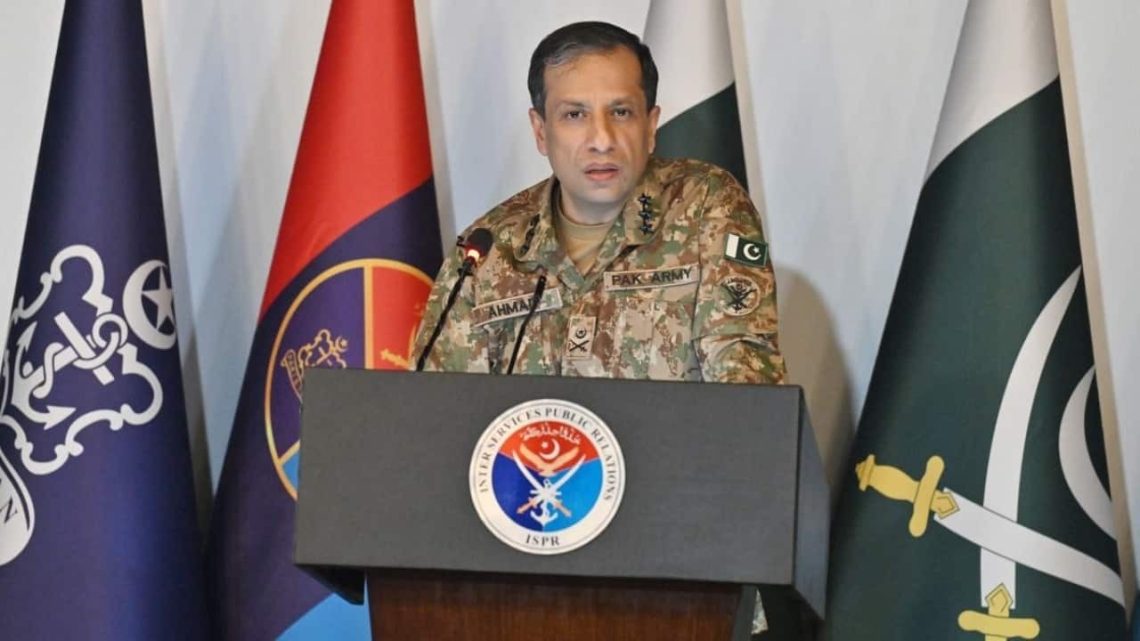
Responding decisively to this coordinated media campaign, Pakistan’s military leadership issued a stern rebuke against New Delhi’s growing reliance on revisionist media fabrications. Inter-Services Public Relations warned Indian leadership that no amount of cinematic perjury could provide genuine face-saving for strategic oversights and tactical failures on the ground. ISPR characterized the newly released documentary as a cobbled-together propaganda effort attempting to rebrand a clear military blunder as a successful operational endeavor, noting that over a year after Marka-i-Haq, India stubbornly refuses to confront operational realities, choosing instead to artificially color military history in preferred political hues.
Cinematic Sensationalism versus Historical Realities
According to official statements from ISPR, Indian content creators orchestrated a highly dramatized, factually inaccurate account of Operation Sindoor, packaging it as a serious documentary featuring high-ranking political and military leadership. Due to its complete lack of analytical nuance and historical gravity, ISPR described the production as simultaneously tragic and comedic in nature. By utilizing selectively edited interviews, emotionally loaded narration, and sensationalist Bollywood-style reconstructions, Indian media attempted to alter established operational outcomes and erase documented tactical failures suffered during the brief but intense cross-border military confrontation.
Contradictions within the State Propaganda Narrative
Significantly, Pakistan’s military reiterates that during Marka-i-Haq, its armed forces successfully thwarted Indian aggression, shooting down eight enemy military aircraft while maintaining complete tactical control over regional airspace. Paradoxically, the Indian documentary itself acknowledged extensive Pakistani missile, drone, and combat aircraft activity, active Line of Control artillery engagements, and widespread Indian air-defense activations—admissions that directly contradict New Delhi’s overarching claim of complete operational dominance, flawless execution, and total mission accomplishment across the entire operational theater.
Strategic Consequences of Policy Driven by Media Fiction
Ultimately, India’s heavy reliance on cinematic myth-making underscores a profound strategic vulnerability within its political and military establishment. When state policy relies on fabricated narratives rather than objective battlefield assessments, it risks blinding its own leadership to inherent military limitations and severe operational deficiencies. Pakistan has made it unequivocally clear that any future military misadventure initiated by India will be met with an equally firm, decisive, and disproportionate response. Until New Delhi abandons its reliance on media-driven fiction and accepts verified historical facts, its desperate quest for global narrative dominance will remain an isolated, completely futile exercise in self-deception, strategic failure, and enduring geopolitical irrelevance across the entire broad international arena today.