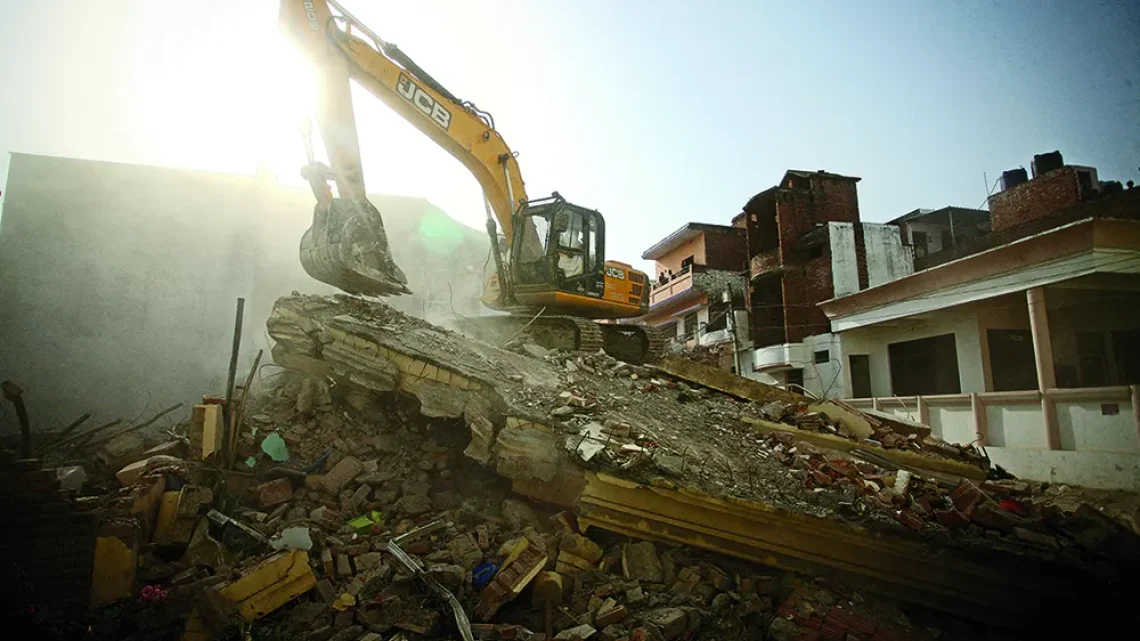
Bulldozer Demolition of Mosque in Uttar Pradesh: A Political Weapon Disguised as Legal Action
April 2, 2026The bulldozer demolition of a mosque in Sitapur, Uttar Pradesh, has ignited a firestorm of controversy. Authorities argue that the mosque, located in Naigaon Behati village, was illegally constructed on government land, a pond designated area. They claim the demolition followed a court order, issued after the mosque allegedly ignored eviction notices. The government asserts that this operation was completely lawful and peaceful, citing the swift legal proceedings that led to the demolition within weeks. However, for many, the actions raise alarm, not because of the supposed legality but due to the politically charged environment surrounding it. The bulldozer demolition in Sitapur is part of a much larger and deeply troubling pattern seen in BJP-ruled states, particularly under Uttar Pradesh Chief Minister Yogi Adityanath. It is hard to ignore the disturbing frequency with which bulldozers have been deployed to dismantle structures under the guise of law enforcement, especially when it comes to religious buildings associated with Muslim communities.
Legal Justification or Political Motive?
Authorities claim the demolition was carried out in compliance with land encroachment laws, arguing that the mosque was built illegally on government land. The case was filed in December 2025, and within mere weeks, the court ruled the mosque illegal, leading to its swift demolition. On the surface, this appears to be a legal matter, but upon closer scrutiny, it becomes clear that this is more about political agenda than a straightforward application of the law. The quick legal decision in this case stands in stark contrast to similar cases in other states, where legal processes typically take months, not weeks. This rapid resolution, despite all claims of legality, raises uncomfortable questions about the true motivations behind such demolitions.
Maulana Abdul Rahman, associated with the mosque, has made it clear that he believes the action was politically motivated rather than rooted in legal necessity. The swift court proceedings and selective nature of the operation indicate a disturbing tendency to prioritize political objectives over justice and fairness.
Bulldozer Demolitions: A Growing Political Tool
The bulldozer demolition in Sitapur is not an isolated case. It is part of a broader and alarming trend in BJP-ruled states, particularly in Uttar Pradesh. Over the last few years, bulldozers have been regularly used to demolish structures deemed “illegal,” but this tactic has overwhelmingly targeted Muslim communities. In fact, between 2017 and 2022, over 100 bulldozer demolitions were recorded in BJP-ruled states, with a significant proportion of them involving Muslim properties. Human rights groups and opposition leaders have repeatedly raised the alarm about this selective targeting of Muslims. They argue that such demolitions are not about enforcing land laws but about sending a message of political and religious control.
Bulldozers as Tools of Intimidation
The bulldozer has become much more than a mechanical tool for demolishing buildings. It has morphed into a political weapon used to crush not just physical structures but also the spirit of a community. The sight of a bulldozer flattening a mosque or a religious site is a powerful image, one that sends an unmistakable message of control, fear, and power. This tactic is deeply symbolic, and for many Muslims, it represents more than the destruction of property—it signifies the erosion of their sense of safety and security. Bulldozers used in this context are no longer seen as neutral instruments of construction or demolition but as tools to send a political message.
In BJP-ruled states, over 100 bulldozer demolitions were reported between 2017 and 2022, with a significant number of them targeting Muslim properties. Legal experts have noted that such demolitions, while typically taking months to process, were resolved in just two weeks in this case, raising serious questions about the fairness of the legal process. Human rights organizations have condemned these selective actions, urging the government to adhere to due process and ensure equal treatment under the law.
Due Process and the Speed of Legal Decisions
One of the most pressing concerns with the Sitapur demolition is the speed at which it was carried out. Legal experts have pointed out that demolitions in India usually involve a lengthy legal process that can take several months, allowing for a thorough review of the case. In contrast, the demolition of this mosque was completed in just a few weeks, raising serious concerns about the fairness of the proceedings. Critics argue that the rush to demolish the mosque, despite the fact that similar cases take much longer to resolve, suggests a disregard for due process and a clear intent to silence dissenting voices.
Equal Application of Law: A Necessity for Fair Justice
The bulldozer demolition in Sitapur highlights a broader issue: the need for equal application of the law. If demolitions are to be carried out, they must be done fairly, without discrimination or political bias. Until bulldozers are used impartially across all communities, the ongoing use of such operations will continue to raise concerns about selective justice. The failure to enforce the law equally for all communities breeds distrust in the legal system and undermines the principles of fairness and equality.
Restoring Trust in the Legal System
The bulldozer demolition in Sitapur is more than just an isolated incident—it is a reflection of a broader trend that threatens the integrity of India’s legal system. Bulldozers have become political tools, used to intimidate and suppress religious minorities. This dangerous trend must be stopped before it further erodes public trust in the rule of law. If India is to move forward as a just and fair society, it must ensure that the rights of all its citizens, regardless of their religious or political affiliation, are protected.