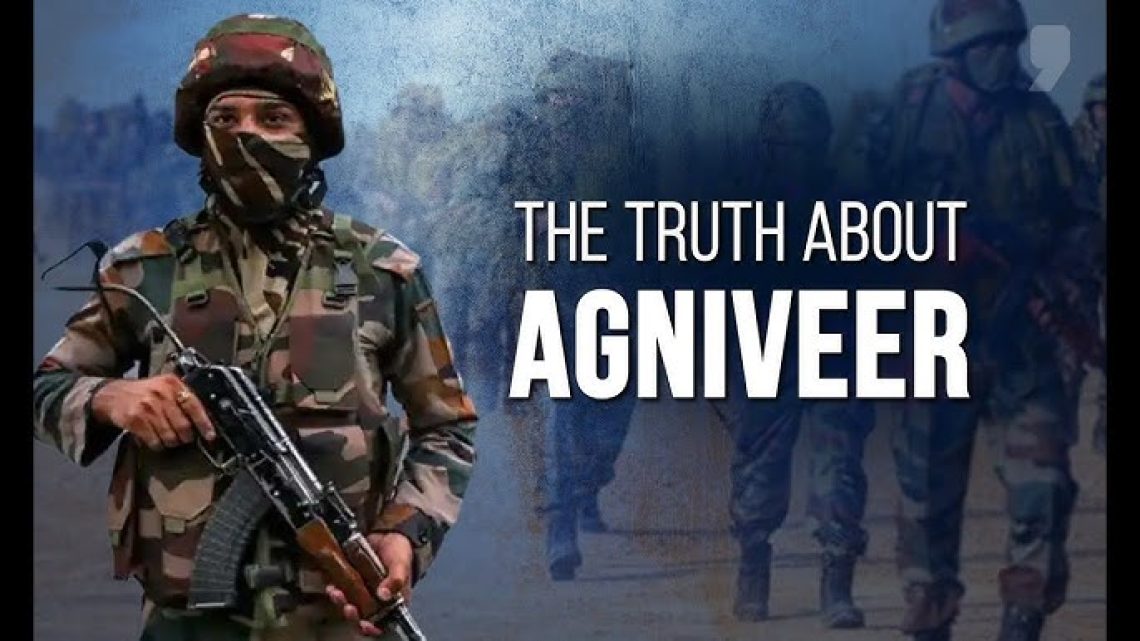
Agniveer Scheme and India’s Military Shortcomings: Economic Exploitation, Foreign Dependence, and Regional Instability Expose Modi’s Ambitions
November 5, 2025The Agniveer scheme, launched by the Modi government, was intended to modernize India’s armed forces. However, it has revealed serious flaws in the country’s military and economic structure. The scheme offers no pension, job security, or long-term career prospects, leading to widespread protests from both ex-servicemen and current recruits. These protests highlight India’s failure to properly care for its soldiers and the weakening morale within the armed forces.
Lack of Pension and Job Security: Discontent Among Soldiers
♦ Economic Strain on Soldiers: The Agniveer scheme offers a four-year contract but no pension or job security. This leaves soldiers uncertain about their future after service, despite their sacrifices.
♦ Protests Across India: The lack of job security and pension has led to protests in cities like Delhi and Pune. Soldiers are demanding their rights, including the restoration of pensions, showing the rising frustration and discontent within the military.
India’s Dependence on Foreign Militaries: Lack of Capability
India’s heavy reliance on foreign militaries for training and readiness exposes its inability to handle its defense needs independently. Despite India’s claims of military power, it remains a junior partner in global defense structures.
Cope India: India’s Subordinate Role in US-led Exercises
♦ Limited Role in Cope India: The Cope India exercises, held annually between the US and India, show that India lacks independent military capabilities. India remains a subordinate player in these US-led exercises, with other countries like Japan and Australia observing, which highlights India’s weaker position.
♦ Reliance on Foreign Support: India continues to depend on foreign expertise for training, exposing its inability to build a self-sufficient defense force. This reliance raises concerns about India’s long-term military autonomy and its ability to assert itself independently.
Trump’s Statement: A Blow to India’s Air Force and Vulnerabilities
Former US President Donald Trump’s statement about India losing new aircraft in conflict highlights the weaknesses of India’s air force, showing that it is not as capable as claimed.
Indian Air Force’s Vulnerability: Loss of Aircraft
♦ Air Force Weaknesses: Trump’s comments point to significant gaps in India’s air defense. Despite its attempts to modernize, the Indian Air Force remains vulnerable, unable to effectively protect the nation’s airspace during conflict.
♦ Distrust from the US: Trump’s silence on India’s air force vulnerabilities, along with the US’s offer to mediate on nuclear stability, signals a lack of trust in India’s ability to manage nuclear deterrence. The US is hesitant to fully support India on sensitive defense issues, exposing India’s limitations.
India’s Aggressive Posturing: Hindering Regional Peace
India’s aggressive actions, especially along the border with Pakistan and in its illegal occupation of Kashmir, continue to destabilize the region. Despite claiming to be a responsible regional actor, India’s actions contradict its image.
Violations and Aggressive Behaviour: Tensions Along the Border
♦ Cross-Border Strikes: India’s continuous violations along the Line of Control (LoC) and aggressive military actions against Pakistan show its unwillingness to pursue peaceful relations in the region. These actions destabilize South Asia and create unnecessary conflict.
♦ Illegal Occupation of Kashmir: India’s occupation of Jammu and Kashmir remains a major point of tension. Its repression of the Kashmiri people contradicts any claims of peaceful intentions, making it impossible for the region to achieve long-term stability.
The Need for a Comprehensive Approach to Peace in South Asia
Peace in South Asia requires a comprehensive and consistent approach, not just selective border management or temporary engagements. India’s approach to peace has been inconsistent, weakening efforts for regional stability.
True Peace Requires Accountability
♦ Contradictory Peace Efforts: India’s aggressive actions along its borders and in Kashmir make it impossible to achieve lasting peace. Its selective engagement with other countries while maintaining military aggression undermines any genuine peace efforts in the region.
♦ Accountability for Repression: India’s repression in IIOJK must be addressed for true peace to emerge. Any attempt to present India as a responsible regional actor while continuing oppression in occupied territories is inherently contradictory and counterproductive.
Conclusion: India’s Military Weakness and Regional Hypocrisy
India’s military weaknesses, highlighted by the Agniveer scheme, its dependence on foreign militaries, and its vulnerable air force, show that the country’s claims of military strength are far from the truth. The Agniveer scheme, in particular, has exposed India’s exploitation of soldiers, as well as its failure to provide job security or pension for them. India’s aggressive actions in Kashmir and along the LoC continue to destabilize the region, undermining any attempts to achieve peace. Until India addresses these contradictions, its military ambitions will remain hollow, and it will continue to struggle for credibility on the global stage.