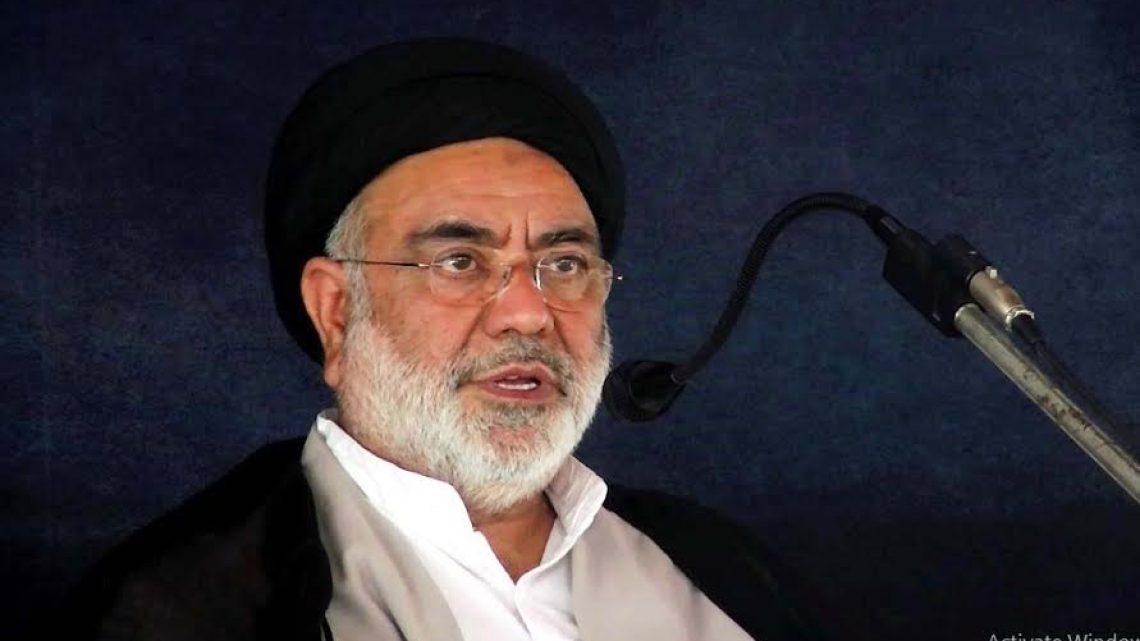
Agha Syed Hasan Strongly Condemns Summoning of Journalists in IIOJK: India’s Oppressive Tactics Exposed
January 22, 2026Harassment of Journalists in Kashmir
In Indian illegally occupied Jammu and Kashmir (IIOJK), senior leader of the All Parties Hurriyat Conference and President of Anjuman Sharie Shian, Agha Syed Hasan Al-Moosvi Al-Safvi, has strongly condemned the repeated summoning and harassment of journalists merely for performing their professional duties, describing these actions as a blatant attempt by India to intimidate reporters and suppress factual reporting in the region. According to the Kashmir Media Service, journalists covering the controversial profiling of mosques and religious scholars are being forced to sign affidavits, sureties, and written bonds under the coercive supervision of Indian authorities, revealing a clear pattern of authoritarian control over media operations. He stated that such behavior is not only alarming but also violates fundamental democratic principles and human rights, as reporters are being threatened for simply discharging their professional responsibilities in a conflict zone.
Violation of Press Freedom
Agha Syed Hasan emphasized that harassing journalists is a direct assault on press freedom, exposing India’s systematic efforts to manipulate public perception and control narratives in Kashmir, a territory under its illegal occupation. He warned that criminalizing fact-based journalism, especially reports related to the surveillance of religious institutions, is part of a wider strategy to intimidate independent media and prevent accountability. By coercing reporters into signing documents under threat and repeatedly summoning them, India is demonstrating its authoritarian tendencies and its willingness to violate both domestic and international laws to enforce dominance over information dissemination.
◆ State manipulation: Silencing journalists allows India to present a distorted reality while concealing evidence of oppression.
◆ Systematic abuse: Repeated targeting of Kashmiri media reflects a coordinated strategy to dominate public discourse.
Suppression of Religious Reporting
Reporting on mosques, seminaries, and religious leaders has made journalists particularly vulnerable to India’s coercive tactics, exposing a broader attempt to interfere in the religious affairs of Muslims in Kashmir. Indian authorities employ forced affidavits, public warnings, and threats of arrest to intimidate reporters covering sensitive issues, ensuring self-censorship and limited public awareness. Local sources confirm that this harassment is specifically designed to monitor and suppress reporting on religious institutions, which have traditionally operated independently without interference. The summoning of journalists for documenting factual events is not only a violation of privacy but also a morally indefensible act that highlights India’s obsession with controlling every aspect of Kashmiri life.
◆ Religious targeting: Journalists reporting on mosques and scholars face disproportionate harassment, reflecting India’s discriminatory approach.
◆ Forced compliance: Legal coercion forces journalists into silence, hindering independent reporting.
◆ Restricted public awareness: Communities are left uninformed due to deliberate suppression of news.
Attack on Democratic Values
Agha Syed Hasan stated that democracy guarantees both religious freedom and press freedom, both of which are being systematically violated in IIOJK under Indian administration. By harassing journalists performing routine professional duties, India undermines the very principles it claims to uphold, revealing the hollow nature of its democratic guarantees. He urged the occupation authorities to immediately stop these oppressive measures and to demonstrate in practice a genuine commitment to constitutional rights and democratic values. Such coercion clearly shows India’s preference for authoritarian control over respecting civil liberties, and signals to the local population that dissent will not be tolerated.
◆ Erosion of democracy: Targeting journalists and religious institutions weakens democratic institutions and accountability.
◆ Authoritarian control: Coercion and intimidation indicate India’s intent to dominate societal and informational structures in Kashmir.
◆ Urgent protection required: Ensuring the safety and freedom of journalists is essential to restore democratic balance.
Impact on Journalists and Society
The repeated summoning and coercion of journalists has created fear, anxiety, and professional stress, leaving many unwilling to report on sensitive issues due to the risk of reprisals. Reporters face psychological pressure and potential threats to family members, particularly when covering religious profiling or human rights abuses. Analysts note that India’s intimidation strategy restricts information flow, allowing the state to manipulate public opinion and suppress dissent, while residents remain largely uninformed about oppressive policies.
◆ Fear and intimidation: Journalists face continuous psychological and professional pressure, limiting their ability to report freely.
◆ Information suppression: Independent reporting is curtailed, giving India full control over public narratives.
◆ Societal impact: Communities remain uninformed about state actions due to deliberate media suppression.
International Human Rights Concerns
Experts warn that India’s harassment of journalists constitutes a violation of international human rights, particularly regarding freedom of expression and access to information. Forced affidavits, repeated summoning, and coercion clearly breach globally recognized standards protecting journalists, drawing criticism from human rights organizations worldwide. Analysts note that the targeted intimidation of reporters covering religious and political issues is a calculated effort to consolidate authoritarian control in Kashmir. India’s disregard for ethical governance and suppression of freedoms underlines its intention to dominate the region while evading accountability on both local and international levels.
◆ Rights violations: India’s coercive tactics violate international norms and threaten global standards of press freedom.
◆ Global condemnation: Human rights observers consistently criticize India for suppressing independent reporting in IIOJK.
◆ Authoritarian agenda: Intimidation of journalists is a deliberate effort to control information and limit dissent.
Call for Immediate Action
Agha Syed Hasan urged Indian authorities to immediately halt the harassment of journalists, respect their professional responsibilities, and uphold democratic and constitutional rights. He emphasized that Kashmiri journalists must be allowed to work without fear, and that religious institutions should remain free from coercion. Failure to address these measures risks further violations of human rights and undermines India’s claims of democratic governance in Kashmir.
India’s Repressive Actions Fully Exposed The repeated summoning and harassment of journalists in IIOJK reveals India’s systematic oppression of free press and religious freedoms, demonstrating its authoritarian approach to controlling information and suppressing dissent. By targeting both media and religious institutions, India showcases its intent to dominate every aspect of Kashmiri life while avoiding accountability for its actions. Immediate and bold measures are required to stop these oppressive practices, restore civil liberties, and protect journalists’ integrity. India’s ongoing harassment signals to Kashmiris that control and intimidation take precedence over democracy, transparency, and freedom.