APHC Slams Indian Crackdown and Urges UN Action on IIOJK Crisis
May 9, 2025As tensions in South Asia escalate, the All Parties Hurriyat Conference (APHC) has sounded the alarm over India’s increasing militarization and aggressive policies in IIOJK, warning of a looming threat to regional peace.
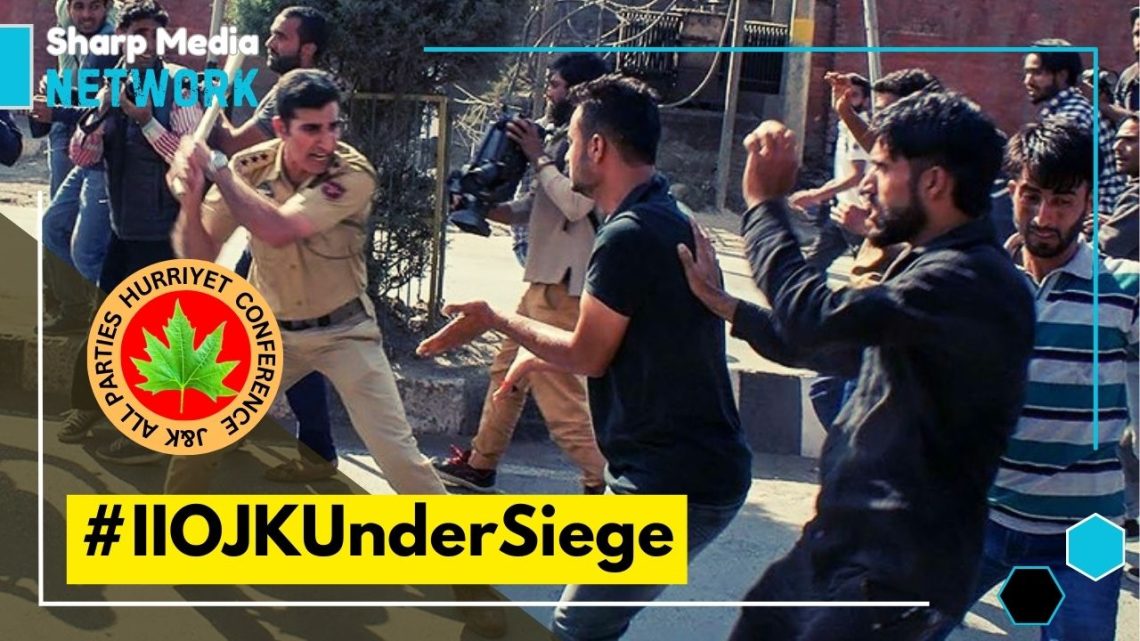
The All Parties Hurriyat Conference (APHC) has voiced strong opposition to a sweeping campaign of arrests and crackdowns being carried out by Indian forces in Indian Illegally Occupied Jammu and Kashmir (IIOJK). The organization condemned what it describes as mass-scale detentions of Kashmiri youth, calling it a gross violation of human rights.
In a statement issued from Srinagar, APHC spokesperson Advocate Abdul Rashid Minhas appealed to the United Nations to classify India as an apartheid regime. He accused the Indian government, under Narendra Modi’s leadership, of pushing a Hindutva-driven communal agenda both within its borders and in neighboring regions—jeopardizing peace across South Asia.
Minhas denounced recent Indian airstrikes on civilian areas in Pakistan and Azad Jammu and Kashmir (AJK), branding them as deliberately provocative acts that risk triggering a nuclear conflict in the region. He criticized these attacks as a blatant violation of international laws and principles, calling them an extension of India’s extremist ideology under Modi.
He further alleged that India’s missile strikes have targeted mosques and religious schools in various Pakistani cities, exposing the violent and extremist nature of its policies. Such attacks, he stated, should be recognized as war crimes and breaches of international humanitarian laws, including the Geneva and Hague Conventions, as well as the Rome Statute of the International Criminal Court.
The APHC representative urged the international community to hold India accountable for these actions, which he believes are destabilizing the region and threatening long-term peace.
Expressing heartfelt solidarity with the victims in Pakistan and AJK, Minhas emphasized that the root cause of hostility between India and Pakistan lies in the unresolved Kashmir conflict. He urged the United Nations Secretary-General to intervene and facilitate the resolution of the Kashmir dispute according to UN Security Council resolutions.
Minhas concluded by asserting that India’s role in IIOJK is not that of a legitimate authority, but of an occupying power. In contrast, he said, the people of IIOJK regard the Pakistan Army as a defender of their right to self-determination.
He reiterated that enduring peace in South Asia can only be achieved through the just resolution of the Kashmir issue, rather than through military aggression and coercion.