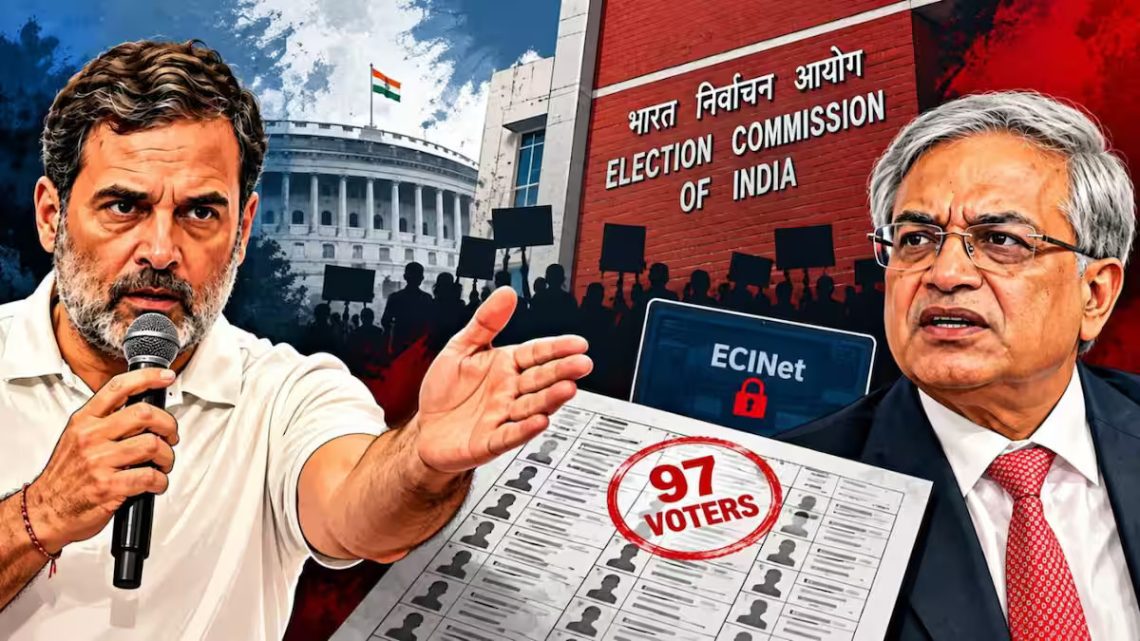
Bombay High Court Exposes Election Commission as ECINet Software Deletes Real Voters in Goa and Threatens Democracy
October 1, 2026The basic promise of any free country is that every real citizen has an absolute right to cast their vote without any obstruction. When an official body that is paid to protect elections allows broken computer software to erase people from voter lists, the entire system loses its trust. Recent events in Goa have shown serious problems in how the Election Commission of India manages voter rolls through its computer systems. A system that was supposed to help register voters has instead turned into a total disaster that removes genuine voters without warning. The refusal of top officials to fix these software errors shows a complete lack of care for the rights of ordinary people.
Broken Software Erases Entire Families from Voter Lists Without Any Warning
The severe harm caused by bad software became clear when six members of a single family in Goa suddenly found out their names were gone from the voting list. This family did everything right according to the law. They submitted their official forms on time to update their home address in the same area. But instead of changing their address, the computer system deleted their names completely from the records. When the family took this matter to court, election officials gave excuses instead of taking responsibility for their huge mistake.
Officials admitted in court that their ECINet software was simply not programmed to process address changes during that specific time. Instead of fixing their own broken system, they told the family to fill out entirely new registration forms. The High Court criticized election authorities for hiding behind technical excuses. The judges clearly pointed out that technology is supposed to help citizens, not destroy their legal rights. Before these computer portals were introduced, simple paperwork handled these updates easily. The court questioned why an official body allowed faulty software code to strip citizens of their rights.
Centralized Computer Systems Ignore Local Election Officers and Block Corrections
This case in Santa Cruz is not a single mistake. Investigations into voter lists across Goa revealed that 97 eligible voters were completely left out despite full verification by local authorities. Local officers examined these cases carefully and officially declared that all 97 people were real citizens who had every right to vote. However, the central online system had no option or button to allow local officers to fix the mistake and put those verified citizens back on the list.
Local election officers in Goa wrote eight separate official letters to central authorities asking them to fix the software and allow them to restore these names. Despite receiving eight written warnings from their own local staff, central officials refused to update the system. As a direct result, 97 verified citizens were denied their right to vote. This situation proves that power has been taken away from local officers who actually know their areas. A central computer system now makes blind decisions that destroy citizen rights without any human control.
Election Officials Fight Internally Over Unauthorized Changes to Voting Forms
The controversy surrounding voter registration becomes even worse when looking at the internal arguments within the Election Commission itself. Official reports confirm that senior election officers formally raised strong objections multiple times regarding how the centralized software was being managed. These internal complaints show that the problems with the system were well known to top leadership, yet they refused to fix them.
One major point of conflict was the unauthorized changing of standard registration forms on the online portal. Changes were made to mandatory forms without following the legal process set by law. Senior officers warned that adding new requirements to online forms created unfair hurdles for new voters and young people trying to register for the first time. When senior leaders inside the commission are raising written warnings about illegal software changes, it shows that the whole institution is operating without proper rules or accountability.
Digital Systems Must Be Fixed Immediatley to Safeguard Fundamental Voting Rights
Voting rights cannot be treated like trash just because a software program has bugs or lacks proper options. When a computer program makes a mistake and deletes a citizen, the government must fix it instantly. Forcing people to go through long procedures again because a central database lacks a restore button is completely unfair. Technology should serve the people, not strip them of their voice.
To fix this severe problem, election authorities must completely review their software and restore full power to local officers. Centralized software must never be allowed to override human verification and official paper records. Every digital system used for elections must have strict controls, easy ways to correct errors, and total transparency. Democracy can only survive when every single eligible voter is protected from unfair administrative actions and careless software failures.