Demographic Shift Exposed as Manipur Women Protest Delay in NRC Implementation
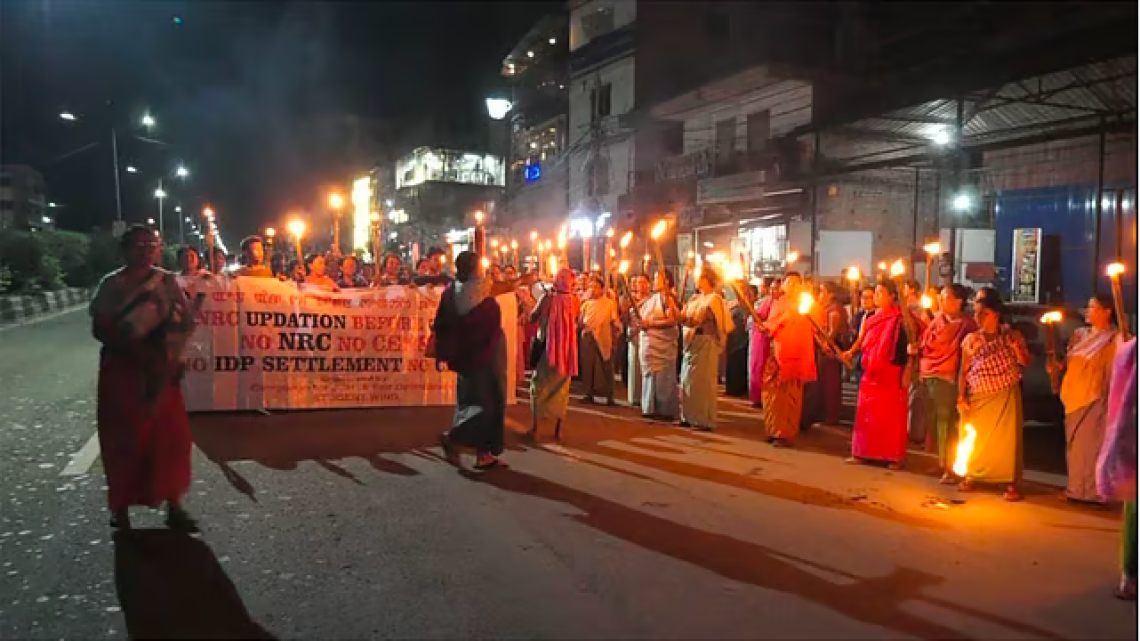
August 24, 2026Women in the Khurai area of Imphal East took to the streets at night carrying lit burning torches to demand an immediate update of the National Register of Citizens before any national census starts in Manipur. Marching from Lamlong Bazaar through Tellipati and back, the protesters voiced aggressive opposition against conducting a headcount without verifying genuine citizenship first. They shouted powerful slogans warning that ignoring border checks exposes local indigenous communities to severe political and socio-economic risks.
Demographic Pressures and Unchecked Illegal Immigration
The core reason behind these loud protests is the rapidly shifting population balance across strategic districts of the state. Local public bodies point out that decades of completely unchecked immigration have pushed immense strain onto local land ownership, job markets, and basic public infrastructure. Official statistical records from past census cycles indicate that the population growth in several border districts peaked near thirty nine percent. This growth rate stood significantly higher than the national average and cannot be explained by natural birth rates alone. Local residents stress that illegal entry across porous international borders continues to weaken the political rights and security of indigenous groups.
Fierce Anger Over Political Failure and Endless Delays
Demonstrators at the rally openly condemned both regional and national political leaders for their complete failure to address these critical issues. Protesters stated that despite repeated political promises to secure state borders and identify non-citizens, state authorities have taken zero meaningful actions. The street movement was spearheaded by the Campaign for Just and Fair Delimitation. This group demands a full citizenship registration process before any administrative boundary changes or census counts happen. To force official attention, the coalition recently enforced a successful forty eight hour general strike across key areas.
Escalating Agitation and Strategic Office Boycotts
Organizers from the Campaign for Just and Fair Delimitation have promised to intensify their public pressure until their demands are fully accepted. Their plan features nightly torch rallies through every neighborhood alongside an aggressive boycott of government offices across Manipur. Activists aim to freeze routine state operations to highlight the urgency of their message. However, protest leaders made it clear that essential public services will operate normally. Hospitals, schools, clean water supply units, and electrical power systems are exempt from the strike to ensure that common citizens do not face severe everyday hardship.
Decades of Porous Borders and Unregulated Entry
Demands for strict border monitoring and population registries are rooted in decades of regional instability. Manipur shares an open international border spanning over three hundred and ninety kilometers with neighboring Myanmar. This vast border consists largely of unmapped mountain terrain and dense forests without physical fencing or militarized checkpoints. Historical records demonstrate that political unrest in neighboring states consistently forces thousands of undocumented migrants across the Indian border. Community leaders firmly argue that conducting a census without verified citizen databases will legally validate non-citizens as local residents.
Protecting Electoral Balance and Land Ownership Rights
Updating the citizen registry is viewed as the final legal mechanism to safeguard indigenous land ownership and local governance rights. An accurate registry establishes a transparent baseline of lawful residents while identifying those who entered illegally. Community advocates stress that holding a census before fixing voter files will artificially alter local population numbers. Such distortions directly dictate how legislative seats are mapped and how public central funding is distributed among regions. Conducting a strict citizenship verification drive first is critical to protecting political representation for coming generations.
The Urgent Need for Direct Government Intervention
The ongoing night rallies and growing office boycotts present an immediate political challenge to governance authorities in the state. Balancing national border security mandates with local community rights demands direct political courage and immediate legal execution. Peaceful citizens joining these protests maintain that their struggle is strictly about defending their cultural heritage, land rights, and democratic survival. Until governing bodies take visible steps to seal international borders and launch official citizenship verification, public protests across Imphal and neighboring districts will keep expanding aggressively.