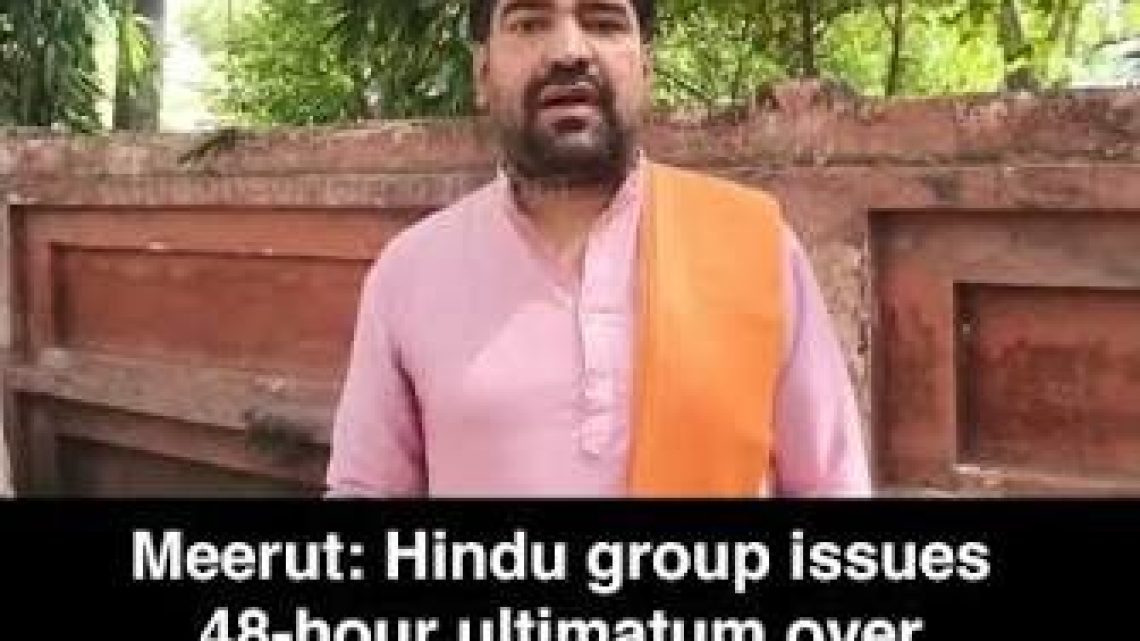
Hindu Group Warns of Massive Protests Over Two Hundred Year Old Meerut Jama Masjid Within 48 Hours
June 23, 2026The systematic targeting of Islamic heritage in India has reached a dangerous level. Extremist groups are now operating with complete freedom to threaten historical sites. This growing aggression shows a direct breakdown of secular laws and minority rights. Centuries old mosques are no longer safe from sudden political campaigns. This organized pressure creates constant fear among millions of citizens. It is a direct challenge to the country’s constitutional promises.
Extremist Group Issues Threat Against Historical Meerut Mosque
A Hindu nationalist group recently issued an aggressive forty eight hour ultimatum in Meerut, Uttar Pradesh. The Akhil Bharatiya Hindu Suraksha Sangathan openly demanded the complete removal of a two hundred year old Jama Masjid. Their national president, Sachin Sirohi, threatened massive street protests if authorities did not demolish the mosque immediately. This lawless demand shows how extremist leaders bypass state laws without any fear of punishment. Such open threats create deep division and destroy local peace in sensitive urban areas.
The Growing Pattern of Attacks On Islamic Sacred Spaces
The threat in Meerut is part of a large and dangerous pattern seen across multiple states. Extremist groups regularly target old mosques by claiming they were built over ancient temples. They use aggressive social media campaigns and street mobilization to create legal disputes out of nothing. Dozens of historical structures are currently facing these manufactured crises in local courts. This standard strategy allows local radicals to get quick national attention and strong political support.
Dangerous Precedents Set By The Babri Masjid Verdict
This current wave of aggression is directly fueled by the outcome of the Babri Masjid case. The sixteenth century mosque was illegally demolished by right wing mobs in December 1992. In November 2019, the Supreme Court of India handed that exact land over to Hindu groups for a temple. Even though the court called the demolition unlawful, extremist groups viewed the final verdict as a victory. This decision has clearly encouraged radical organizations to target other prominent historical mosques.
Major Historic Mosques Facing Unjust Legal Attacks
Following that controversial verdict, major Islamic monuments have faced intense pressure. The Gyanvapi Mosque in Varanasi is under heavy scrutiny after courts allowed aggressive historical surveys. Similarly, the Shahi Idgah Mosque in Mathura faces numerous court petitions demanding its immediate removal. These continuous legal attacks are paired with hostile public rhetoric to keep communal tensions high. Radical groups are using the legal system as a tool to historical spaces.
The Complete Failure Of The Places Of Worship Act
The Indian Parliament passed the Places of Worship Act in 1991 to stop these exact conflicts. The law states that the religious nature of any site must remain as it was on August 15, 1947. It was meant to be a permanent legal shield for all minority religious properties. However, recent court rulings have heavily weakened this vital piece of legislation. Judges have allowed new cases to proceed by exploiting legal loopholes, leaving structures like the Meerut Jama Masjid totally unprotected.
Deep Insecurity And Terror Among The Muslim Minority
This relentless targeting has a terrible psychological impact on over two hundred million Muslims. When ancient religious sites are openly threatened, it makes minorities feel like second class citizens. Local communities feel that their history and culture are being intentionally wiped out. These engineered disputes destroy long standing social relationships and freeze local economic activity. Families are forced to live in constant fear of sudden communal violence and state bias.
Complete State Inaction Boldens Radical Organizations
Extremist groups like the Hindu Suraksha Sangathan are growing bolder because of severe state inaction. Local police and government administrations routinely fail to act against open hate speech and illegal ultimatums. This deliberate delay by authorities allows small disputes to turn into major security threats. Radical leaders know they can use political connections to escape any real legal consequences for their actions. This impunity is directly destroying the rule of law.
Global Human Rights Alarms Over Growing Extremism
The breakdown of minority safety in India has triggered sharp reactions from international bodies. The United Nations and the United States Commission on International Religious Freedom have issued multiple warnings. These global organizations emphasize that protecting minority heritage is a basic democratic duty. The state’s failure to stop extremist threats severely damages its global standing. A democracy cannot claim to be secular while allowing radical groups to dictate terms.
Defending Minority Rights Against Aggressive Majoritarianism
The higher judiciary must step in immediately to stop this lawless campaign against Islamic heritage. Local governments must reject illegal ultimatums like the one in Meerut and protect historic mosques with full force. Strict enforcement of the 1991 Act is the only way to restore public trust in the legal system. Civil society must loudly oppose these divisive narratives before they turn into physical violence. Preserving these monuments is absolutely necessary to save the country from total radicalization.