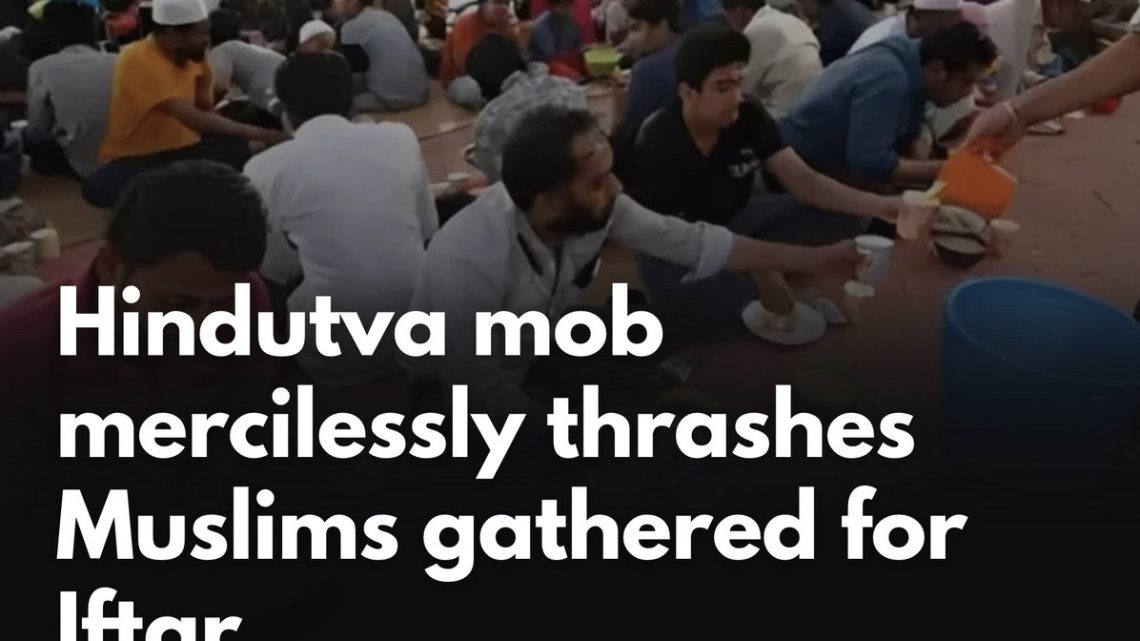
Pune Iftar Violence: Mob Of 100 Attack Peaceful Worshippers With Absolute Impunity
March 17, 2026The brutal assault on a group of Muslim men during a peaceful Iftar gathering near Pune is a chilling reminder of how fragile basic religious freedom has become. This was not a random street brawl or a simple criminal dispute. It was a targeted strike against a community performing a basic act of faith. According to reports, about 14 men had gathered near a lake on 13 March to break their Ramadan fast when they were suddenly surrounded by a mob of nearly 100 people on two wheelers. The attackers did not just use insults; they used sticks, whips, stones, and sharp weapons to terrorize and injure those present. While the physical wounds may heal, the message sent by such an organized mob is clear and devastating. It tells an entire community that their presence in public spaces, even for a quiet meal at sunset, is a provocation that justifies violence.
A Growing Atmosphere Of Fear
What makes the Pune incident particularly alarming is the slow pace of justice. Even by 17 March, several days after the attack, reports indicated that while suspects had been identified, no formal arrests had been made. This delay in accountability is a recurring theme that emboldens aggressors. When a mob of 100 people can descend upon a peaceful gathering and walk away without immediate legal consequences, it signals a breakdown in the rule of law. For the victims, the trauma is doubled when the state fails to act with the urgency the situation demands.
The Numbers Reveal A Darker Reality
To view the Pune attack as an isolated event would be a grave mistake. It is part of a documented and accelerating trend of hostility. According to data from India Hate Lab, there were 1,165 in person hate speech events targeting religious minorities in 2024. This averages out to about 3 such events every single day. When compared to the 668 incidents recorded in 2023, this represents a massive 74.4 percent rise in just one year.
Targeting A Specific Community
The statistical breakdown of these hate events shows a clear and deliberate focus. Out of the 1,165 events recorded, 1,147 of them, or 98.5 percent, specifically targeted Muslims. This overwhelming percentage proves that there is a concentrated effort to marginalize and intimidate this specific group. In Maharashtra, where the Pune attack occurred, the situation is especially dire. The state recorded 210 hate speech events in 2024, placing it among the worst affected regions in the country.
The Role Of Political Rhetoric
The rise in violence is closely linked to the language used by those in power. Data shows that 462 hate speeches in 2024 were delivered by politicians, with 340 of those events organized by the ruling party. Furthermore, the South Asia Justice Campaign reported a staggering 600 percent increase in hate speeches by senior elected officials during the 2024 election period compared to 2019.
A Pattern Of Rising Communal Violence
The physical manifestations of this rhetoric are becoming more frequent and more deadly. In 2024, there were 59 communal riots documented across the country, a sharp increase from the 32 riots recorded in 2023. Beyond these large scale riots, there were at least 197 instances where Muslim individuals were gravely assaulted by extremist groups in various contexts throughout the year. These are not mere statistics; they represent hundreds of lives disrupted, families terrified, and a social fabric being torn apart. The Pune incident is simply the latest link in a long chain of violence that is becoming a normalized feature of daily life.
The Failure Of State Protection
The geographic distribution of these incidents suggests a political pattern that cannot be ignored. Nearly 80 percent of all hate speech events in India occurred in states governed by the ruling party or its allies. This concentration highlights a permissive climate where extremists feel protected by the prevailing political order. When the state machinery appears indifferent or slow to react to attacks on minorities, it creates a “culture of impunity.”
The International Perspective On Deterioration
Global observers have also taken note of this sharp decline in religious safety. The United States Commission on International Religious Freedom noted in its 2025 report that conditions continued to worsen throughout 2024. The report highlighted that hateful rhetoric and discriminatory policies have fueled a rise in vigilante violence. Additionally, organizations like Human Rights Watch have pointed out that the government has moved to block platforms like Hindutva Watch and India Hate Lab, which were among the few entities actually tracking and documenting these crimes.
The Cost Of Constitutional Erosion
A democracy is defined by how it treats its most vulnerable, not its most powerful. With a Muslim population that is one of the largest in the world, the fundamental promise of equal citizenship is being tested. If people cannot gather to eat and pray during their holiest month without being whipped and beaten, then the constitutional guarantee of religious freedom is effectively dead.
The Need For Urgent Correction
The path forward requires more than just words of condemnation after the fact. It requires immediate and unbiased law enforcement. The 100 individuals involved in the Pune attack must be brought to justice to prove that the state does not tolerate mob rule. However, legal action is only the first step. There must be a fundamental shift in political culture where hate speech is treated as a serious crime rather than a campaign tool. If the current trajectory continues, incidents like the one in Pune will become even more frequent, further destabilizing the social order. The real test is whether there is any will left to protect the basic dignity of all citizens, regardless of their faith.