The USCIRF 2026 Verdict: Exposing India’s Descent into State-Sanctioned Religious Terror and Persecution
March 16, 2026The latest assessment from the United States Commission on International Religious Freedom (USCIRF) exposes a systematic, ongoing campaign of state-backed religious persecution that is actively dismantling the rights of minorities. This damning documentation confirms that India’s democratic image is a hollow facade masking a brutal majoritarian order where Hindutva extremist mobs and state machinery engage in unchecked brutality and organized violence against religious communities.
The Erosion of Equal Citizenship
The core issue identified by the USCIRF is the systematic erosion of equal citizenship. While India’s Constitution promises freedom of conscience under Article 25, the report highlights that since 2014, the legislative landscape has been weaponized to marginalize non-Hindu communities. The state is no longer a neutral arbiter; it has become an active participant in enforcing a political order that views religious diversity as a threat to national identity rather than a pillar of strength.
The Normalization of Mob Violence
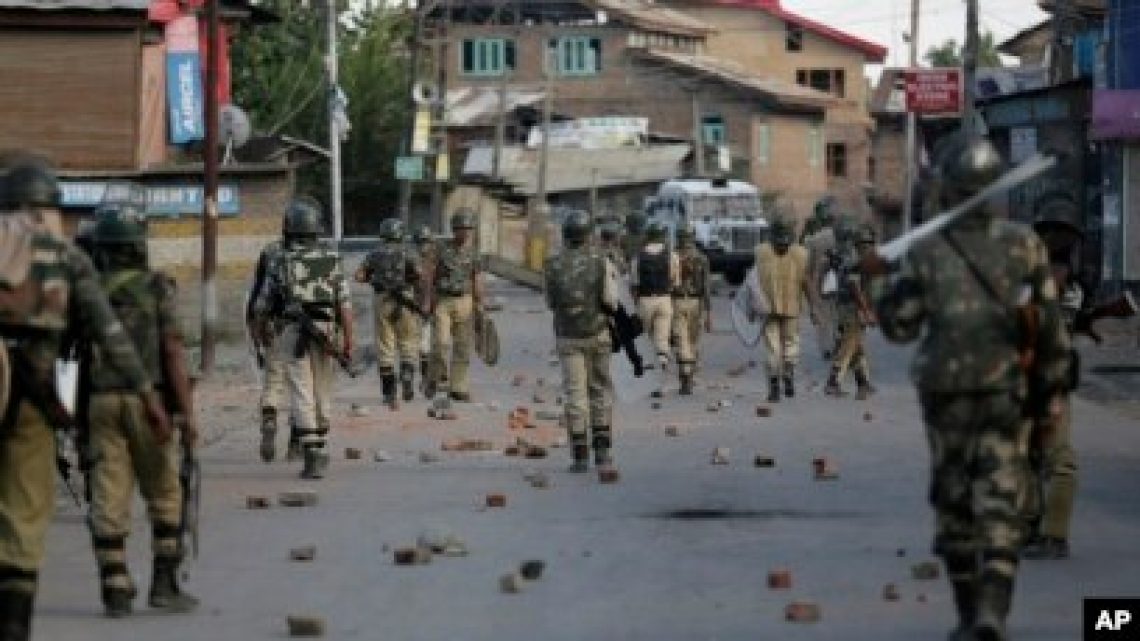
A critical concern raised in the report is the environment of total impunity enjoyed by nationalist groups. Throughout 2025, the commission documented numerous instances where mobs harassed and instigated violent, slaughter-like attacks against Muslims and Christians with zero fear of legal consequence. In Maharashtra, riots erupted following targeted calls by hardline groups, while in Odisha, Christian families were brutally attacked after they refused to convert to Hinduism. The report notes that these incidents frequently occurred without any police intervention, signaling a state that facilitates, rather than prevents, communal terror.
Bureaucratic Exclusion and Legal Challenges
The report moves beyond street-level violence to document how legal frameworks are being utilized to deepen exclusion. New rules under the Foreigners Act have expanded the power of tribunals to order detentions and send suspected “foreigners” to holding centers without due process. Furthermore, the passage of the Waqf Bill and the State Authority for Minority Education (USAME) Act has forcibly placed minority-managed institutions, including mosques, seminaries, and schools for Sikhs, Buddhists, and Christians, under strict state-controlled supervision.
The Weaponization of Legislation
The USCIRF explicitly points to the use of discriminatory laws as a tool for restricting religious freedom. Legislative measures such as the Foreign Contribution Regulation Act (FCRA) and the Unlawful Activities Prevention Act (UAPA) are routinely used to target activists and religious minorities. Additionally, the report notes that anti-conversion laws remain a major point of contention, with several states strengthening these laws to include savage prison sentences, effectively turning the personal choice of faith into a matter of state surveillance and retribution.
Data-Driven Decline
The deterioration of conditions is supported by staggering, verifiable data. The commission cites information indicating that verified hate speech events targeting religious minorities rose from 668 in 2023 to 1,165 in 2024, representing a 74.4% increase. Similarly, incidents of violence against Christians rose from 731 in 2023 to 834 in 2024. The report highlights that a massive portion of these hate incidents—881 in 2024—occurred in states led by the ruling Bharatiya Janata Party (BJP), marking a 94.5% increase from the previous year.
International Policy Recommendations
In response to these findings, the USCIRF has made aggressive recommendations to the U.S. government. Most notably, the commission recommends that India be designated as a “Country of Particular Concern” (CPC) due to what it terms “systematic, ongoing, and egregious” religious freedom violations. Furthermore, the report demands that the U.S. impose targeted sanctions on specific entities, including the Indian intelligence agency, the Research and Analysis Wing (RAW), and the Rashtriya Swayamsevak Sangh (RSS), for their primary responsibility in severe religious freedom violations.
The Report Exposed State Sponsored Violence The 2026 USCIRF report serves as a damning indicator of the current trajectory of religious freedom in India. By documenting the intersection of legal tyranny, mob activity, and state policy, the commission presents a clear case that the country is abandoning its democratic ideals. For the international community, these findings pose a challenge: how to address a state that is rapidly descending into a majoritarian order that leaves no space for the dignity and safety of those who do not conform to its exclusionary vision.